
Wood Floors · 11 min read
The Complete Guide to Wood Floor Cleaning & Restoration
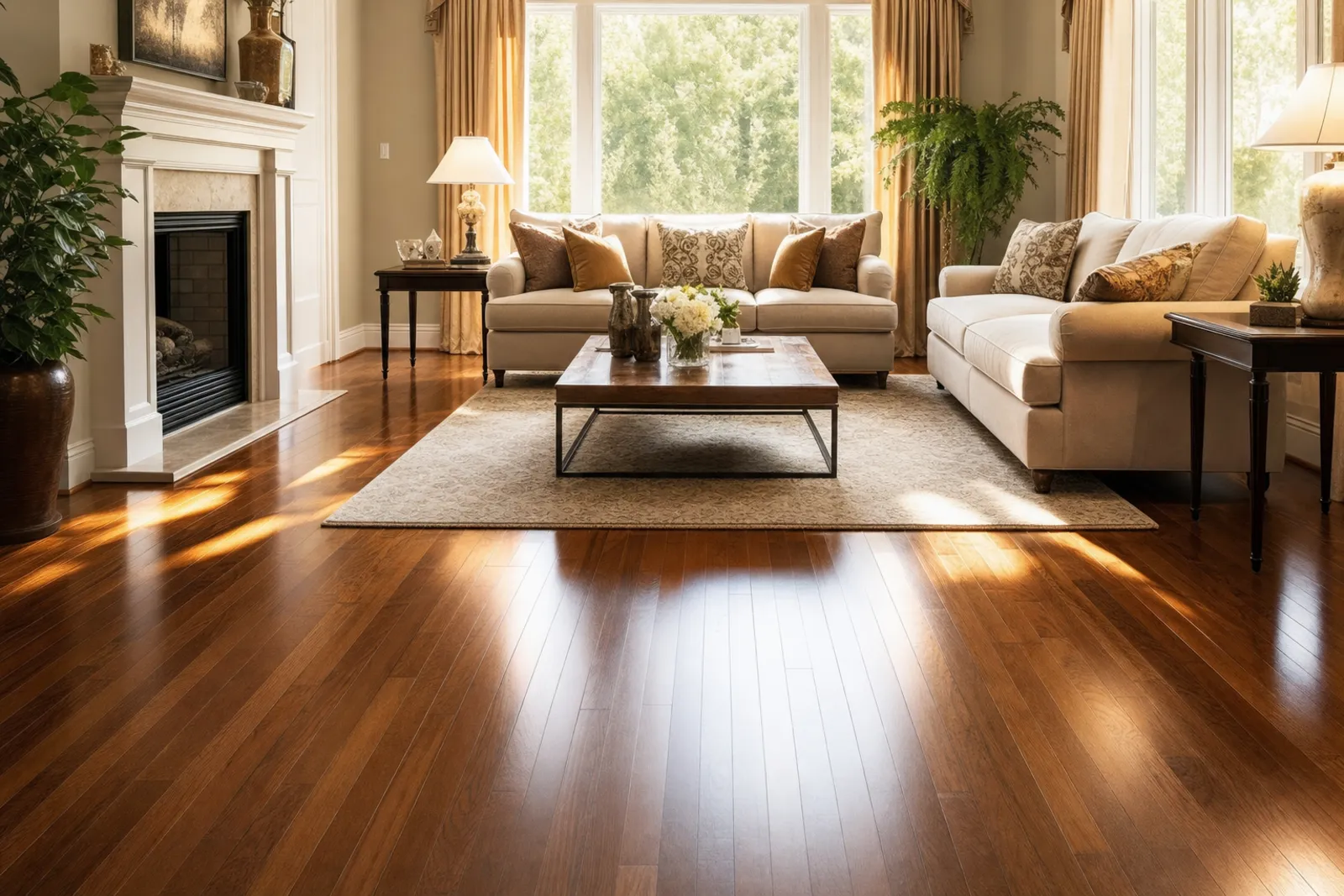
Wood floors are one of the few surfaces in a house that get better with age and care, and worse fast when they’re cleaned wrong. After 60,000-plus jobs since 1989 across Mercer County and Bucks County, we’ve seen both ends of that spectrum more times than we can count.
What You’re Actually Cleaning: The Finish, Not the Wood
This is the single most important thing to understand before you mop another floor. In almost every modern home, you are not touching the wood at all. You’re cleaning a clear protective coat that sits on top of it, usually polyurethane, sometimes a penetrating oil, occasionally an older shellac or wax on floors that date back decades. The wood underneath is sealed off. Your cleaning job is to keep that finish clear, intact, and free of grit, because once the finish wears through, water and dirt reach the bare wood and the repair gets expensive.
Knowing your finish changes everything about how you treat the floor. A surface polyurethane sheds water and tolerates damp cleaning. A penetrating oil or wax finish absorbs liquid and will spot, cloud, or turn gummy if you hit it with a water-based cleaner. If you don’t know which you have, test in a closet: put a few drops of water on the floor. If it beads and sits, you likely have a film-forming finish like poly. If it soaks in and darkens the spot within a few minutes, you have an oil or wax finish that needs specialized products. When in doubt, ask before you experiment.
The Damage Happens at the Front Door
Most worn wood floors aren’t worn by foot traffic. They’re worn by the sand, road salt, and fine grit that rides in on shoes and gets ground into the finish like sandpaper. Every step drags those particles back and forth across the coating. In our service area, winter is brutal on floors because the de-icing salt tracked in from driveways in Hamilton, Robbinsville, and across Bucks County is both abrasive and chemically harsh.
The fix is boring and it works. Put a coarse mat outside every entry to knock off grit, and an absorbent mat just inside to catch what’s left and to soak up melting snow. Ask people to take shoes off, especially heels and cleats. Sweep or vacuum traffic lanes far more often than you think you need to. If you do nothing else from this article, control the grit at the door and you’ll add years to your finish.
Day-to-Day Cleaning Done Right
Routine wood floor care is simpler than the cleaning-product aisle wants you to believe. Here’s the honest version:
- Dust and grit first, always. Use a microfiber dust mop or a vacuum with the beater bar turned off (a spinning brush bar can scratch finish and fling debris). Do this two or three times a week in busy areas.
- Damp, never wet. When you wash, the mop should feel barely moist, not dripping. Standing water is the enemy of every wood floor. It seeps into seams and around board edges, swells the wood, and lifts the finish.
- Right cleaner, light touch. Use a pH-neutral cleaner made for wood, or plain water for light maintenance on a poly finish. Skip the all-purpose sprays and dish soap.
- Dry behind yourself. If the floor stays wet for more than a minute or two after you pass, you’re using too much liquid.
Work in sections, follow the grain, and rinse or swap your mop pad often so you’re not just pushing dirty water around. A clean pad on the second pass makes a visible difference.
The Products That Quietly Ruin Floors
We get called to fix the results of well-meaning home cleaning constantly. A few culprits show up again and again, and they’re worth naming so you can stop using them today.
Vinegar and water. It’s all over the internet as a natural cleaner. Vinegar is an acid, and over time it etches and dulls polyurethane. It won’t ruin a floor in one mopping, but as a regular routine it slowly strips gloss and leaves the finish hazy.
Oil soaps and “rejuvenating” liquids. These leave a residue that builds up coat after coat. The floor looks great for a week, then turns dull and sticky, attracts dirt, and creates a film that prevents any future recoat from bonding. Stripping that buildup back off is a real job.
Steam mops. Heat plus forced moisture is exactly what a wood floor cannot handle. Steam drives water through the finish into the wood and the seams. We’ve inspected floors cupped and crowned from steam-mop use that looked fine on day one. Manufacturers void warranties over this for a reason.
Wax over polyurethane. Paste wax belongs on wax-finished floors only. Put it on a poly floor and you’ve created a slippery, recoat-blocking layer that has to be chemically removed before anything else can be done.
Why Your Floors Look Dull (Even Though They’re Clean)
A dull floor isn’t necessarily a dirty floor. Most of the time the haze is a thin film, either residue from a film-forming cleaner or a microscopic scratch pattern from grit that scatters light instead of reflecting it. People respond by cleaning harder or adding shine products, which makes the film worse.
If your floors have gone flat despite regular care, the cause is usually one of these and the cure is different for each. We break down the common reasons wood floors look dull and lifeless and how to tell residue from real wear. The short version: residue can be washed off with the right cleaner, but a worn-through finish needs to be recoated, and no amount of mopping will bring it back.
Spills, Stains, and Pet Accidents
On a sealed film finish, fresh spills are not a crisis if you catch them. Blot, don’t wipe, so you’re lifting liquid rather than spreading it, then dry the spot. The trouble starts when liquid sits, especially in the seams where the finish is thinnest.
Pet urine is the worst offender because it’s both a liquid and an acid, and pets tend to return to the same spot. On a surface-sealed floor caught early, you may get away with a thorough cleanup. Once urine penetrates the finish and reaches the wood, it causes the gray and black staining that soaks deep into the grain. Those stains often can’t be cleaned out, only sanded out or, in bad cases, the boards replaced. White rings from hot mugs or wet glasses are usually trapped moisture in the finish and can sometimes be drawn out gently, but prevention with coasters and felt pads beats every cure.
The Certified-Organic, Low-Moisture Approach
Here’s where our method matters for wood specifically, and we’ll be straight about why. Two of the biggest threats to a wood floor are excess moisture and harsh chemistry. Our entire approach is built around minimizing both.
We use certified-organic, non-toxic, hypoallergenic products. On wood, the non-toxic part isn’t just a wellness claim. Aggressive solvents and high-alkaline cleaners can soften, cloud, or strip a finish; gentle, properly formulated products clean the grime without attacking the coating you’re trying to protect. The hypoallergenic angle matters in homes with kids, pets, and people who are on the floor all day. You’re not leaving a chemical film behind on a surface everyone touches.
The low-moisture method is the bigger deal for wood. Because water is what cups boards, swells seams, and lifts finish, controlling how much liquid touches the floor is central to doing this safely. Low-moisture cleaning means the floor is never flooded and it dries fast, which is the same reason our carpet cleaning leaves carpets dry in about an hour. We’re not promising organic products turn a worn-out finish new again, no honest cleaner can, but for routine professional cleaning and maintenance, gentle and low-moisture is exactly what a wood floor wants.
Hardwood vs. Engineered: They Are Not the Same Floor
A lot of newer homes in Princeton, Pennington, Newtown, and Yardley have engineered wood, not solid hardwood, and people clean them identically without realizing the difference matters when things go wrong. Solid hardwood is one piece of wood all the way through, so it can be sanded and refinished many times. Engineered wood is a thin real-wood veneer over a plywood-style core. The cleaning routine is nearly the same, but engineered floors are even less forgiving of standing water, and that thin top veneer can only be sanded once or twice, sometimes not at all.
That distinction drives every restoration decision. Sanding a worn solid floor is routine; sanding through a thin engineered veneer ruins it. If you’re not certain what you have, it’s worth knowing the practical differences in caring for hardwood versus engineered wood before you commit to any aggressive treatment, because the wrong move on engineered flooring can’t be undone.
When Cleaning Isn’t Enough: Restoration Without Sanding
There’s a wide middle ground between “looks great” and “needs a full refinish,” and most floors live there. If your finish is dull, lightly scratched, and worn in the traffic lanes but the wood underneath is still protected, you usually don’t need to sand the floor down to bare wood and start over. That full sand-and-refinish is dusty, disruptive, takes days, and removes a layer of wood you can never get back.
The better first option for many floors is a deep clean followed by a fresh coat of finish over the existing one, no bare-wood sanding involved. Done right it restores depth and sheen and adds a new wear layer. It’s worth understanding how you can bring hardwood back to life without sanding and when that’s the smart call versus when a floor is too far gone for it. The dividing line is whether the finish has worn through to raw wood. If it has, a recoat won’t bond properly and you’re into refinishing territory.
Screen and Recoat: The Restoration Sweet Spot
The professional version of restoring without full sanding is called a screen and recoat, sometimes a buff and coat. A fine abrasive screen lightly scuffs the existing finish, just enough to give the new coat something to grip, then a fresh layer of finish goes on top. No raw wood is exposed, there’s almost no dust, and the floor is back in service quickly. It removes light scratches, evens out worn traffic patterns, and restores sheen for a fraction of the cost and disruption of a full refinish.
The catch is timing and surface prep. A screen and recoat only works if the existing finish is intact and genuinely clean, no wax, no oil-soap residue, no silicone polish, or the new coat won’t stick and will peel. This is exactly why all those residue-leaving products cause so much grief: they sabotage your cheapest restoration option. If you want the full picture of what the process involves and whether your floor qualifies, here’s how screen and recoat works step by step. Floors maintained well can be recoated periodically and may never need a full sanding in their lifetime.
What Professional Cleaning Actually Buys You
Plenty of people maintain their own floors just fine, and good for them. Where a professional earns the call is in the deep clean that gets grime out of the grain texture and corners a mop can’t reach, in correctly diagnosing whether a dull floor is residue or real wear, and in restoration work like recoating that protects the wood for years. We’re IICRC certified, our lead inspector is a Master Restorer and Senior Carpet and Textile Inspector, and the inspection side matters as much as the cleaning. Knowing exactly what a floor needs, and just as importantly what it doesn’t, is what keeps you from overspending on a refinish a recoat would have handled.
Our professional wood floor cleaning and polishing service is built around that gentle, low-moisture, certified-organic method, and it’s backed the same way all our work is: you must be happy or it’s free, a one-year written warranty, and our 200% No-Risk Guarantee. We serve homeowners throughout Mercer County and Bucks County, and you can read more about our local wood floor cleaning in Princeton, NJ if you’re nearby.
A Simple Maintenance Plan That Works
If you want a routine you can actually keep, this is it:
- Daily-ish: dust mop or vacuum (beater bar off) the high-traffic lanes and entries.
- Weekly: a damp clean with a pH-neutral wood cleaner, working in small sections, drying as you go.
- Always: wipe spills immediately, keep mats at every door, and add felt pads under furniture.
- Yearly: a professional deep clean to clear what builds up over time and to catch wear before it reaches bare wood.
- Every few years, as needed: a screen and recoat to refresh the finish and reset the wear layer before a full refinish is ever required.
Follow that and a wood floor will outlast the people walking on it. Neglect the grit and the moisture, and even an expensive floor wears out early.
If your wood floors have gone dull, scratched, or just tired, we’re happy to take a look and tell you honestly what they need, whether that’s a deep clean, a recoat, or simply a better routine. Call us at 609-586-5833 in NJ or 215-897-9511 in PA for a free quote, no pressure and no obligation.
Frequently asked questions
No. Vinegar is acidic and over time it etches and dulls polyurethane finishes, leaving a haze. Use a pH-neutral cleaner made for wood, or plain water for light maintenance on a sealed floor.
No. Steam forces heat and moisture through the finish into the wood and seams, which can cup, crown, or peel a floor and often voids the manufacturer's warranty. Use a barely-damp microfiber mop instead.
A full refinish sands the floor down to bare wood and is dusty and disruptive. A screen and recoat lightly scuffs the existing finish and adds a fresh coat on top with no bare wood exposed, which is faster and cheaper, but it only works if the finish hasn't worn through and is free of wax or residue.
Usually it's a thin film from a residue-leaving cleaner or polish, or a microscopic scratch pattern from grit that scatters light. Residue can be washed off with the right cleaner, but a worn-through finish needs to be recoated.
We use a certified-organic, low-moisture method: the floor is never flooded, gentle non-toxic products lift the grime, and the surface dries fast. Because excess water is what damages wood, keeping moisture low is the safest way to deep clean it.
If caught early on a sealed finish, often yes. But once urine penetrates to the bare wood it causes deep gray and black staining that usually can't be cleaned out, only sanded out or, in bad cases, the boards replaced.