
Wood Floors · 9 min read
Why Your Wood Floors Look Dull (and How to Bring Back the Shine)
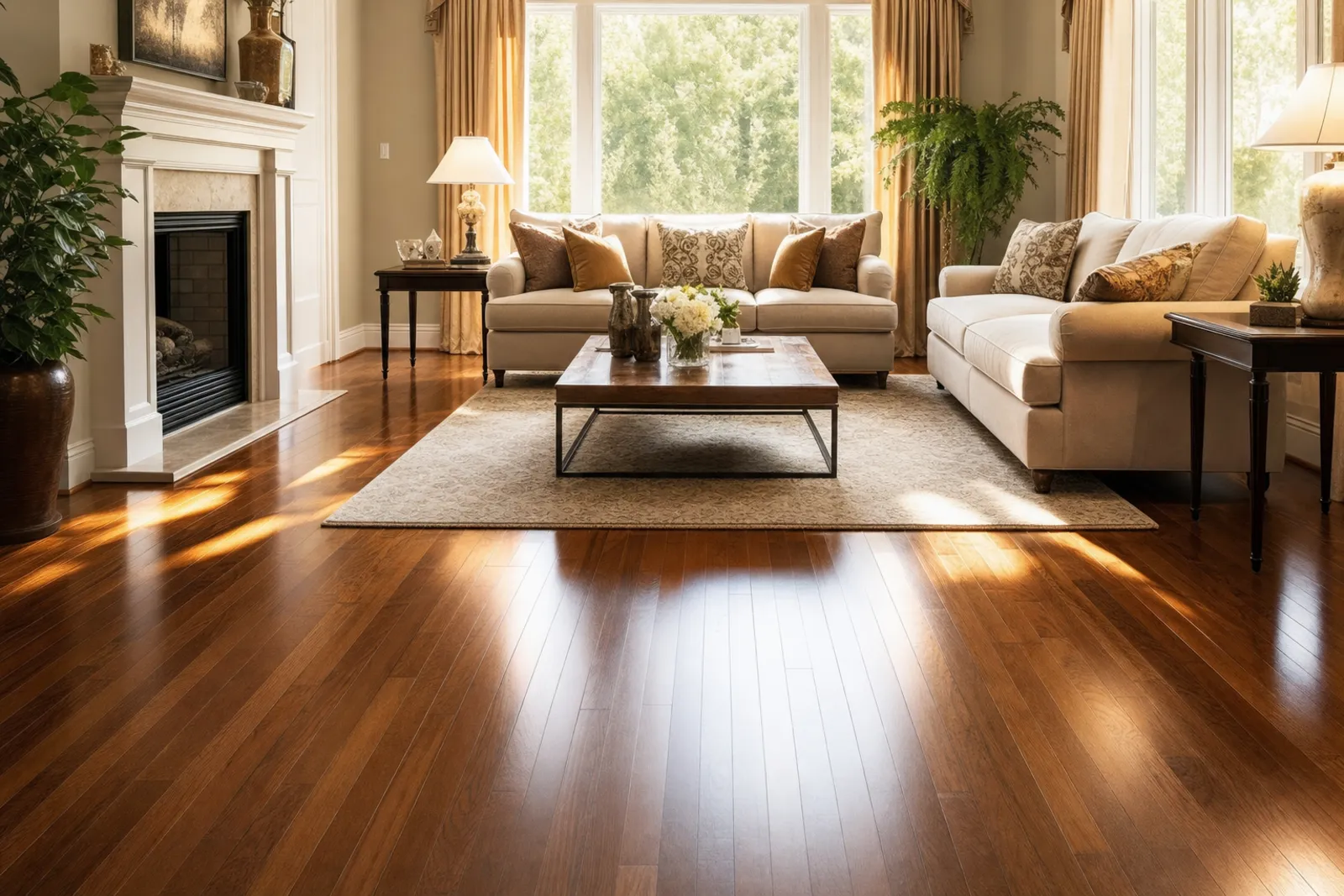
A wood floor doesn’t usually go dull overnight. It fades a little at a time, and one day you notice the light no longer bounces off it the way it used to. The good news is that most dull floors aren’t worn out at all. They’re coated in the wrong stuff, scratched at the surface, or simply starving for the right kind of cleaning.
Dull Usually Means Buildup, Not Damage
After more than three decades and 60,000-plus jobs across Mercer County and Bucks County, the single most common reason we find for a hazy, lifeless wood floor is residue. Years of mopping with the wrong products leave a thin film on top of the finish. That film is what you’re actually looking at, not the wood and not the original sheen.
The usual culprits are oil soaps, vinegar-and-water mixes, spray “mop and shine” products, and furniture-polish sprays used on floors. They all promise shine, and they all leave something behind. Oil soaps build a dull, sticky layer that grabs dust. Acrylic “restorer” liquids dry to a cloudy haze that yellows over time. Vinegar slowly etches a polyurethane finish, leaving it microscopically rough so it scatters light instead of reflecting it. The floor isn’t ruined; it’s buried.
How to Tell Buildup From Real Wear
Before you decide what to do, figure out what you’re dealing with. There’s a simple test we use on site. Put a few drops of clean water in an inconspicuous spot and wait two minutes. If the water beads up and sits on top, your finish is intact and the dullness is on the surface, which means it can almost always be cleaned and polished back. If the water soaks in and darkens the wood, the protective finish has worn through and you’re into recoating or refinishing territory.
- Hazy and even across the room usually means product residue.
- Dull only in walkways and in front of the sink or stove usually means the finish is worn thin from traffic.
- Gray or black spots mean water has gotten past the finish into the wood, which is a repair, not a cleaning.
- Tiny scratches that catch the light are surface abrasion and respond well to a clean-and-recoat.
If you’d rather not guess, this is exactly the kind of thing our IICRC-certified inspector reads in a few minutes during a free in-home assessment.
Why Grit Is the Quiet Killer
The fastest way to dull a floor permanently is to grind sand into it. Every footstep drags fine grit, and grit is harder than most wood finishes. It acts like sandpaper underfoot, scratching the finish thousands of times a day. Those scratches are too small to see one by one, but together they scatter light and turn a glossy floor flat.
This is why doormats at every entrance and a no-shoes habit do more for your floor’s shine than any bottle of polish. Vacuum or dust-mop often with a soft head, never a stiff broom that flicks grit around. If you want the long version of a maintenance routine that actually protects the finish, our step-by-step wood floor cleaning guide walks through it.
The Mopping Mistakes That Make It Worse
Most dull floors in this area are over-cleaned, not under-cleaned. Three habits do the damage.
- Too much water. Wood and standing water don’t mix. A soaked mop pushes moisture into seams, swells the boards, and dulls the finish along every edge. Damp, wrung-nearly-dry is the rule.
- The wrong cleaner. Dish soap, all-purpose spray, and oil soap all leave film. Use a cleaner made for your finish, applied lightly.
- Never rinsing. Even a good cleaner leaves residue if it’s never rinsed off. Over months that residue is the haze you’re trying to get rid of.
If you’re not even sure what finish or what species you’ve got, that changes the right approach. Engineered planks with a thin wear layer can’t take the same treatment as solid oak. We break that down in hardwood versus engineered wood cleaning.
The Certified-Organic, Low-Moisture Way We Bring Shine Back
Here’s where our method matters, and we’ll be honest about what it does and doesn’t do. We clean wood floors with certified-organic, non-toxic, hypoallergenic products and a low-moisture process. The goal of the cleaning step is to strip off years of film and grime without flooding the wood, which is what dulls floors in the first place. Because we use very little moisture, the floor dries in about an hour and the boards never get the chance to swell.
Stripping the residue alone often restores a surprising amount of shine, because you’re finally seeing the real finish again. From there, on a sound finish, a professional polish or protective coat brings back the depth and gloss and adds a sacrificial layer that takes the abuse instead of your finish. That two-part approach, deep clean then protect, is what our wood floor cleaning and polishing service is built around.
What this method will not do is fix wood that’s actually worn through or water-damaged. No cleaner reaches below a finish that’s already gone. When the finish itself is the problem, you need a coating, not a cleaning, and we’ll tell you that up front rather than sell you a polish that won’t last.
When Cleaning Isn’t Enough: Recoat vs. Refinish
If your water test soaked in, or the finish is visibly worn down to bare wood in the traffic lanes, cleaning won’t bring the shine back for long. You have two real options, and they’re very different in cost and disruption.
Screen and recoat
If the wood underneath is still protected, a screen-and-recoat lightly abrades the existing finish and lays a fresh coat on top. No sanding to bare wood, no dust storm, and a floor that looks new again for a fraction of refinishing. It’s the most under-used fix in this business. We explain exactly when it works and when it doesn’t in screen and recoat, explained.
Restore without full sanding
For floors that are dull and lightly worn but not gouged, there are restoration methods that bring back gloss without the mess and expense of sand-to-bare-wood refinishing. If that sounds like your floors, see how to restore hardwood without sanding before you call a refinisher.
Full refinishing, sanding everything down to raw wood and starting over, is the last resort. It’s the right call for deep gouges, gray water stains, or floors that have been refinished so many times there’s barely any wood left. For most dull floors, it’s overkill.
Lighting, Sheen Level, and What “Shine” Really Is
Part of judging a floor is understanding that not every wood floor is supposed to be glossy. Finishes come in gloss, semi-gloss, satin, and matte, and a satin floor that’s perfectly healthy will never mirror the ceiling the way a high-gloss one does. Before you decide your floor looks dull, ask what sheen it was finished in. We’ve had homeowners convinced their floors were failing when they simply had a low-sheen finish that was doing exactly its job.
Lighting matters just as much. Low side-lighting from a window in the late afternoon will reveal every micro-scratch and any haze, while overhead light at noon hides them. If your floor only looks dull at certain times of day, you’re seeing surface scratching catch the raking light, which is normal wear and usually responds to a clean-and-recoat rather than anything drastic. The flip side is useful too: clean a small test patch and look at it under that same raking light. If the patch comes back to life, residue was your problem all along.
What “Restorer” Bottles Don’t Tell You
The shelves are full of liquid floor “restorers” and “rejuvenators” that promise instant shine in a pour-and-spread coat. They do shine, for a few weeks. What they don’t tell you is that most are acrylic or polymer films that sit on top of your real finish. They yellow, they cloud, they show every scuff, and they’re a headache to remove once they’ve built up in layers. Worse, when you eventually do need a proper recoat, that acrylic film has to be stripped first because new finish won’t bond to it.
We pull these films off floors regularly, and the wood underneath is almost always fine. If you’ve been using one of these products and your floor looks worse than when you started, that’s expected, and it’s fixable. The fix is to strip the film back to the original finish and protect it correctly, not to add another layer on top.
Keeping the Shine Once You’ve Got It Back
A floor we clean and polish will hold its shine for a long time if you stop feeding it the things that dulled it. The maintenance is simple and it’s mostly about what you don’t do.
- Dust-mop or vacuum two or three times a week to keep grit off the finish.
- Damp-mop with a wood-specific cleaner only, never oil soap, vinegar, or “shine” sprays.
- Wipe spills right away so nothing sits and soaks in.
- Put felt pads under furniture legs and replace them when they wear down.
- Mats at every door, and ideally shoes off, to stop sand at the threshold.
That’s it. No miracle products, no monthly waxing. Most homeowners we serve in Princeton, Hamilton, Lawrenceville, and over in Newtown and Yardley get years between professional cleanings when they keep to that routine.
Why Local Matters for Wood Floors
Our climate runs humid in summer and dry in winter, and wood moves with it. Floors that were laid tight in February can cup a little in August, and a finish that’s already thin will show that movement as dullness along the seams. Cleaners who understand how Mercer and Bucks County homes behave through the seasons clean and protect accordingly. If you’re nearby, our wood floor cleaning in Princeton, NJ page covers how we handle local homes specifically.
Family-owned since 1989, we back every job with a one-year written warranty and our 200% No-Risk Guarantee: you must be happy or it’s free. If your wood floors have gone flat and you’re not sure why, we’ll take a look and tell you honestly whether they need a clean, a recoat, or nothing at all. Call us at 609-586-5833 in NJ or 215-897-9511 in PA for a free, no-pressure quote.
Frequently asked questions
Mopping with the wrong product is usually what makes it dull. Oil soaps, vinegar, and 'shine' sprays leave a film that builds up over time, so each mopping adds to the haze instead of removing it.
Yes, in most cases. If the finish is still intact, a professional deep clean to strip residue followed by a polish or protective coat restores the shine without any sanding.
Drop a little water on it and wait two minutes. If the water beads on top, the finish is intact and cleaning will work; if it soaks in and darkens the wood, the finish is worn through and you need a recoat or refinish.
No. Vinegar is acidic and slowly etches polyurethane finishes, leaving the surface microscopically rough so it scatters light and looks dull. Use a cleaner made for wood floors instead.
About an hour. We use a low-moisture, certified-organic process so very little water touches the wood, which protects the boards and gets you back on the floor quickly.
It's a way to refresh a worn finish without sanding to bare wood. The existing finish is lightly abraded and a fresh protective coat is applied on top, restoring shine for far less cost and mess than full refinishing.