
Wood Floors · 6 min read
Hardwood vs. Engineered Wood: Cleaning Differences
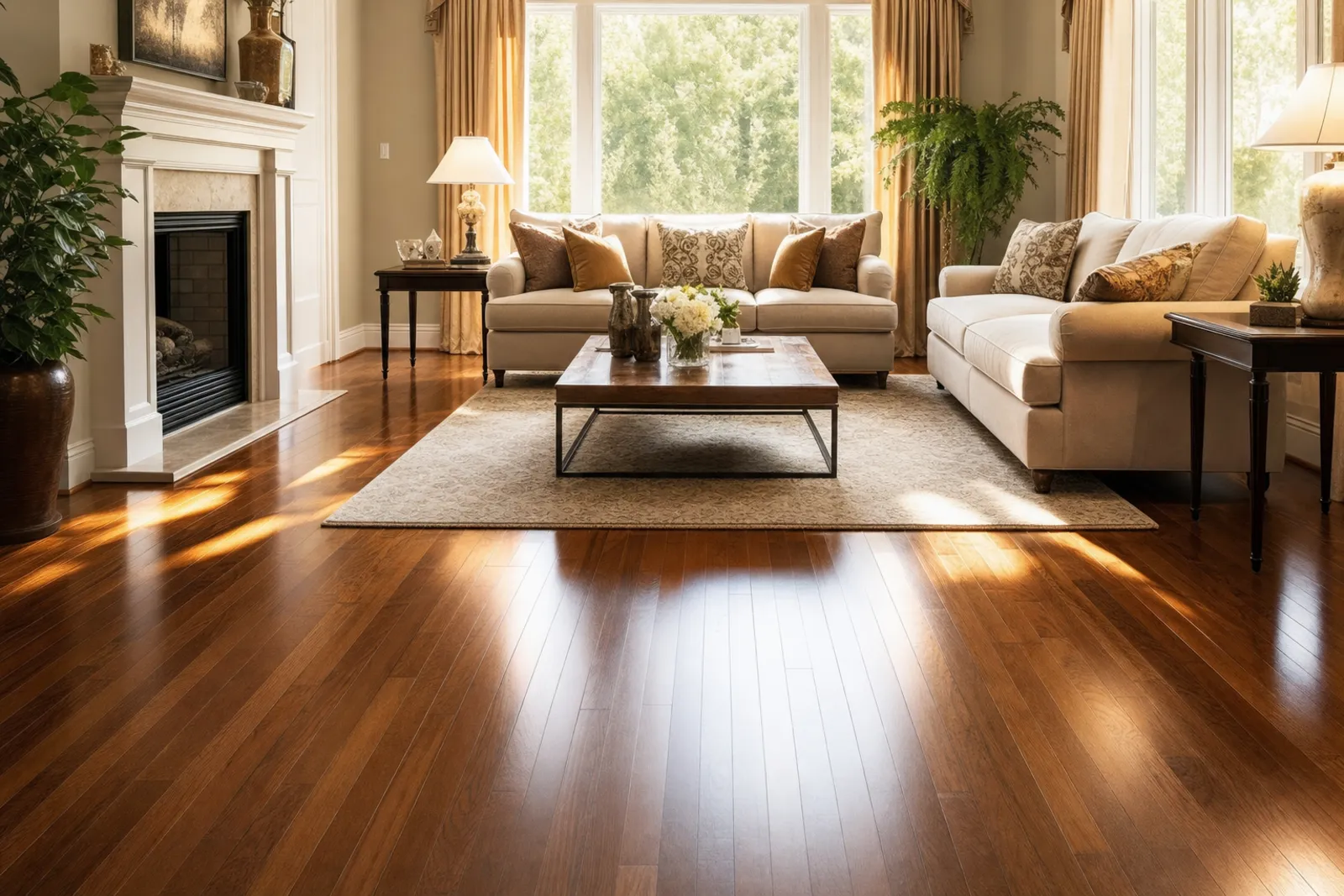
From the floor up, a solid hardwood plank and an engineered board can look identical. How you clean them, though, is not identical at all, and getting it wrong is one of the fastest ways to ruin a floor that should last decades.
The Difference That Actually Matters for Cleaning
Solid hardwood is exactly what it sounds like: a single piece of wood, usually 3/4 inch thick, all the way through. Engineered wood is a thin layer of real hardwood (the wear layer) bonded over a plywood or high-density fiberboard core. From above, both have a genuine wood surface and a finish on top. That shared finish is why people assume they clean the same way.
The cleaning difference comes down to two things: how much abrasion and refinishing the surface can take, and how the material reacts to moisture. Solid hardwood can be sanded down and refinished many times over its life. Engineered wood has a wear layer that might be anywhere from a paper-thin 0.6 mm to a robust 4 mm or more, and once you sand through it, there is no fixing it. That single fact shapes every decision about how aggressively you can clean and restore each floor.
Why Moisture Is the Real Dividing Line
Both wood types hate standing water, but they hate it differently. Solid hardwood is more dimensionally stable across its thickness, yet because it is all wood, it swells and cups when water sits on it or soaks into the seams. Engineered wood resists cupping better thanks to its cross-layered core, but its weak point is the glue line between the wear layer and the substrate. Saturate an engineered floor repeatedly and you risk delamination, where the top veneer lifts or bubbles. There is no sanding that back to life.
This is exactly why we are skeptical of the wet-mop-and-bucket habit so many homeowners fall into. A sopping mop pushes water into seams, beveled edges, and any micro-gaps in the finish. On engineered floors especially, that water has a shorter trip to reach a layer it can damage. Our professional wood floor cleaning uses a low-moisture approach for precisely this reason: enough liquid to lift soil, never enough to flood the seams.
Routine Cleaning: Mostly the Same, With One Caution
Day-to-day, the routine for both floors is nearly identical, and it is boring on purpose. Dry soil, grit, and sand are the enemies. They act like sandpaper underfoot and scratch the finish on solid and engineered wood alike. A good weekly rhythm looks like this:
- Dust-mop or vacuum (with the beater bar off) several times a week to remove grit before it scratches.
- Damp-clean, not wet-clean, with a well-wrung microfiber pad and a pH-neutral cleaner made for wood.
- Wipe spills the moment they happen, then dry the spot.
- Use felt pads under furniture and walk-off mats at every entry.
The one extra caution for engineered wood: be even stingier with moisture. If your microfiber pad leaves a visibly wet film that doesn’t evaporate in under a minute, you are using too much. For both floor types, skip the steam mop entirely. Steam forces hot moisture and pressure straight into the finish and seams, and on engineered wood it is a fast route to a lifted veneer.
Products: What’s Safe and What Quietly Wrecks the Finish
The product mistakes are the same for both floors, and they are common. Vinegar and water, a beloved internet remedy, is mildly acidic and over time dulls and etches a urethane finish. Oil soaps and “mop-and-shine” liquids leave a residue that builds into a hazy, sticky film that attracts dirt and interferes with any future recoat. Anything ammonia-based is too harsh for a wood finish.
What we use, and what we recommend, is a non-toxic, hypoallergenic, pH-neutral cleaner. As a certified-organic cleaner, we lean on this not as a marketing line but because it is genuinely better for floors people live on, especially homes with kids, pets, and bare feet. Organic, low-residue products clean the surface without leaving the buildup that forces an early refinish. If your floors already look cloudy, our explainer on why wood floors look dull walks through the usual culprits, most of which are residue, not worn finish.
When the Floor Looks Tired: Refinishing Options Diverge Hard
This is where solid and engineered wood part ways most dramatically. A worn solid hardwood floor can be fully sanded to bare wood and refinished, and you can do that several times across its lifespan. That is the classic, dusty, days-long sand-and-stain job.
Engineered wood usually cannot take a full sand. With a thin wear layer, one aggressive sanding goes straight through to the plywood core. Thicker wear layers (3 mm and up) can sometimes handle a single light sanding, but you have to know the exact thickness, and most homeowners do not. This is precisely why screen-and-recoat matters so much for engineered floors. Instead of sanding to bare wood, a screen-and-recoat lightly abrades only the existing finish and lays a fresh coat over it. It refreshes the look and protection without touching the precious wear layer, and it works beautifully on solid hardwood too.
Restoring Shine Without a Full Sanding
Most floors that look beat up are not actually worn out, they are just dull, scratched in the finish layer, and coated with old residue. For both solid and engineered wood, the answer is rarely a full refinish. A thorough deep clean strips the haze, and a screen-and-recoat or polish restores the sheen. We cover the full process in our guide to restoring hardwood without sanding, which is the right path for the majority of floors we see, and the only safe path for thin-veneer engineered floors.
The honest version of this is simple: if the damage is in the finish, you can usually fix it without sanding. If the damage is in the wood itself (deep gouges, water staining that has penetrated, gray oxidized boards), solid hardwood can be sanded and saved, while engineered wood with a thin veneer may need board replacement instead.
How We Approach Each Floor Type in the Field
When we arrive at a home in Hamilton, Princeton, or Newtown, the first thing we do is identify what we are actually standing on. We check edges, thresholds, and any vent cutouts to see the cross-section, and we test the finish in an inconspicuous spot. That tells us the floor type, the wear-layer situation, and the finish condition before we touch anything.
From there the method is the same low-moisture, organic process for both, with the moisture dialed down further on engineered floors. Carpets and textiles dry in about an hour with our system, and wood floors are handled with the same restraint, so you are not living around a wet or off-limits floor for days. For homeowners nearby, our wood floor cleaning in Princeton, NJ follows the exact same approach. If you want the longer breakdown of routine care, our complete wood floor cleaning guide covers maintenance schedules for both floor types.
The Short Version for Homeowners
Clean both floors dry first, damp second, and never wet. Use a pH-neutral, low-residue cleaner and skip vinegar, oil soaps, and steam. Treat engineered wood as the more moisture-sensitive of the two, and remember that its wear layer is finite, so plan to refresh it with a recoat rather than a sand. Solid hardwood gives you more room to recover from mistakes, but the same gentle habits keep it looking right far longer between any major work.
Not sure which floor you have or how to bring it back to life? We have done it 60,000+ times since 1989, and we are happy to take a look. Call us at 609-586-5833 for a free quote and an honest assessment of what your floors actually need.
Frequently asked questions
Usually not. Most engineered floors have a thin wear layer that a full sanding cuts straight through to the plywood core. Only thicker wear layers (about 3 mm and up) can sometimes take one light sanding, so a screen-and-recoat is the safer choice.
In a way, yes. Engineered wood resists cupping better, but its glue line between the veneer and the core can delaminate if water repeatedly reaches it. Both floors should be kept dry, with engineered wood treated even more cautiously.
No. Steam forces hot moisture and pressure into the finish and seams. On engineered wood it can lift the veneer, and on solid hardwood it can cloud the finish and swell the boards.
Vinegar is mildly acidic and over time it etches and dulls a urethane finish. A pH-neutral wood cleaner cleans just as well without breaking down the protective coat.
Most often it is residue from oil soaps or mop-and-shine products, or a finish that has lost its sheen. A proper deep clean removes the haze, and a recoat restores the shine, usually without any sanding.
Our low-moisture, certified-organic process uses minimal liquid, so floors are ready to walk on quickly rather than being off-limits for days. We dial moisture down even further on engineered wood.