
Tile, Grout & Stone · 7 min read
Slate, Granite & Travertine: Safe Cleaning and Sealing
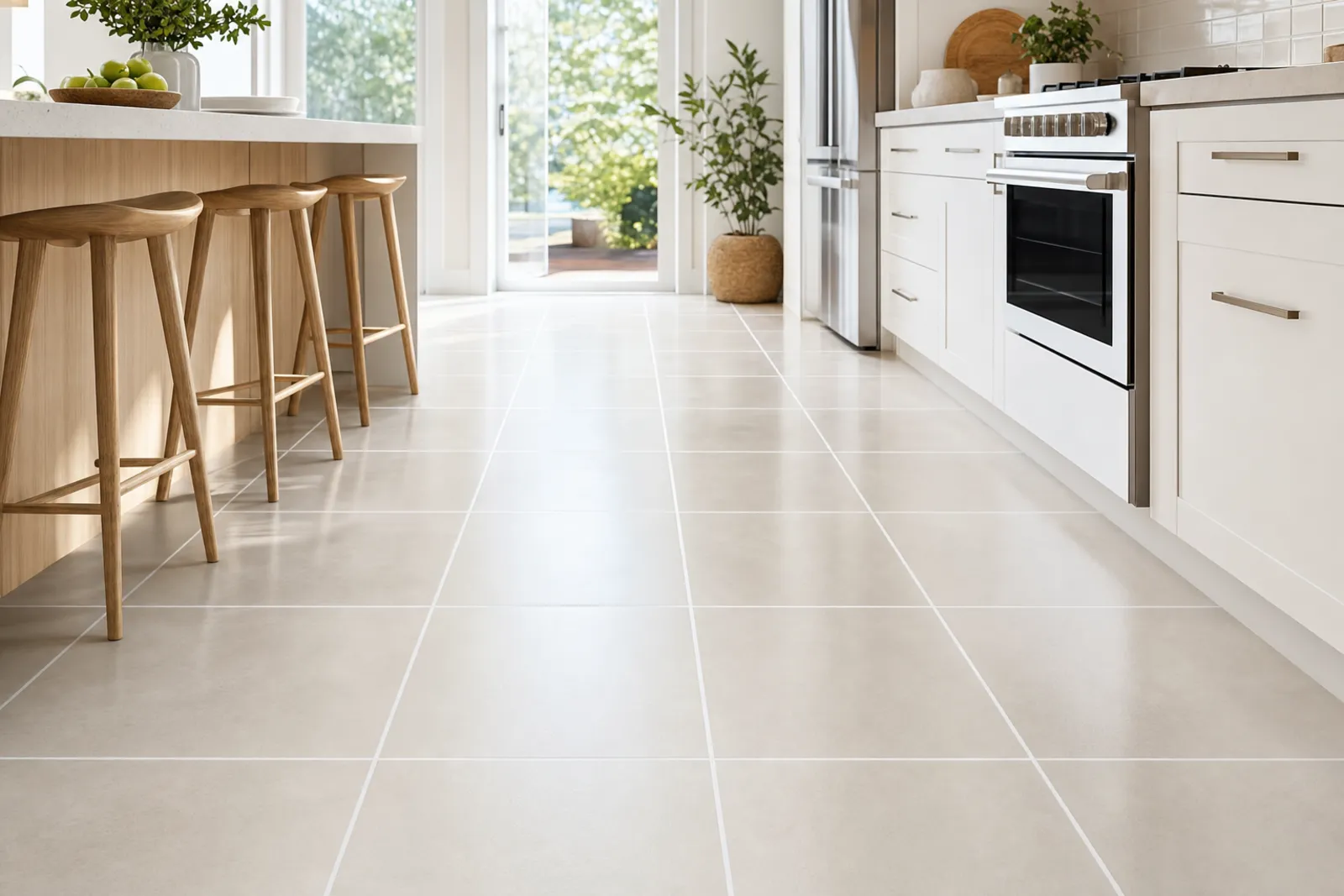
Slate, granite, and travertine each look like “stone,” but they behave like three completely different materials underfoot and on the counter. Clean them the same way and you will dull one, etch another, and trap grit in the third.
Why these three stones need different handling
The reason a single cleaner cannot serve all three comes down to what each stone is made of. Granite is an igneous stone, dense and hard, with a crystalline surface that resists scratching but can hold a polished shine that acidic spills will slowly fog. Slate is a metamorphic stone that splits into layers, which is why it has that natural cleft texture and why it sheds fine flakes if you scrub it wrong. Travertine is a sedimentary limestone formed around mineral springs, full of natural pits and voids, and it is calcium-based, which means it reacts to anything acidic the way a chalkboard reacts to vinegar.
That last point is the one homeowners get wrong most often. Travertine and other calcium-based stones etch on contact with acid. Etching is not a stain you can scrub out; it is a chemical burn that dissolves the polished surface and leaves a dull spot. A splash of orange juice, a lemon wedge, a wine ring, even some “green” citrus cleaners will do it. Granite is far more acid-tolerant but not bulletproof. Slate sits in the middle, generally acid-resistant but soft enough to scratch and flake.
The daily and weekly routine that actually protects stone
Good stone care is mostly about what you do not do. The single most damaging habit we see across Mercer and Bucks County homes is dragging grit across the surface. Sand and dirt tracked in from the driveway act like sandpaper every time someone walks over a slate entry or sets a pan down on a granite top.
- Dust-mop or vacuum slate floors before any wet cleaning, so you are not grinding debris into the cleft.
- Wipe stone counters with a soft cloth and a pH-neutral cleaner, never a generic all-purpose spray.
- Blot spills immediately. Wine, coffee, oil, and citrus all set fastest in the first few minutes, especially on porous travertine.
- Use mats at every exterior door and felt pads under anything that sits on a polished surface.
For routine cleaning, warm water and a stone-safe, pH-neutral product is all you need. Skip vinegar, lemon, ammonia, bleach, tub-and-tile foams, and most grocery-store sprays. Anything that promises to “cut” or “dissolve” is usually acidic or strongly alkaline, and both ends of that scale damage natural stone over time.
Where the certified-organic, low-moisture approach fits
Our deep cleaning is built on the same philosophy we use on textiles: certified-organic, non-toxic, hypoallergenic products and a low-moisture method. On natural stone that approach matters more than people expect. Porous stone like travertine and unsealed slate will wick water and any harsh chemistry straight down into the body of the stone, where it can feed mineral spotting and efflorescence (that white, powdery bloom) for weeks afterward. A controlled, low-moisture clean lifts soil from the surface and out of the pits without flooding the stone or driving residue deep.
It is also honest to say what low-moisture does and does not do here. It will not magically reverse an etch or a deep stain that has already set. What it does is clean safely, rinse cleanly, and leave the surface dry and ready to seal in roughly the same window we promise on carpet, instead of leaving you with a wet floor and a film of detergent that attracts dirt. If you want the broader picture of how we approach hard surfaces, our guide to cleaning tile, grout, and stone walks through the method in more detail.
How to handle stains versus etches
Telling these apart saves a lot of wasted scrubbing. A stain is darker than the surrounding stone and sits in or on the surface; it absorbed something. An etch is lighter, often a dull or matte spot, and it changed the surface itself. You treat them in opposite directions.
Drawing out a stain
Organic stains (coffee, tea, food, leaf litter on outdoor slate) and oil stains (grease, cooking oil, cosmetics) both respond to a poultice, which is a paste that pulls the staining material back out of the pores as it dries. The trick is matching the poultice to the stain: a mild solvent base for oil, a gentle oxygen-type cleaner for organics. Rushing it or using the wrong chemistry on travertine can make things worse, so light, patient applications beat one aggressive pass.
Repairing an etch
An etch on polished travertine or marble is a refinishing job, not a cleaning job. Light etching can sometimes be buffed back with a stone polishing compound; deeper damage needs honing and re-polishing. This is one of those moments where calling a certified inspector first will save you from turning a quarter-sized dull spot into a hand-sized one.
Sealing: what it does and how to test for it
Sealing is the most misunderstood step in stone care. A penetrating (impregnating) sealer does not put a coating on top of the stone; it soaks in and lines the pores so spills have time to be wiped up before they absorb. It buys you minutes, not immunity. It will not stop etching, because etching is a reaction with the surface, not absorption into it.
The water test tells you whether you need to seal: drop a small puddle of water on the stone and wait several minutes. If it beads or stays put, your seal is intact. If it soaks in and darkens the stone, the surface is thirsty and due for sealing. Travertine and slate generally need resealing more often than dense granite, and high-traffic floors and kitchen counters wear faster than a guest bath. Some honed and unfilled stones drink sealer quickly and need more than one coat.
If your project is more grout than stone, the same logic applies but the products and timing differ. We cover that decision in depth in when and whether you should seal grout, and where existing grout has gone blotchy or dingy, color sealing can restore a uniform look that ordinary sealing cannot.
Grout, joints, and why the lines go dark
On tiled slate or travertine, the grout lines usually fail before the stone does. Grout is porous cement; it absorbs soil, mop water, and grease, and over time it turns gray or brown no matter how clean the tile looks. People assume the grout is permanently stained when it is often just saturated with trapped dirt. If you are wondering what is actually happening in those lines, our explainer on why grout darkens over time lays out the real causes and which ones are reversible.
The professional fix is to deep-extract the grout, let it dry, then seal or color-seal it so it stops drinking up everything that hits the floor. Done together with a stone cleaning, it restores the whole installation rather than leaving fresh-looking stone framed by dingy lines.
Outdoor slate, patios, and freeze-thaw in our climate
A lot of slate in this area lives outdoors, on patios, walkways, and pool surrounds, and our New Jersey and Pennsylvania winters are hard on it. Water that soaks into unsealed slate or travertine freezes, expands, and pops flakes off the surface, a process called spalling. Pressure washing, the default DIY tool, often accelerates this by blasting out the natural binders and forcing water deep into the layers.
Outdoor stone is better served by a controlled low-moisture clean, a proper dry-down, and a breathable penetrating sealer rated for exterior use, ideally going into fall before the first hard freeze. A sealer that traps moisture is worse than none at all, which is another reason product selection matters more than horsepower.
When to call a professional
Routine cleaning is yours to do, and doing it well prevents most problems. Bring in a pro when you see etching on polished stone, stains that have not lifted after a careful poultice, grout lines that no longer respond to cleaning, efflorescence that keeps returning, or any time you are about to put an unknown chemical on travertine or marble. As an IICRC Certified Master Restorer and Senior Carpet and Textile Inspector with more than 60,000 jobs behind us since 1989, we would rather answer a quick question than repair an avoidable mistake. Our professional tile, grout, and stone cleaning service covers identification, safe cleaning, stain treatment, and sealing in one visit, and homeowners around Princeton can read more about our local stone and grout work and the guarantee that backs it.
Not sure whether your stone is sealed, stained, or etched? We will tell you straight. Call us at 609-586-5833 for a free, no-pressure quote, and we will help you protect the stone you already have.
Frequently asked questions
No. Vinegar is acidic and will etch travertine, marble, and other calcium-based stones, and over time it dulls a polished granite finish. Use only a pH-neutral, stone-safe cleaner.
A stain is darker than the surrounding stone because something absorbed into the pores, and it can often be drawn out with a poultice. An etch is a lighter, dull spot where acid chemically burned the surface, and it must be polished or honed out, not cleaned.
It depends on the stone and traffic. Test it by leaving a puddle of water for a few minutes; if the water soaks in and darkens the stone it needs sealing. Porous travertine and slate usually need it more often than dense granite.
No. Penetrating sealer reduces absorption so stains have time to be wiped up, but etching is a reaction with the stone's surface and a sealer cannot prevent it. The only protection against etching is keeping acids off the stone.
Grout is porous cement that absorbs dirt, grease, and mop water, so it darkens even when the tile stays clean. The fix is professional deep extraction followed by sealing or color sealing so the grout stops absorbing soil.
Usually not. Pressure washing can blast out the stone's natural binders and force water deep into the layers, which worsens freeze-thaw spalling in our NJ and PA winters. A controlled low-moisture clean and a breathable exterior sealer is safer.