
Tile, Grout & Stone · 7 min read
Why Grout Darkens and How Low-Pressure Cleaning Restores It
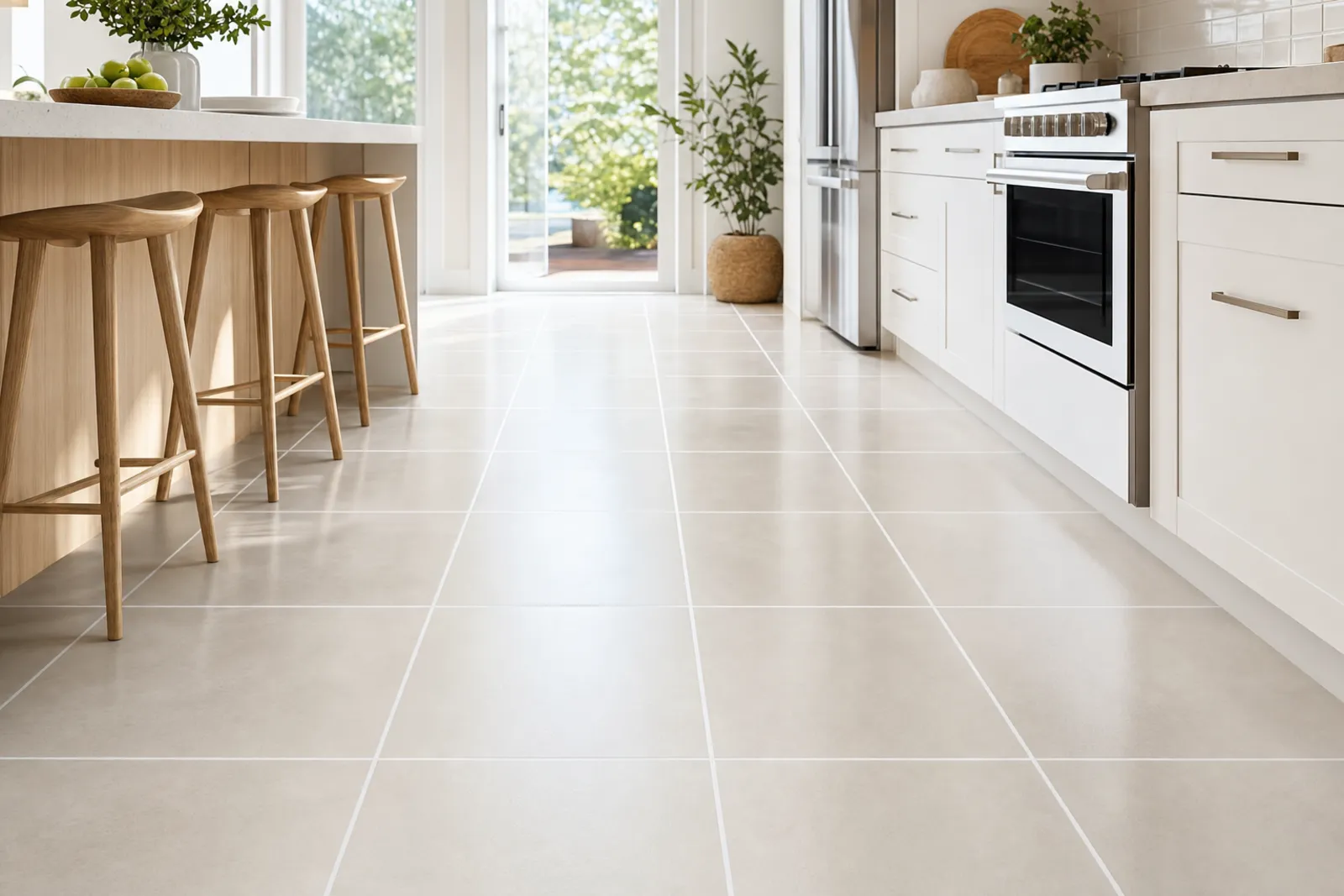
If your tile floor looks clean but the grout lines have turned gray, brown, or nearly black, you are not imagining it and you are not doing anything wrong. Grout darkens because of what it is, not because you neglected it.
What grout actually is, and why that matters
Most residential grout is a cement-based mortar: a blend of Portland cement, fine sand, and water, sometimes with a polymer additive. When it cures, it does not become a solid, sealed surface the way a glazed tile does. It stays porous — riddled with microscopic channels and air pockets. Picture a hard sponge. That porosity is the whole story behind why grout darkens while the tile next to it stays bright.
Tile is fired and glazed, so dirt sits on top and wipes away. Grout sits slightly lower than the tile face, collects everything that rolls off, and then drinks it in. Over the years we have cleaned more than 60,000 floors and textiles in Mercer and Bucks Counties, and the pattern is almost always the same: the tile is fine, the grout is the problem, and the homeowner has been scrubbing the wrong thing.
The real reasons grout turns dark
Darkening is rarely one cause. It is usually three or four stacking on top of each other.
- Trapped soil. Foot traffic grinds in dust, sand, pollen, and skin oils. Because grout is recessed and porous, that soil packs into the lines and builds a dark film that no surface mopping reaches.
- Mop water itself. This is the big one people miss. A string or sponge mop pushes dirty water across the floor, and the lowest point on the floor is the grout line. You are essentially funneling gray water straight into the most absorbent part of the room. Over months, that gray haze becomes permanent-looking.
- Soap and detergent residue. Many floor cleaners leave a sticky film. That film is tacky, so it grabs new dirt every day. The grout looks dirty again two days after you mop because it is literally coated in glue for dust.
- Mineral deposits and efflorescence. Hard water and moisture moving through the grout can leave behind a whitish or yellowish mineral crust, which then traps soil and reads as discoloration.
- Mold and mildew. In showers, around tubs, and in damp basements, the dark color is often biological growth feeding on soap scum and moisture inside the pores.
Why scrubbing harder usually backfires
The instinct is to attack dark grout with a stiff brush, a strong acidic cleaner, and a lot of pressure. The trouble is that cement grout is softer than the tile and far more vulnerable. Aggressive acids etch the cement binder and open the pores even wider, so the grout absorbs dirt faster afterward. Heavy scrubbing wears down the surface and can leave it pitted. And the dirty cleaning solution you create still has to go somewhere — it wicks right back into the grout as it dries.
You can spend a Saturday on your hands and knees with a toothbrush and genuinely improve a small bathroom. But on a kitchen or a large tiled floor, hand scrubbing rarely reaches the soil that has settled deep in the pore structure, and it does not lift it out of the floor — it just relocates it.
How low-pressure, low-moisture cleaning restores grout
Professional restoration of grout works on a different principle than scrubbing. The goal is to break the bond between the soil and the cement, then physically extract that soil away from the floor instead of pushing it around.
The process we use is built around controlled pressure and controlled moisture rather than blasting the floor:
- Dwell time with a safe cleaning agent. A certified-organic, non-toxic solution is applied and given time to penetrate the pores and emulsify the trapped oils and soil. Chemistry and patience do the work that brute force cannot.
- Agitation at the grout line. A controlled mechanical action loosens the film inside the recessed lines without gouging the cement.
- Low-pressure rinse and simultaneous extraction. Here is the key difference from a mop. The rinse and the vacuum recovery happen together, so the dirty water is pulled off and out of the floor in the same motion. The soil leaves the building instead of soaking back in.
We deliberately avoid the screaming high-pressure tools you sometimes see used on patios and driveways. High pressure can blow soft grout right out of the joint, damage the tile edges, and force water under the tile. On interior floors, finesse beats force every time. If you want the full walkthrough of how different surfaces are handled, our tile, grout, and stone cleaning guide breaks it down surface by surface.
The certified-organic, low-moisture angle — and why it is honest
We clean with certified-organic, hypoallergenic products, and we keep moisture low on purpose. There are two real, practical reasons for this, not just marketing.
First, grout and the substrate beneath it hate excess water. Flooding a floor to clean it drives moisture into the subfloor and the grout pores, which can feed mildew and, in the case of natural stone, cause cloudiness or spotting. A low-moisture method dries fast — the same low-moisture approach lets our carpets dry in about an hour — so you are not left with a damp floor or trapped humidity.
Second, you live on these floors. Children sit on them, pets walk on them and then lick their paws, and people with allergies or asthma breathe whatever you leave behind. Non-toxic, organic chemistry means there is no harsh residue to come back up later. It is worth being straight about one thing, though: organic and gentle does not mean weak. The cleaning power here comes from correct chemistry, proper dwell time, and real extraction — not from dumping the strongest, most caustic product we can find onto your floor.
When cleaning is enough — and when it is not
Cleaning restores grout to its true, original color. What it cannot do is change the color of grout that was always a medium gray, and it cannot rebuild grout that is physically failing. Knowing the difference saves you money.
If the grout is cleaned but still looks blotchy, or if you simply want it darker, more uniform, or better protected, the next step is usually color sealing — a pigmented sealer that coats every line in one consistent shade and locks dirt out. If your grout is cracking, crumbling, or missing in spots, no amount of cleaning will help; that is a repair issue, and our breakdown of cleaning versus regrouting walks through how to tell which camp you are in.
Keeping grout from going dark again
Once grout is professionally restored, a few habits keep it that way far longer:
- Rinse your mop water often, or switch to a microfiber flat mop with clean water. Stop dragging the same gray water into the lines.
- Use a neutral pH cleaner and skip the heavy, sudsy, film-leaving products that turn grout into a dust magnet.
- Wipe spills quickly, especially on a kitchen floor, before they wick into the pores.
- Consider sealing. A penetrating sealer buys you time by slowing absorption — though it is not permanent and not a substitute for cleaning. Whether it is worth it for your floor is covered in should you seal grout.
For homeowners around Princeton, Hamilton, Lawrenceville, and across the area, the most cost-effective routine is a thorough professional tile and grout cleaning every year or two, with sealing as needed in between. It is far cheaper than regrouting and keeps the floor looking like the day it was installed.
Why a local, certified eye makes the difference
Grout problems are not all the same, and treating them all the same is how floors get damaged. Sanded versus unsanded grout, cement versus epoxy, ceramic versus porcelain versus natural stone — each calls for a different solution strength, dwell time, and amount of moisture. As an IICRC Certified Master Restorer family business serving Mercer County, NJ and Bucks County, PA since 1989, we read the floor first, then choose the method. Homeowners in town can see exactly how we approach local jobs on our Princeton tile and grout cleaning page.
If your grout has gone dark and you want it back to its real color without harsh chemicals or a soaking-wet floor, we are happy to take a look. Call 609-586-5833 for a free, no-pressure quote — every job is backed by our 1-year written warranty and our promise that you must be happy or it is free.
Frequently asked questions
Most likely your floor cleaner is leaving a sticky film that grabs new dust every day, and your mop is dragging gray water into the lines. Switch to a neutral pH cleaner and clean mop water, and consider a professional restoration to remove the existing buildup.
In most cases it can be fully restored. Grout usually looks dark from trapped soil deep in its pores, not from damage, and proper low-moisture cleaning with extraction lifts that soil back out, returning the grout to its true color.
Yes, high pressure can blow soft cement grout out of the joint, chip tile edges, and force water under the tile. Interior floors should be cleaned with controlled, low pressure and proper extraction instead.
Yes, when used correctly. The cleaning power comes from the right chemistry, proper dwell time, and real extraction, not from caustic strength, so you get a clean floor with no harsh residue left behind for kids, pets, or allergy sufferers.
With good habits, often a year or two before it needs cleaning again. Rinsing mop water, using a neutral cleaner, wiping spills quickly, and sealing the grout all extend how long it stays bright.
Cleaning removes trapped soil and restores the grout's original color. Color sealing applies a pigmented sealer that coats every line in one uniform shade and locks dirt out, which is the right choice when grout is blotchy or you want a different, more consistent color.