
Tile, Grout & Stone · 6 min read
Should You Seal Your Grout? (and How Long It Lasts)
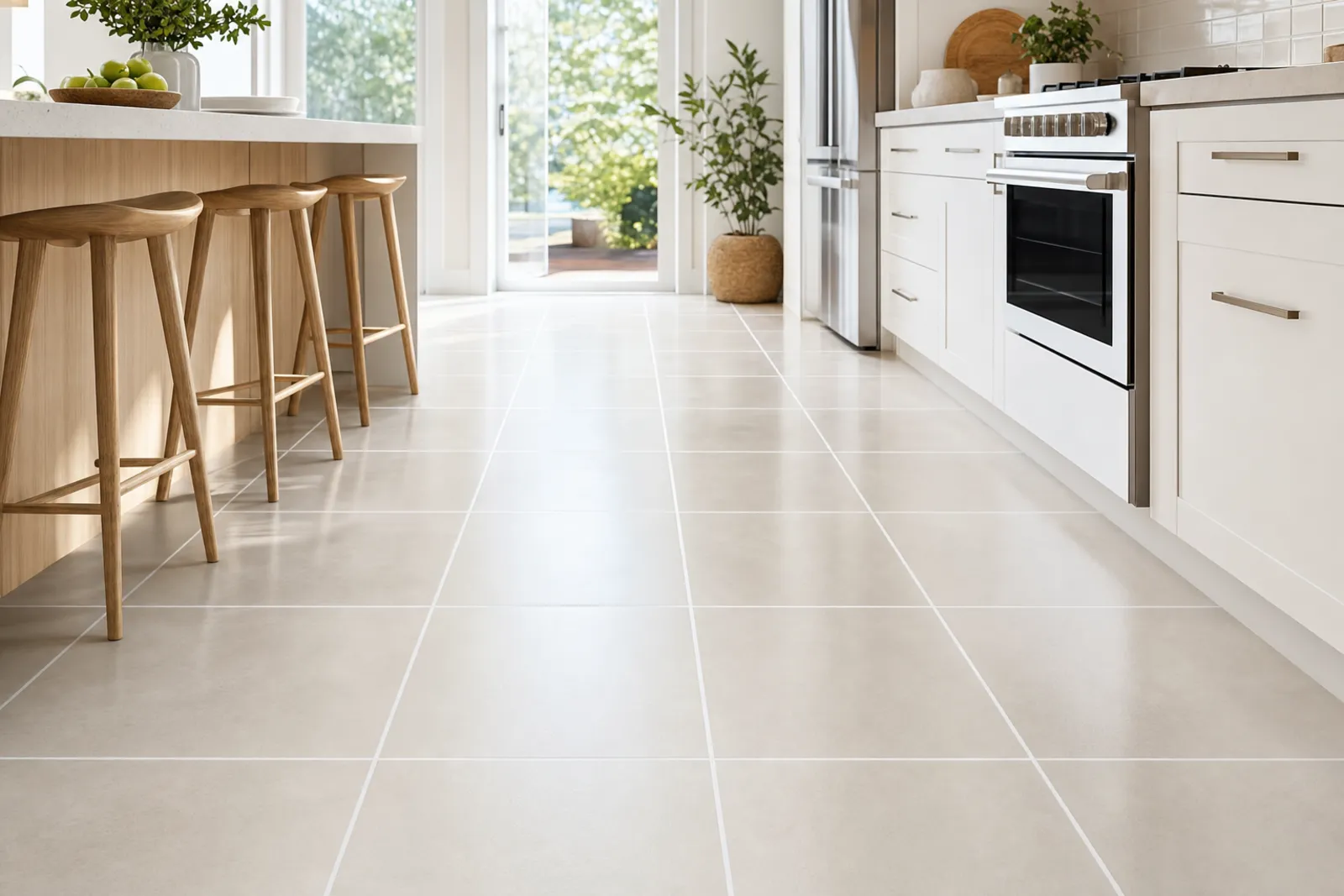
Grout looks solid, but it is one of the most porous materials in your house. Sealing it is usually worth doing, but only if you understand what a sealer actually does, what it does not do, and how long it really holds up.
What grout actually is, and why it soaks up everything
Most tile floors and walls are set with cement-based grout. Cement cures hard, but it stays full of tiny pores, like a sponge that dried solid. Those pores wick up water, mopping solution, cooking grease, soap scum, and foot traffic dirt. That is the real reason grout turns from a clean cream or gray into a dark, dingy line over the years. The tile glaze repels almost everything; the grout between the tiles drinks it in.
A penetrating sealer soaks into those pores and lines them so liquids bead up and sit on the surface long enough to be wiped away instead of absorbed. It buys you time. It does not turn grout into glass, and it does not make grout waterproof. If you want the longer explanation of why grout discolors in the first place, we wrote a whole piece on what makes grout go dark.
Should you seal it? Almost always yes, with two exceptions
For the vast majority of homes in Mercer County and Bucks County, the answer is yes. Sealing cement grout is cheap insurance against staining, and it makes routine cleaning easier for years. There are really only two situations where you skip it.
- Epoxy grout. If your tile was set with epoxy grout, it is already non-porous and a penetrating sealer cannot soak in. Sealing it does nothing. Most epoxy grout is found in newer kitchens, showers, and commercial jobs.
- Grout that is still wet or dirty. Never seal grout that has not fully cured (wait at least 48 to 72 hours on new installs), and never seal grout that is already stained. Sealing dirty grout locks the dirt in permanently. It has to be cleaned first.
That second point is the one homeowners get wrong most often. A sealer is not a cleaner. It traps whatever is there at the moment you apply it.
Penetrating sealer vs. color sealer: two different jobs
People use the word “sealing” for two very different things, so it is worth separating them.
Penetrating (impregnating) sealer
This is the clear sealer described above. It soaks in, leaves the grout looking the same color, and provides stain resistance. It is what most floors and walls need.
Color sealer
A color seal is a pigmented coating that bonds to the surface of the grout. It does two things at once: it gives every grout line a uniform, fresh color (great for grout that has gone blotchy or that you simply want a different shade) and it seals at the same time. It is more involved and costs more, but it lasts far longer than a clear penetrating sealer and it hides permanent staining that cleaning alone cannot remove. If your grout is clean but still looks uneven or faded, color sealing is often the better long-term move than re-cleaning every year.
How long does grout sealer last?
This is the question everyone asks, and the honest answer is: it depends entirely on the type of sealer and how much traffic and water the grout sees.
- Clear penetrating sealer on floors: typically 1 to 3 years. High-traffic kitchen and entry floors are on the shorter end; a guest bathroom can go longer.
- Clear penetrating sealer in showers: often 1 to 2 years. Constant water, heat, and soap break sealers down faster than anywhere else in the house.
- Color seal: commonly 8 to 15 years, sometimes longer, because it is a bonded coating rather than something soaked into the pores.
Two things shorten any sealer’s life faster than time itself: harsh cleaners and abrasive scrubbing. Acidic cleaners (vinegar included) and bleach-heavy products strip penetrating sealers and eat at the cement. We see this constantly. People seal their grout, then mop weekly with something acidic, and wonder why it stopped repelling water in eight months.
A simple test to know if your grout still needs sealing
You do not need to guess. Drop a few drops of plain water onto a grout line and wait two or three minutes.
- If the water beads up or sits on top, your sealer is still working. Leave it alone.
- If the water soaks in and darkens the grout, the sealer is gone (or was never there) and it is time to clean and reseal.
Do this once a year on a section of floor that gets the most use. It takes thirty seconds and tells you exactly where you stand.
Where the organic, low-moisture method fits in
Here is where our approach matters. Sealer can only go on clean grout, and how you clean it changes the result. We are a certified-organic, IICRC master-certified shop, and our tile and grout cleaning uses non-toxic, hypoallergenic products and a low-moisture process rather than the high-pressure, chemical-heavy blast a lot of services rely on. That matters for sealing for a few reasons.
First, harsh acidic and caustic cleaners leave residue in the pores that interferes with how well a sealer bonds. A clean, neutralized surface accepts sealer evenly. Second, low-moisture cleaning means the grout dries quickly and fully, so we are not trying to seal grout that is still holding water deep in the pores, which causes hazing and failure. Third, the organic products are safer in kitchens, bathrooms, and homes with kids, pets, or anyone with allergies, since you are putting your hands and feet on these surfaces every day.
For most clients the sequence is straightforward: we clean the grout properly, let it dry, then apply the right sealer for that surface and that level of traffic. If you want the full rundown on caring for tile and stone, our tile, grout, and stone cleaning guide covers it. And if you are local, you can read about tile and grout cleaning in Princeton specifically.
When sealing is not enough
Sometimes grout is too far gone for cleaning and sealing to save it. If the grout is cracking, crumbling, missing in spots, or stained so deep that even color sealing cannot disguise it, you are looking at regrouting instead. That is a judgment call best made by someone who can see it, and we walk through the difference in cleaning versus regrouting. As a rule of thumb, if the grout is structurally sound, clean it and seal it; if it is breaking down, replace it.
Not sure whether your grout needs a fresh seal, a color seal, or just a good cleaning? We are happy to take a look and tell you straight. Call us at 609-586-5833 for a free quote, and we will recommend only what your floors actually need.
Frequently asked questions
Yes, in almost all cases. Standard cement-based grout is porous and will absorb water, grease, and dirt unless it is sealed, which leads to staining and dark grout lines over time.
Reseal clear penetrating sealer every 1 to 3 years on floors and every 1 to 2 years in showers. Test yearly by dropping water on the grout: if it soaks in instead of beading, it is time to reseal.
No. Sealing dirty grout traps the stains underneath permanently. The grout must be professionally cleaned and fully dried first, then sealed.
A clear penetrating sealer soaks into the pores for stain resistance and keeps the grout's existing color. A color seal is a pigmented bonded coating that recolors every grout line uniformly and lasts much longer, often 8 to 15 years.
Usually because of harsh cleaners. Acidic products such as vinegar and bleach-based cleaners strip penetrating sealers and break down the grout, so switching to neutral, non-toxic cleaning makes the seal last far longer.
No. Epoxy grout is already non-porous, so a penetrating sealer cannot soak in and would do nothing. Sealing is only needed for cement-based grout.