Tile, Grout & Stone · 7 min read
Color-Sealing Grout: Pros, Cons and Lifespan
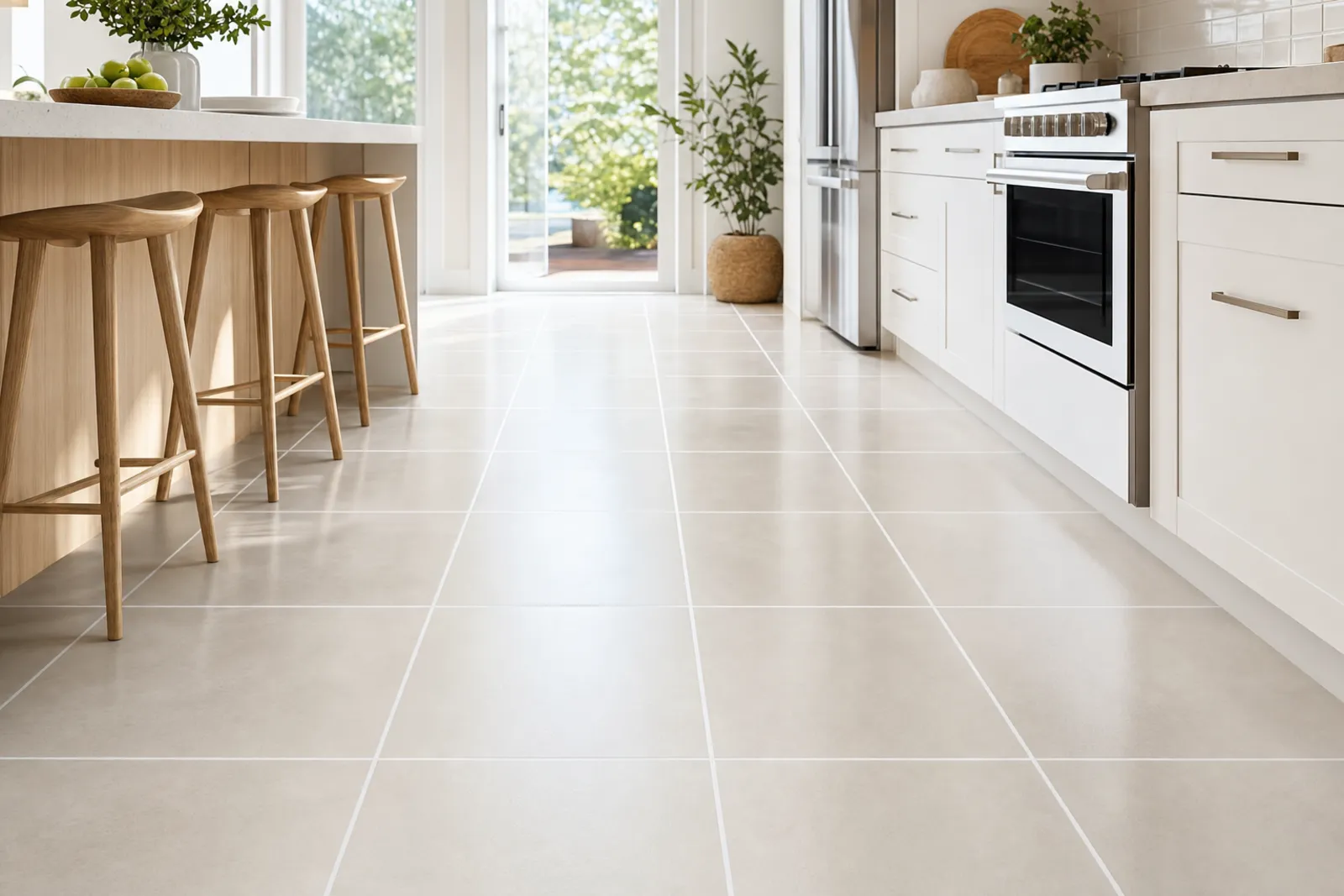
Color-sealing grout is one of the few tile services that actually changes how a floor looks for years, not days. Done right it can make a tired bathroom or kitchen look re-grouted at a fraction of the cost. Done wrong, or sold to the wrong customer, it can lock in problems you’ll regret. Here’s the honest version from someone who has cleaned and inspected tens of thousands of floors since 1989.
What Color-Sealing Actually Is
Color-sealing (sometimes called grout staining or color-grouting) is a process where, after the grout is deep-cleaned, a pigmented epoxy or acrylic coating is applied to the grout lines only. Unlike a clear penetrating sealer that soaks into the grout, a color-seal sits on top and bonds to the surface, putting down a uniform, colored film that completely covers the old grout.
The result is grout that looks brand new and a single, consistent color across the entire floor. You can keep the original shade or change it entirely. A dingy off-white kitchen grout can become a clean bright white, or you can go the other direction and choose a charcoal or tan that hides dirt far better in a high-traffic area.
The key thing to understand is the difference between sealing and color-sealing. A penetrating sealer is invisible and protects porous grout from soaking up spills. A color-seal does that and changes the appearance. If you’re trying to decide which you need, our breakdown of whether you should seal grout at all is the right place to start before you commit to a colored coating.
Why Grout Discolors in the First Place
Grout is essentially cement. It’s porous, it’s lighter than the tile around it, and it sits lower than the tile, which means dirt, mop water, and foot traffic all collect right in those lines. Over the years that porosity acts like a sponge, pulling in grease in a kitchen, soap scum and body oils in a shower, and ground-in soil in an entryway.
That’s why grout almost always looks worse than the tile. Most of what you’re seeing isn’t permanent staining at all, it’s soil trapped below the surface that a mop simply pushes around. We cover the full picture in our article on why grout darkens over time, and it matters here because color-sealing only works after that embedded soil is professionally removed first.
The Real Pros of Color-Sealing
When color-sealing is the right call, the benefits are substantial and they hold up over time.
- Uniform appearance. Even the best deep-cleaning can’t fully even out grout that has aged at different rates around a room. A color-seal erases all of that and gives you one consistent line throughout.
- A built-in sealer. The colored coating is itself a barrier. It keeps spills, grease, and mop water from soaking into the grout, so cleanup becomes wiping a surface instead of scrubbing a sponge.
- Easier maintenance. Sealed grout doesn’t grab dirt the way raw cement does. Routine mopping keeps it looking good with far less effort.
- Color choice. You aren’t stuck with what the original installer picked. Going a shade darker on a busy floor is one of the smartest moves a homeowner can make for long-term appearance.
- Cost versus regrouting. Pulling out and replacing grout is messy, dusty, and expensive. Color-sealing delivers a similar visual result for far less, on floors where the grout is sound.
The Cons and Honest Limitations
No reputable inspector will tell you color-sealing is right for every floor. Here’s where it falls short.
First, it’s a coating, which means it can show wear. In very high-traffic lanes, a colored seal can eventually thin or scuff over years of foot traffic, more so than on a wall or a low-use floor. It’s a maintainable surface, not a permanent one.
Second, the prep is everything. A color-seal is only as good as the cleaning underneath it. If grout isn’t fully cleaned and dried first, you’re sealing dirt and moisture into the line, and the coating can peel or bubble. This is exactly why color-sealing is a professional job and not a weekend project from a hardware-store kit.
Third, it doesn’t fix structural problems. Cracked, crumbling, or missing grout needs to be repaired or replaced before any coating goes on. If your grout is actually failing rather than just dirty, color-sealing is the wrong tool, and you should read our comparison of cleaning versus regrouting to figure out which path your floor really needs.
Finally, it’s largely permanent. Once grout is color-sealed, going back is difficult. Choose your color deliberately, because you’ll live with it for a long time.
How Long Color-Sealing Lasts
This is the question we get most, and the honest answer is: it depends on traffic and care, but a properly applied color-seal commonly lasts somewhere in the range of ten to fifteen years, and often longer on floors that don’t take heavy daily abuse.
A few things drive the lifespan:
- Traffic. A guest bathroom can hold its color-seal for fifteen-plus years. A kitchen in front of the sink or a back-door entryway will wear faster.
- Cleaning habits. Harsh acidic or abrasive cleaners shorten the life of any coating. Neutral pH cleaners and a soft mop extend it dramatically.
- Quality of the application. A thin, rushed coat over poorly cleaned grout fails early. A correctly prepped, fully cured application is what gives you that decade-plus lifespan.
The good news is that color-seal is maintainable. When a high-wear lane eventually shows its age, those areas can be cleaned and re-coated without redoing the whole floor.
The Certified-Organic, Low-Moisture Difference
This is where our approach differs from a lot of tile-and-grout outfits, and it matters more than people expect for color-sealing specifically.
The prep step before any seal is a deep clean, and most companies reach for aggressive acidic strippers to do it fast. Those products are hard on grout, hard on natural stone, and hard on the air in your home. We use certified-organic, non-toxic, hypoallergenic products instead. They clean the grout thoroughly without dosing your kitchen or bathroom in harsh chemistry, which matters in a home with kids, pets, or anyone sensitive to fumes.
Our low-moisture method also means we’re not flooding the floor and trapping water under tile or in the grout line before sealing. Excess moisture is one of the most common reasons a color-seal fails to bond. Cleaning thoroughly while keeping moisture controlled gives the coating the clean, dry surface it needs to last. You can read more about our overall approach in our tile, grout, and stone cleaning guide.
Is Color-Sealing Right for Your Floor?
Here’s the simple decision framework we walk homeowners through.
- Is the grout structurally sound? No cracks, no crumbling, no missing sections. If yes, you’re a candidate. If no, repair first.
- Is it discolored or uneven even after cleaning? If a deep clean gets it back to even and you’re happy, you may only need a clear sealer. If it stays blotchy, color-sealing solves it.
- Do you want to change the color? Only a color-seal can do that. A clear sealer can’t.
- How much traffic does the area get? This tells us whether to recommend a darker, more forgiving shade.
For many Mercer County and Bucks County homeowners, the right first step is a professional inspection and a thorough cleaning, and only then a recommendation on sealing. Our tile and grout cleaning service always starts with that honest assessment rather than upselling a coating you don’t need.
What to Expect from a Professional Job
A proper color-seal is a multi-step process, not a quick spray. We deep-clean the grout with our organic, low-moisture method to remove every bit of embedded soil. We let it dry fully, because moisture is the enemy of adhesion. We do any minor repairs needed. Then the colored seal is applied carefully to the grout lines, excess is removed from the tile face, and the coating is allowed to cure.
Because we’re an IICRC Certified Master Restorer and Senior Carpet & Textile Inspector serving 23 towns including Princeton, Hamilton, Lawrenceville, Pennington, Newtown PA, and Yardley PA, we stand behind the work with a one-year written warranty and our 200% No-Risk Guarantee. Local homeowners can see our area-specific service on our Princeton tile and grout cleaning page.
If you’re weighing color-sealing for a kitchen, bathroom, or entryway, the smartest move is a free, no-pressure assessment so you know exactly what your grout needs before you spend a dollar. Call us at 609-586-5833 in NJ and we’ll give you a straight answer and a free quote.
Frequently asked questions
A clear sealer soaks into the grout and protects it invisibly, while color-sealing applies a pigmented coating on top that both protects the grout and changes its appearance to a uniform color of your choice.
A correctly applied color-seal commonly lasts 10 to 15 years, and often longer in low-traffic areas. High-traffic lanes like kitchen sinks and entryways may need spot re-coating sooner.
No. Color-sealing is a coating, not a repair. Damaged, cracked, or missing grout must be repaired or regrouted before any color-seal is applied.
It is largely permanent and difficult to reverse, so choose your color deliberately. The upside is that worn areas can be cleaned and re-coated over time without redoing the entire floor.
Yes. You can keep the original shade or switch entirely, such as going from dingy off-white to bright white or to a darker tan or charcoal that hides dirt better in busy areas.
Because the coating only bonds to a clean, dry surface. Our certified-organic, low-moisture method removes embedded soil without harsh chemicals or trapping water in the grout, which is a common reason a color-seal fails.