
Tile, Grout & Stone · 11 min read
The Complete Guide to Tile, Grout & Natural Stone Cleaning
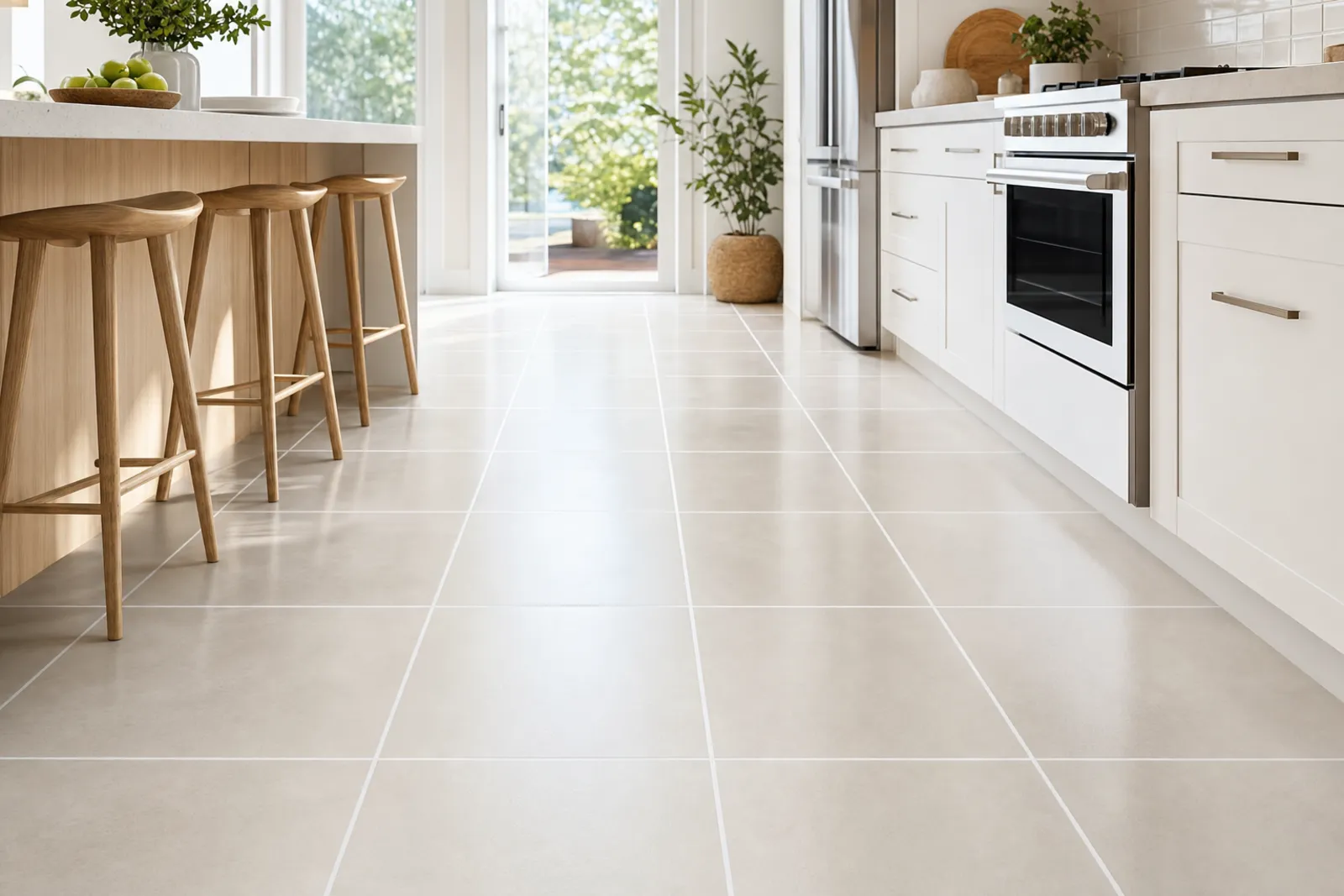
Tile and stone are sold as the “forever” flooring, but the grout lines and the stone itself quietly do most of the aging. Done right, a professional cleaning can pull years of grime out of grout and bring dull stone back to life without ever damaging the surface.
Why Tile, Grout, and Stone Are Three Different Cleaning Problems
People lump these together because they often live in the same room, but they behave nothing alike. Glazed ceramic and porcelain tile have a hard, glassy surface that resists almost everything you throw at it. Grout is the opposite: it is cement-based, full of microscopic pores, and it acts like a sponge for grease, mop water, foot traffic, and spills. Natural stone, on the other hand, is its own world entirely, and some of the cleaners that are perfectly safe on tile will permanently etch a marble countertop in seconds.
Understanding which of these three you are dealing with on any given surface is the whole game. A bathroom floor might be porcelain tile with sanded grout. A kitchen counter might be granite. A shower might mix glazed wall tile, a stone threshold, and a mosaic floor with twice the grout of a normal floor. Each one calls for a different chemistry and a different amount of moisture, and getting that wrong is how surfaces get ruined.
How to Identify What You Actually Have
Before any cleaning, you need to know your materials. Here is how a professional sorts it out on a walkthrough.
- Ceramic vs. porcelain tile: Porcelain is denser and absorbs almost no water; a chipped edge looks the same color all the way through. Ceramic often has a colored glaze over a reddish or tan clay body that shows at the chips.
- Natural stone: Marble, travertine, limestone, and onyx are calcium-based (calcareous) and react to acid. Granite, slate, and quartzite are silicate-based and far more acid-resistant. A drop of water that darkens the stone tells you it is porous and unsealed.
- Sanded vs. unsanded grout: Wider joints (over 1/8 inch) use sanded grout, which feels gritty. Tight joints use unsanded grout, which is smoother and is what you usually find on polished stone and glass tile.
- Epoxy grout: Less common in homes, but it is nearly waterproof and does not absorb stains the way cement grout does. If your grout has never darkened in years, it may be epoxy.
If you are not sure whether your countertop is marble or granite, a simple at-home test settles it: put a drop of plain white vinegar on a hidden spot. If it fizzes or leaves a dull mark within a minute, it is calcareous stone (marble, travertine, limestone) and must never see an acidic cleaner again. Wipe it off immediately.
Why Grout Darkens in the First Place
Grout does not “get dirty” the way a tile does. Because it is porous and usually sits slightly below the tile surface, it collects everything: cooking grease that travels through the air and settles, soap scum in showers, mop water that pushes dissolved dirt down into the joints, and plain foot traffic that grinds soil into the texture. Over time those particles bond to the cement and oxidize, and the grout shifts from its original light gray or beige to a permanent-looking brown or near-black.
Mopping makes it worse, not better. A string or sponge mop just relocates dirty water into the lowest point in the floor, which is the grout line. That is the single most common reason a floor that gets mopped twice a week still has filthy grout. We break down the full chemistry and the prevention side of this in our piece on what makes grout turn dark, which is worth reading if you have been fighting the same lines for years.
The Professional Cleaning Process, Step by Step
A real tile and grout cleaning is not a mop and a bottle of spray. The process matters more than the product, and here is how a proper job runs.
- Inspection and identification. We confirm the tile type, the grout type, the stone (if any), and check for cracked grout, loose tiles, or existing sealer. This determines the chemistry and the pressure.
- Pre-treatment. An appropriate cleaning solution is applied to the grout and given dwell time to break the bond between the soil and the cement. For natural stone, this means a pH-neutral or alkaline cleaner, never acid.
- Agitation. The grout lines are scrubbed by hand or with a turbo brush so the loosened soil actually lifts out of the pores rather than smearing.
- Extraction. This is the step that separates pros from rentals. High-pressure rinse heads flush the joints and immediately vacuum the dirty water back up, so nothing settles back into the grout. The surface is left clean and far drier than a mopped floor.
- Sealing (optional but recommended). Once grout is clean and dry, a penetrating sealer is applied to slow down future staining.
If you want a deeper look at the service and pricing for your home, our tile and grout cleaning service page lays out exactly what is included.
The Certified-Organic, Low-Moisture Approach
AllState Cleaning is a certified-organic cleaner, and that is not a marketing line, it changes how we approach tile and stone. The products we use are non-toxic and hypoallergenic, which matters most in the two rooms where tile lives: the kitchen, where you prepare food, and the bathroom, where the family is barefoot and the air is closed in. You do not want a residue of harsh solvent or a lingering chemical smell on the surfaces your kids and pets touch all day.
Being honest about it: organic cleaning is not a magic eraser, and anyone who promises that is selling something. What it does deliver is a thorough, deep clean that is safe for your household and your indoor air, paired with the same extraction power that pulls soil out of the grout. We also work low-moisture wherever possible. Less standing water means less of that dirty rinse water has any chance to wick back into grout or seep under stone, and it means floors are walkable again quickly instead of staying wet for hours.
Cleaning and Sealing Natural Stone
Natural stone is beautiful and unforgiving. The cardinal rule is no acid on calcareous stone: no vinegar, no lemon, no bathroom cleaners with citric or phosphoric acid, no generic “tile cleaner” off a shelf. Acid eats calcium, and on a polished marble surface that shows up as a dull, rough spot called an etch, which is physical damage, not a stain. Etching cannot be wiped off; it has to be polished out.
Stone also needs the right kind of attention based on its finish. Polished stone wants gentle, pH-neutral cleaners and soft cloths. Honed and tumbled stone, like a lot of travertine, is more forgiving on appearance but more porous, so it stains faster and benefits enormously from sealing. Slate and other textured stones trap grime in their natural clefts and need patient agitation rather than aggressive chemicals. The common thread across all of them is that stone is porous, and porous means it must be sealed and re-sealed on a schedule to stay protected.
To Seal or Not to Seal
Sealing is one of the most misunderstood parts of tile and stone care. A penetrating (impregnating) sealer soaks into the pores of grout or stone and creates a barrier that gives you time to wipe up a spill before it absorbs and stains. It does not make a surface bulletproof and it does not change the look of the surface, but it buys you crucial minutes and makes everyday cleaning far easier.
Most cement grout should be sealed after a deep clean, and most natural stone should be sealed on installation and refreshed every one to three years depending on use. The simplest test for whether your stone or grout needs sealing is the water-drop test: sprinkle a few drops of water and wait a few minutes. If the water beads or sits on top, your sealer is still working. If it soaks in and darkens the surface, it is time to re-seal. We cover the full decision in our guide on whether sealing grout is worth it, including where it helps most and where it does not.
Color Sealing: When Cleaning Alone Will Not Cut It
Sometimes grout is genuinely clean but still looks bad, because years of staining have permanently discolored the cement or because the original color was uneven from the day it was installed. In those cases, even a perfect deep clean leaves you with grout that looks blotchy. That is where color sealing comes in.
Color sealing applies a pigmented, sealing coating over clean grout that does two things at once: it restores a uniform, factory-fresh color of your choice, and it seals the grout against future staining in the same pass. Done well, it can make a tired floor look brand new and it is far cheaper and cleaner than tearing out and replacing grout. If your grout color is the problem rather than the dirt, read our explainer on how color sealing grout works to see if it fits your situation.
When to Clean and Seal vs. When to Regrout
Cleaning, sealing, and color sealing all assume the grout is structurally sound. If your grout is cracking, crumbling, missing in sections, or letting water through in a shower, no amount of cleaning fixes that, because the problem is the grout’s integrity, not its appearance. At that point you are looking at regrouting, where the old grout is cut out and replaced.
The honest dividing line is this: if the grout is intact but discolored, clean it (and color seal it if needed). If the grout is failing physically, especially in a wet area where water is getting behind the tile, you need to regrout before it causes a much more expensive problem behind the wall or under the floor. We lay out the full comparison in our breakdown of cleaning versus regrouting so you can tell which camp your floor or shower falls into.
Maintaining Tile, Grout, and Stone Between Deep Cleans
What you do day to day determines how long a professional cleaning lasts. A few habits make a real difference.
- Stop using string and sponge mops on grouted floors. Use a microfiber flat mop with minimal water, and change the water often so you are not painting dirt back into the joints.
- Wipe spills on stone immediately, especially anything acidic like wine, juice, coffee, or tomato sauce. On marble, time is the enemy.
- Use only pH-neutral, stone-safe cleaners on natural stone. Skip the all-purpose sprays and the “scrubbing” cleaners with grit or acid.
- Keep grout sealed. A maintained sealer is the cheapest insurance against staining you can buy.
- Use mats and felt pads. Walk-off mats at entries cut the grit that grinds into grout, and felt under furniture protects polished stone from scratches.
None of this replaces a periodic deep clean, but it stretches the interval between them and keeps your floors looking their best in the meantime.
Why Local Experience Matters in Mercer and Bucks County
Homes around Princeton, Hamilton, Lawrenceville, Pennington, and across the river in Newtown and Yardley have their own mix of materials. You see a lot of older travertine and marble in established homes, builder-grade porcelain in newer construction, and slate entryways that take a beating from our wet winters and salted walkways. Salt and grit tracked in from January roads are murder on grout and unsealed stone, and our humid summers feed mildew in showers. A cleaner who works in this area every week knows what to expect under your feet.
That local familiarity is why folks searching for tile and grout cleaning in Princeton, NJ and the surrounding towns tend to get a better result from someone who has cleaned the same materials in the same conditions thousands of times. We have completed more than 60,000 jobs across Mercer County, NJ and Bucks County, PA since 1989, and we have seen just about every tile, grout, and stone problem these homes can throw at us.
What to Expect From a Professional Job
A proper tile, grout, and stone cleaning should leave your grout visibly lighter and even in tone, your tile streak-free, and your stone clean without a single etch or dull spot. As an IICRC Certified Master Restorer and Senior Carpet and Textile Inspector, the standard we hold is simple: the surface should look measurably better and be completely undamaged, and you should be told honestly when cleaning is the answer and when sealing, color sealing, or regrouting is the smarter move. Our work is backed by a one-year written warranty and our 200% No-Risk Guarantee, because if you are not happy, it is free.
If your grout has gone dark, your shower looks tired, or your stone has lost its shine, we are happy to take a look and give you a straight answer at no cost. Call us at 609-586-5833 for a free quote, and we will tell you exactly what your floors and surfaces need, and what they do not.
Frequently asked questions
For most homes, every 12 to 18 months keeps grout from building up permanent staining. High-traffic kitchens, busy bathrooms, and homes with kids or pets may benefit from a yearly cleaning.
You can on ceramic or porcelain tile, but never on natural stone, since vinegar is acidic and will etch marble, travertine, and limestone. Even on tile, home methods rarely extract the deep soil that professional rinse-and-vacuum equipment removes.
Yes. We use certified-organic, non-toxic, hypoallergenic products and a low-moisture process, which is especially important in kitchens and bathrooms where families spend time barefoot and prepare food.
Cleaning removes dirt and usually lightens grout significantly, but if the cement is permanently stained or was uneven to begin with, color sealing is the way to restore a uniform, like-new color.
Sealing does not make surfaces bulletproof, but it gives you time to wipe up spills before they stain and makes everyday cleaning easier. Cement grout and porous natural stone both benefit, and most stone should be re-sealed every one to three years.
We serve Mercer County, NJ and Bucks County, PA, including Princeton, Hamilton, Lawrenceville, Pennington, Robbinsville, Newtown PA, and Yardley PA. Call 609-586-5833 in NJ or 215-897-9511 in PA.