Wood Floors · 7 min read
The Safe Way to Clean Hardwood (and the Products That Wreck It)
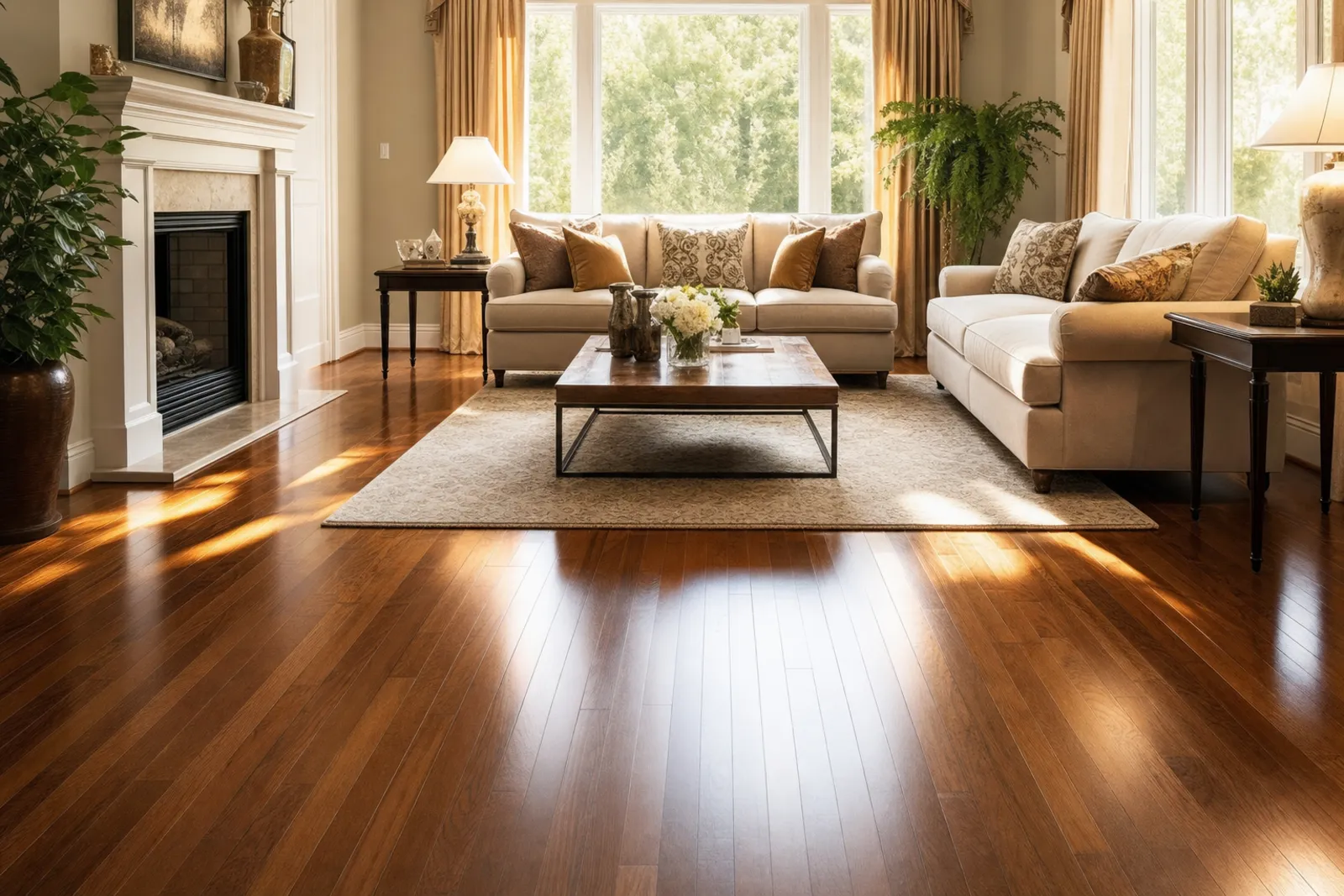
Hardwood is one of the few floors in your house that gets more valuable with age — if you treat it right. The fastest way to ruin it isn’t neglect; it’s the wrong cleaner, used faithfully, week after week.
Wood and water are not friends
Every problem with cleaning hardwood comes back to one fact: wood is a sponge that someone sealed shut. The finish on top — polyurethane, aluminum oxide, a penetrating oil — is the only thing standing between your boards and the moisture that makes them swell, cup, and gap. When you clean, you are really cleaning that finish, not the wood. Get that idea straight and most of the bad advice out there falls apart on its own.
This is why a sopping mop is the single most common cause of damage we see in Mercer and Bucks County homes. Water finds the seams between boards, slips under the finish at worn spots, and soaks into the raw wood underneath. The board absorbs, expands, and pushes against its neighbors. Do that often enough and you get cupping (edges higher than the center) or, near doorways and kitchens, finish that turns cloudy and white. None of it wipes off, because the damage is under the surface.
The products that quietly wreck wood floors
Most floor damage we’re called to assess wasn’t caused by accidents. It was caused by a homeowner cleaning regularly with the wrong thing. Here are the worst repeat offenders:
- Vinegar and water. The internet’s favorite “natural” cleaner is mildly acidic, and over time that acid etches and dulls a polyurethane finish. It looks fine the first few times, then the floor goes flat and hazy and people assume the wood is “worn out.” It isn’t — the finish is etched.
- Oil soaps and “wood-feeding” cleaners. Murphy-style oil soaps leave a residue that builds film, traps dirt, and — critically — contaminates the surface so that any future recoat won’t bond. We’ve turned down refinishing jobs that would have failed because of years of oil soap.
- Steam mops. Forcing hot vapor into wood is exactly the moisture-plus-heat combination that lifts finish and swells boards. Manufacturers void warranties over this for a reason.
- All-purpose sprays, dish soap, and ammonia. These are built to cut grease on countertops. On wood they leave streaky residue and, in ammonia’s case, attack the finish itself.
- Wax and “rejuvenator” liquids on a urethane floor. Wax belongs on old-style waxed floors only. On a modern urethane finish it builds a slippery, smeary layer that, again, blocks any future recoat.
The pattern is consistent: the products that cause the most harm are the ones marketed as gentle and natural. “Natural” and “safe for wood finish” are not the same sentence.
What actually cleans hardwood safely
The safe approach is boring on purpose. Use a cleaner made specifically for hardwood floor finishes, pH-neutral, applied with the least moisture you can get away with. That’s it. The boring part is what protects the floor.
Our day-to-day routine, and the one we teach clients, looks like this:
- Dry first, always. Dust-mop or vacuum (hard-floor setting, no beater bar) before any liquid touches the floor. Grit is sandpaper underfoot; dragging it around with a wet mop scratches the finish every single time.
- Mist, don’t flood. Spray a pH-neutral hardwood cleaner lightly onto a microfiber pad — not onto the floor — and clean in the direction of the boards.
- Damp, not wet. The mop should feel barely moist to the back of your hand. If you can see liquid sitting on the surface, you’ve used far too much.
- Dry it down. Anything that doesn’t evaporate in a minute or two should be wiped with a dry cloth, especially in seams and at board ends.
If you only change one habit, make it the moisture. A barely-damp microfiber pad cleans wood as well as a wet mop and does none of the harm. For the full step-by-step on routine care, our guide to cleaning wood floors at home walks through frequency and tools in more detail.
The low-moisture, certified-organic angle — honestly
We’re an IICRC-certified shop that cleans with certified-organic, non-toxic, hypoallergenic products, and we work low-moisture by design. On wood, low-moisture isn’t a marketing line — it’s simply the correct method, because moisture is the enemy. The “organic” part matters for a different reason: hardwood lives in the rooms where people actually spend time, so you’re breathing whatever you put on the floor for hours afterward. A non-toxic, hypoallergenic cleaner means no harsh fumes lingering in the living room, which matters in homes with kids, pets, or anyone with allergies or asthma.
Let’s be straight about what professional cleaning does and doesn’t do. A deep clean removes the embedded grime and residue a mop can’t reach, and a proper polish or finish refresh restores the protective layer and the shine. What cleaning cannot do is fix damage that’s already in the wood — deep scratches into bare wood, water staining, or cupping. Those need refinishing or, in many cases, a no-sand recoat. Anyone who tells you a mop can undo real wear isn’t being honest with you.
Why your floor looks dull even though it’s clean
This is the most common call we get: “I clean it constantly and it still looks tired.” Nine times out of ten the floor isn’t dirty — it’s coated. Years of the wrong cleaner have left a haze of residue or etched the finish flat. Vinegar etching looks like permanent fog. Oil-soap buildup looks like a greasy film that smears when you breathe on the glass. Neither responds to more cleaning, because more cleaning is what caused it.
The fix is to strip the residue, deep-clean back to the actual finish, and then re-establish the protective coat. We dig into the specific causes in our piece on why wood floors lose their shine, but the short version is: if cleaning isn’t bringing back the gloss, stop cleaning harder and figure out what’s sitting on top of the finish.
Solid hardwood vs. engineered — does it change how you clean?
Day to day, no — both want the same dry-first, low-moisture, pH-neutral routine, because you’re cleaning the finish on top, and the finish behaves the same way. The difference shows up in repair, not cleaning. Solid hardwood can be sanded and refinished many times over its life. Engineered wood has a thin real-wood veneer over a plywood core, so it can usually only be refinished once or twice — sometimes not at all — before you sand through the veneer. That means on engineered floors, protecting the finish with gentle cleaning matters even more, because you have far less wood to fall back on. We break down the practical differences in our look at caring for solid versus engineered floors.
When to clean yourself and when to call a pro
Routine upkeep is genuinely a homeowner job. Dry-dust a couple of times a week, damp-clean with a proper hardwood cleaner every week or two, wipe spills immediately, and put felt pads under furniture. Done consistently, that handles 90% of what a floor needs.
Call a professional when you hit the things upkeep can’t touch: a film or haze that won’t clean off, floors that have lost their luster across the board, a build-up from years of oil soap or wax, or a floor you want restored without the dust and downtime of a full sanding. For surface-level wear, a recoat that skips the sanding can bring a tired floor back in a day, at a fraction of the cost and mess. And when it’s time for a deep clean and polish, that’s exactly the kind of professional wood floor cleaning and polishing we’ve been doing across the area since 1989.
A note for local homeowners
The towns we serve — Princeton, Hamilton, Lawrenceville, Pennington, Robbinsville, and across into Newtown and Yardley, PA — have a lot of older homes with original hardwood worth protecting, and plenty of newer builds with engineered floors that need a gentler hand. Either way, the rules are the same: less water, the right cleaner, dry first. If you’re local and want a professional set of eyes on your floors, our wood floor cleaning service in Princeton, NJ covers the surrounding area too, and every job is backed by our written one-year warranty.
If your floors look dull, feel filmy, or you just want them cleaned without risking the finish, we’re happy to take a look. Call AllState Cleaning at 609-586-5833 for a free, no-pressure quote — and remember, you must be happy or it’s free.
Frequently asked questions
No. Vinegar is acidic and slowly etches and dulls a polyurethane finish, leaving a permanent haze that looks like wear. Use a pH-neutral cleaner made for hardwood instead.
No. Steam forces heat and moisture into the wood and finish, which can lift the finish and swell the boards. Most flooring manufacturers void warranties for steam-mop use.
It's almost always residue or etching sitting on top of the finish from years of the wrong cleaner, not dirt. The fix is to strip the buildup and re-establish the protective coat, not to clean more often.
Yes. Oil soaps leave a film that traps dirt and contaminates the surface so future recoats won't bond. We've seen oil-soap buildup ruin floors that were otherwise fine.
Day to day, no — both want a dry-first, low-moisture, pH-neutral routine. The difference is in repair: engineered floors have a thin veneer and can only be refinished once or twice, so gentle cleaning matters even more.
As little as possible — the mop or pad should feel barely damp, never wet. If liquid is sitting on the surface, it's too much, and any leftover moisture should be wiped dry.