
Wood Floors · 6 min read
How Often Should Wood Floors Be Professionally Cleaned?
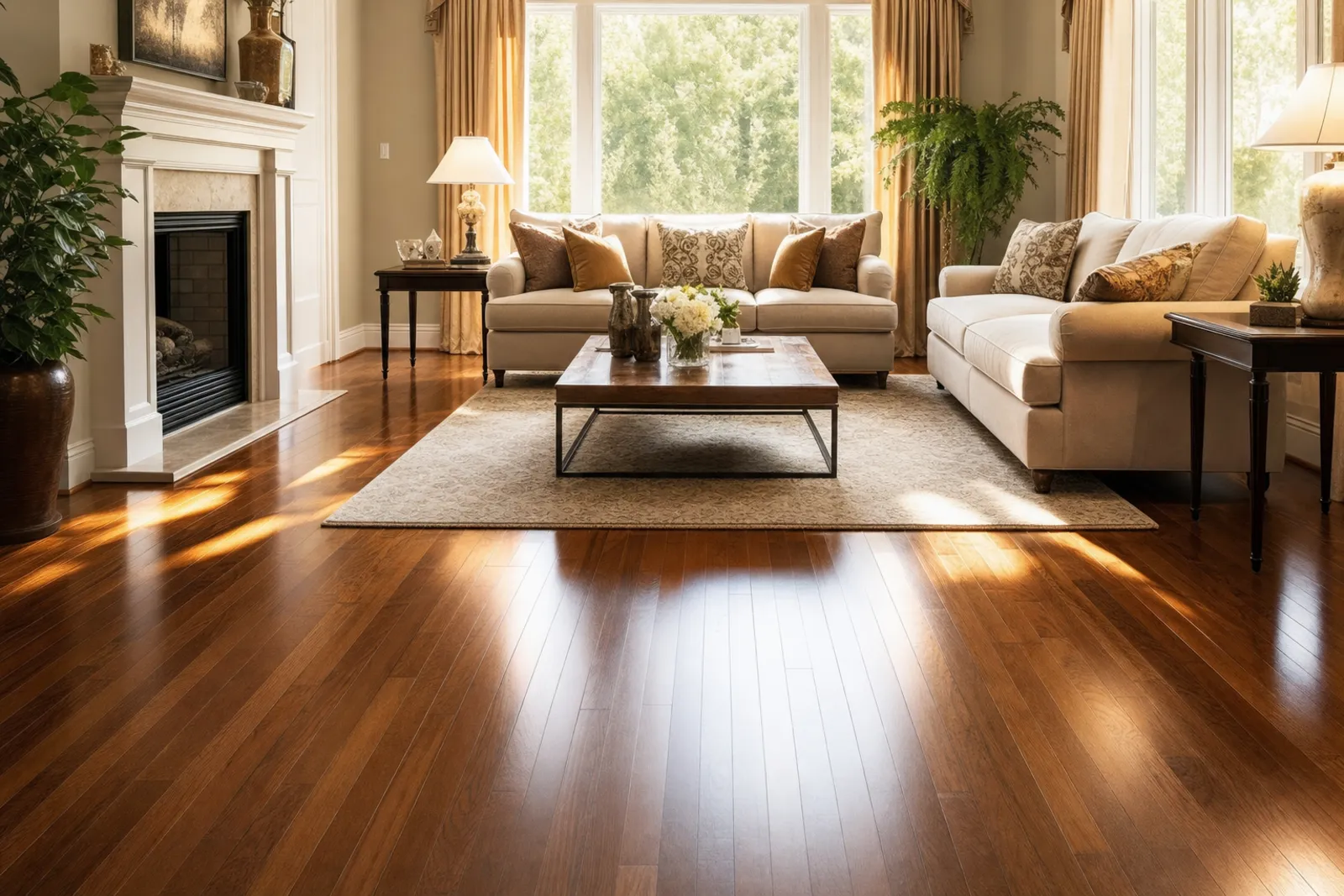
Wood floors do not advertise when they need a deep cleaning. By the time they look dull or feel gritty underfoot, the abrasive wear that shortens a finish’s life is already happening. The honest answer to how often you should bring in a professional is: it depends on your traffic, your finish, and how well you handle the day-to-day care in between.
The Short Answer: Every 12 to 18 Months for Most Homes
For a typical Mercer County or Bucks County household, a professional wood floor cleaning every 12 to 18 months keeps the finish protected and the floor looking the way it should. That cadence covers the average mix of foot traffic, a couple of pets, and the seasonal grit that gets tracked in from gravel driveways and salted winter sidewalks.
That range is a starting point, not a rule. A retired couple with no pets and a no-shoes habit can comfortably stretch to two years. A family of five with a dog, a back door to the yard, and an open-plan kitchen often needs attention every 9 to 12 months. The floor itself will tell you which camp you are in long before the calendar does.
What Actually Drives the Schedule
A blanket recommendation ignores the four things that genuinely change how fast a wood floor degrades. Walk through these honestly and you will land on the right interval for your home.
- Traffic patterns. Entryways, hallways, and the path between the kitchen and the family room wear two to three times faster than a formal dining room. Many homes only need spot attention to high-traffic lanes between full cleanings.
- Grit load. Sand and fine grit act like sandpaper under every footstep. Homes near unpaved areas, with kids, or with frequent in-and-out traffic accumulate it fast.
- Pets. Claws, accidents, and the dirt a dog carries in on its paws all add up. Pet households almost always need a tighter schedule.
- Finish type. A modern aluminum-oxide factory finish is far more durable than an older site-applied polyurethane or a penetrating oil finish, and that changes both how often and how a floor should be cleaned.
How to Read the Signs Your Floor Gives You
You do not need a moisture meter to know when a floor is overdue. The clues are visible and tactile once you know what to look for.
Run your hand across the boards in a walkway. If it feels rough or you can hear a faint grittiness when you walk in socks, abrasive soil is sitting in the grain. Look at the floor with a low light raking across it in the morning or evening; a hazy, cloudy film that does not wipe away with your normal cleaner is residue and ground-in soil building on the surface. If the high-traffic lanes have visibly lost their sheen while the edges of the room still shine, the finish in those lanes is wearing thin. We go deeper into the causes of that flat, lifeless look in our breakdown of why wood floors lose their shine over time, because dullness is often a cleaning problem before it is a refinishing problem.
Why Residue Buildup Is the Hidden Culprit
The most common thing we find on dull, sticky-feeling wood floors is not damage. It is residue from the wrong products. Mop-and-shine sprays, oil soaps, and vinegar-and-water mixes leave a film that attracts dirt and clouds the finish. Each application adds another layer, and the floor looks worse the more you “clean” it.
This is where the professional wood floor cleaning and polishing approach matters. A proper deep clean lifts that accumulated residue and embedded grit without flooding the boards. As a certified-organic, low-moisture cleaner, we use non-toxic, hypoallergenic solutions and controlled moisture so water never sits in the seams where it can swell the wood or creep under the finish. Floors are dry and back in use in about an hour, not the next day. That low-moisture method is not a marketing line; on wood, excess water is one of the few things that causes real, expensive damage, so keeping it controlled is the entire point.
Engineered, Solid, and Older Finishes Are Not the Same
How often a floor should be professionally cleaned is tied to what kind of floor you have. Solid hardwood with a tough factory finish tolerates a longer interval. Engineered wood, which has a thinner real-wood wear layer over a plywood core, is far less forgiving of standing water and needs the low-moisture treatment more than almost anything else. If you are not sure which you have, our guide to cleaning hardwood versus engineered wood walks through how to tell and what changes about the care.
Older floors with a worn site-finished polyurethane, or a penetrating oil or wax finish, are a different conversation again. These respond well to professional cleaning and, in many cases, can be brought back without the disruption and dust of a full sand-and-refinish. If your floors are tired but the boards are sound, it is worth understanding how to restore hardwood floors without sanding before you assume refinishing is the only option.
What You Should Do Between Professional Visits
Good daily care is what lets you stretch the interval between deep cleanings, and it is the single biggest factor you actually control. The routine is simple and it is the same one we have given homeowners for decades.
- Dust-mop or vacuum often. Two to three times a week in busy areas. Removing grit before it gets ground in does more for your floor than any product. Use a vacuum with the beater bar off or a hard-floor setting.
- Put down mats and a no-shoes habit. A good mat at every entry traps the bulk of the grit and salt at the door. This alone can add months to your cleaning cycle.
- Wipe spills right away. Standing liquid is the enemy of wood. Blot, do not let it sit.
- Skip the shine sprays and oil soaps. Use a cleaner made for your finish, used sparingly on a barely damp microfiber. If you have already built up residue, a professional clean resets the floor so your maintenance actually works.
For the full day-to-day routine, our complete wood floor cleaning guide covers products, techniques, and the mistakes that quietly damage floors over time.
When to Move Up Your Schedule
A few situations justify cleaning sooner regardless of the calendar. After a home renovation, fine construction dust settles into everything and grinds at the finish. After a party or the holidays, when traffic and spills spike. After bringing home a new pet. And any time you are putting a house on the market in towns like Princeton, Hamilton, or Pennington, since clean, well-kept wood floors are one of the first things buyers notice. We handle a steady volume of pre-listing work and routine maintenance for homeowners across the area, including dedicated wood floor cleaning in Princeton, NJ.
Not sure where your floors stand? We are happy to take a look and give you a straight answer. Call 609-586-5833 for a free, no-pressure quote, and we will tell you whether your floors need professional attention now or are fine to wait. Either way, you get an honest assessment from a team that has been caring for wood floors since 1989.
Frequently asked questions
For most homes, every 12 to 18 months keeps the finish protected and the floor looking its best. Busy households with kids and pets may need it every 9 to 12 months, while low-traffic homes can sometimes stretch to two years.
Routine dust-mopping and light cleaning should be done yourself, often. But professional cleaning removes embedded grit and product residue that home methods leave behind, and it does so with controlled moisture so the wood is never flooded.
Almost always it is residue from shine sprays, oil soaps, or vinegar mixes building a film that clouds the finish and traps dirt. A professional deep clean resets the floor so it looks clear again and your normal maintenance works.
Yes, when low-moisture methods are used. Engineered wood has a thin real-wood wear layer that does not tolerate standing water, which is exactly why our certified-organic, low-moisture approach suits it well.
With our low-moisture process, floors are typically dry and ready to walk on in about an hour, not the next day.
Yes. We use certified-organic, non-toxic, hypoallergenic products, so floors are safe for children and pets as soon as they are dry.