
Tile, Grout & Stone · 5 min read
Why High-Pressure Tile Cleaning Can Do Damage
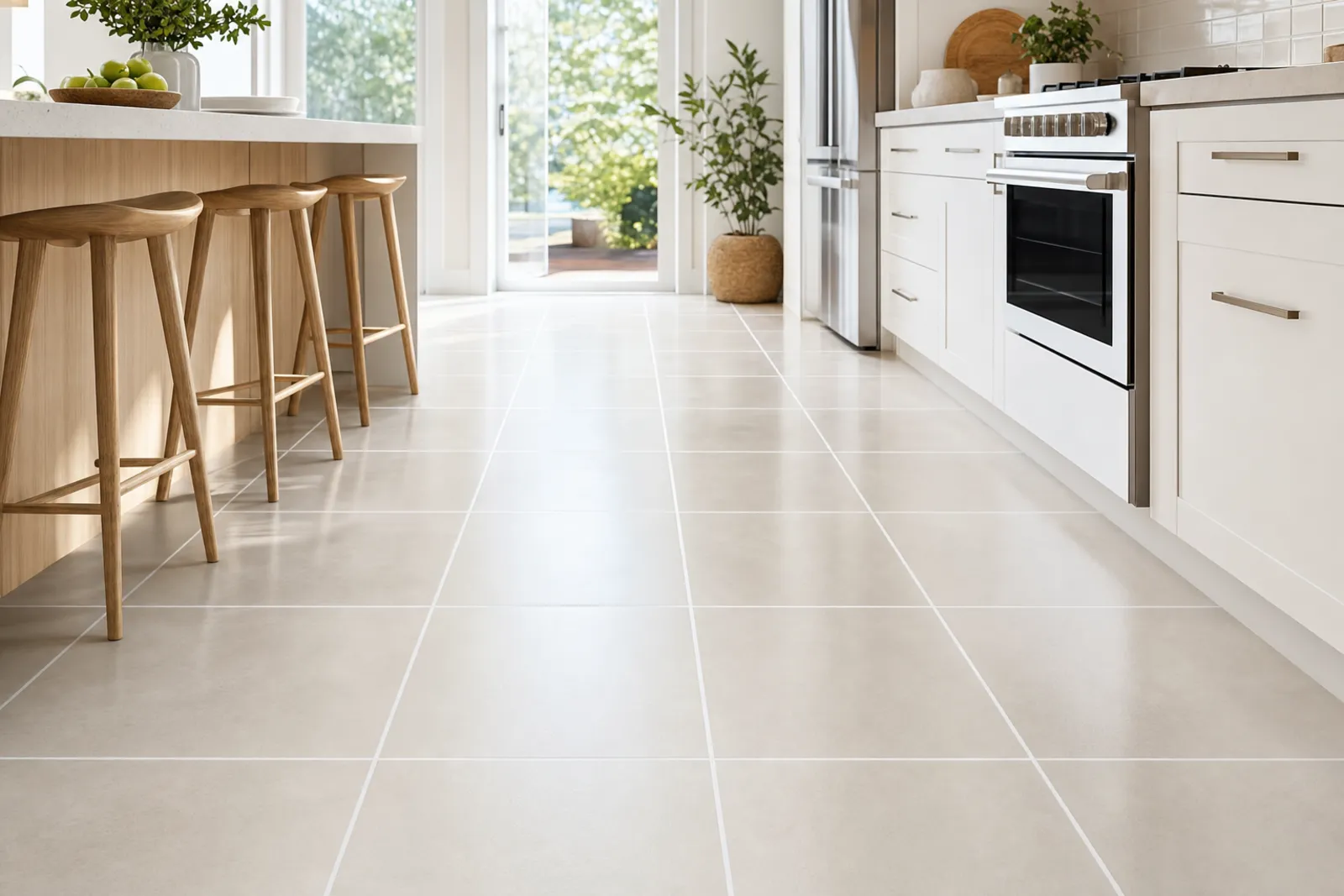
High-pressure washing looks impressive on tile and grout, but the same force that blasts away dirt can quietly wreck the floor you’re trying to save. After more than three decades cleaning floors across Mercer and Bucks County, I’ve seen too many homeowners pay to fix damage that pressure cleaning caused.
What “High-Pressure” Actually Means on a Tile Floor
When people say high-pressure tile cleaning, they usually mean a spinning turbo head fed by a pressure washer or a truck-mounted unit pushing 1,000 to 3,000 PSI against the surface. The pitch is simple: more pressure equals a cleaner floor. On a stone patio or a commercial loading dock, that logic mostly holds. Inside a home, on glazed ceramic, porcelain, natural stone, and the soft cement-based grout between them, it’s a different story.
The problem isn’t dirt removal. High pressure absolutely removes dirt. The problem is that grout and many stone surfaces are softer and more porous than the contaminants sitting on them, so the water stream erodes the floor along with the grime. You get a clean floor today and a damaged one within a year.
How Pressure Erodes Grout
Grout is essentially a thin, sandy mortar. Cement-based grout cures hard on the surface but stays comparatively soft underneath, and the joints are narrow channels where water concentrates. Aim a turbo nozzle at a grout line and you’re sandblasting it. The top layer pits, the sand washes out, and the joint loses depth.
Once grout is eroded, three things follow:
- It absorbs dirt faster. A roughened, pitted surface has far more area for soil and grease to grab onto, so the floor looks dirty again sooner. This is one of the real reasons grout keeps darkening after an aggressive cleaning.
- It cracks and crumbles. Eroded joints can no longer flex with the tile and the subfloor, so hairline cracks open up and corners chip out.
- It lets water reach the substrate. Grout is part of the floor’s moisture barrier. Blow it out and water can travel under the tile to the mortar bed and subfloor.
The Damage You Don’t See Right Away
The worst pressure-washing damage is the kind that doesn’t show up the day the truck pulls away. When high pressure drives water past the grout and under the tile, that water has nowhere to go quickly. On a slab it sits in the mortar bed; on a wood subfloor it soaks in.
Over the following weeks you may see tiles loosen or “tent,” efflorescence (a white, chalky mineral bloom) push up through the grout, or a musty smell take hold in a bathroom or kitchen. In Mercer and Bucks County homes with finished basements and older subfloors, I’ve traced more than one mold problem back to a well-meaning pressure cleaning that flooded the assembly. The cleaning was free; the repair was not.
Natural Stone Is Even More Vulnerable
If your floor is marble, travertine, limestone, or slate, high pressure is a genuine risk to the stone itself, not just the grout. Travertine and limestone are full of natural voids and softer mineral veins. A pressure stream opens those voids, etches the polished surface, and strips any sealer or color enhancer that was protecting the stone.
Polished marble can lose its finish entirely under pressure and aggressive chemistry, leaving a dull, rough patch that has to be re-honed and re-polished by hand. That’s expensive restoration work to undo what was sold as a cleaning. If you want the honest version of how each material should be handled, our guide to cleaning tile, grout, and stone walks through it surface by surface.
Why Heat, Dwell Time, and Controlled Extraction Beat Brute Force
A clean floor doesn’t come from pressure. It comes from the right cleaning agent, given time to break the bond between soil and surface, then lifted away with controlled heat and vacuum extraction. That’s the approach we’ve refined over 60,000-plus jobs since 1989.
Our process uses certified-organic, non-toxic, hypoallergenic cleaning solutions that loosen grease and embedded soil chemically rather than by force. We let the product dwell, agitate the grout lines with appropriately firm brushes, and then extract with heat and a contained vacuum head. It’s a low-moisture method, which is exactly why it doesn’t flood the substrate the way an open pressure stream does. Because there’s no standing water driven into the floor, the assembly stays sound and the area is usable quickly.
This matters for families especially. There are no harsh fumes, no caustic runoff pooling along your baseboards, and nothing that needs to off-gas before kids and pets walk on it. Honest tile and grout cleaning should leave the floor cleaner and the floor’s structure untouched.
Protecting Grout After It’s Properly Cleaned
The longest-lasting results come from cleaning correctly and then sealing, never from scrubbing harder next time. Once grout is clean and fully dry, a penetrating sealer fills the pores so dirt and spills sit on top instead of soaking in. If you’re weighing whether it’s worth it, our take on sealing grout lays out when it pays off and when it doesn’t.
For grout that’s already stained, eroded, or mismatched from years of mop water and past cleanings, color sealing is often the better fix than another round of cleaning. It bonds a uniform, protective coat of color over the grout, restoring an even look and adding a barrier in one step. Homeowners around Princeton, Hamilton, and Lawrenceville frequently choose this once they understand that aggressive cleaning was the thing wearing their grout out in the first place. If you’re local, here’s how we handle tile and grout cleaning in Princeton, NJ.
If your tile floors look tired, get a professional look before anyone aims a pressure washer at them. We’ll tell you honestly what your floor needs and back the work with our written guarantee. Call 609-586-5833 for a free quote, and let’s clean it the way it’ll last.
Frequently asked questions
Yes. Grout is a soft, sandy cement that a pressure stream pits and erodes like sandblasting, washing out the joint and shortening its life. Once eroded, grout cracks, crumbles, and traps dirt faster.
The glazed tile face usually survives, but the grout between the tiles does not. The bigger risk is water being forced under the tile, which can loosen tiles and reach the subfloor.
Absolutely. Marble, travertine, and limestone are soft and porous, so pressure can etch the surface, open natural voids, and strip sealers, often requiring expensive re-honing and re-polishing to fix.
Aggressive cleaning roughens and pits the grout, creating more surface area for soil and grease to grab onto. The damaged grout then darkens and re-soils much faster than smooth, sealed grout.
A low-moisture method that uses certified-organic cleaning solutions, dwell time to break the soil bond, agitation, and controlled heat with vacuum extraction. It cleans deeply without flooding or eroding the floor.
Yes. Sealing or color sealing clean, dry grout fills the pores so dirt sits on top instead of soaking in, which protects the floor far longer than repeatedly scrubbing it harder.