
Wood Floors · 5 min read
Screen-and-Recoat Explained
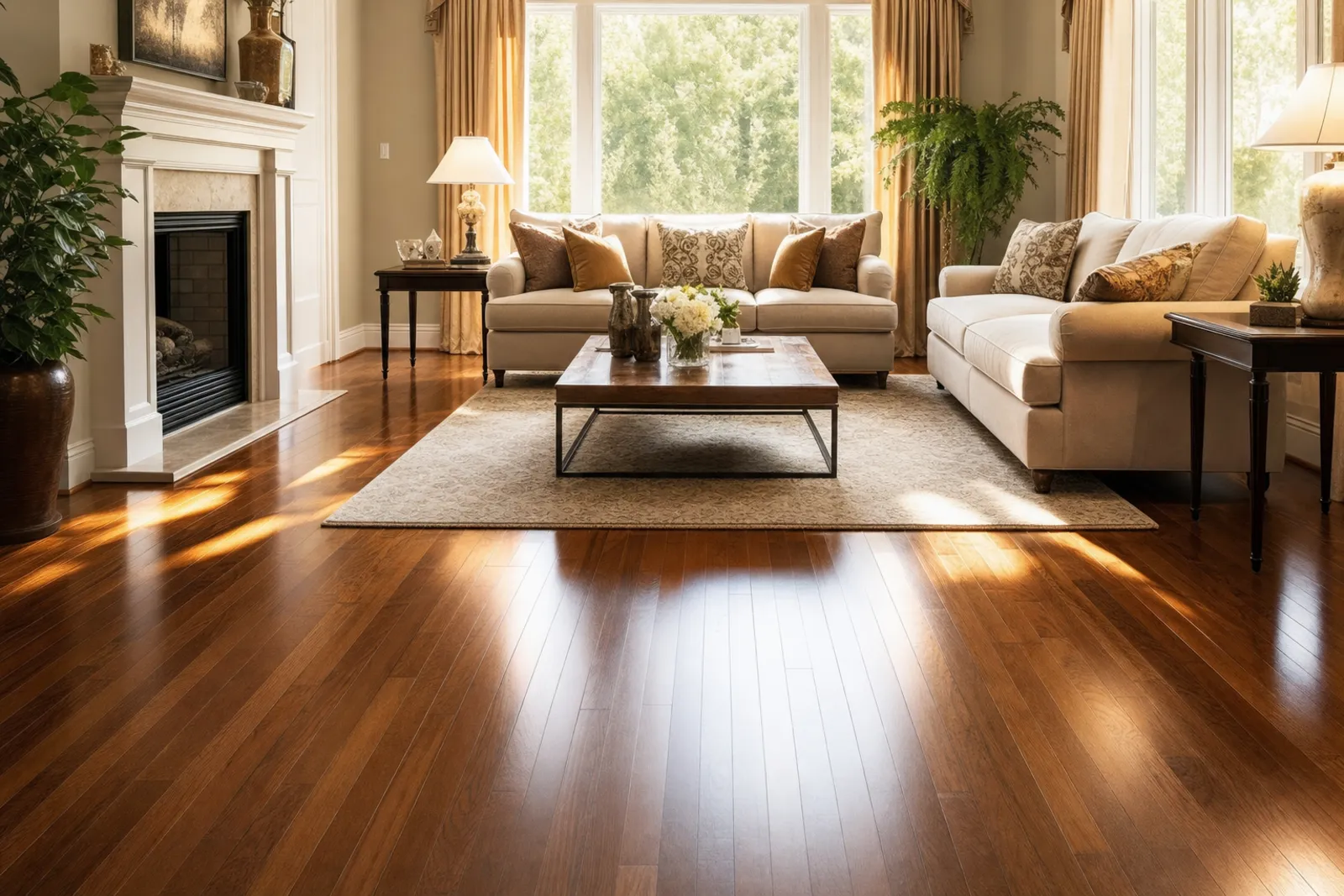
If your hardwood floors look tired but the wood underneath is still sound, you may not need a full sanding. A screen-and-recoat often gets you a fresh finish in a single day, for a fraction of the cost and mess.
What a Screen-and-Recoat Actually Is
A screen-and-recoat (sometimes called a “buff and coat” or “screen and poly”) is a way to refresh the protective finish on a hardwood floor without removing any wood. A technician runs a floor buffer fitted with an abrasive screen across the surface. That screen lightly scuffs the existing polyurethane just enough to give the next coat something to grab onto. After the dust is cleaned up, a fresh coat of finish goes down over the whole floor.
The key word is finish. You are renewing the clear topcoat that protects the wood, not touching the wood itself. That is what makes it fast, affordable, and far less disruptive than a true refinishing job. Most rooms can be screened, recoated, and walkable again within a day, with the floor fully cured over the following week.
How It Differs From Full Sanding
Full refinishing means sanding the floor down to bare wood with a drum sander, removing the old finish, stain, scratches, and a thin layer of the wood itself. It is the only fix for deep damage, but it is loud, dusty, expensive, and takes several days. It also can only be done so many times before the boards get too thin.
A screen-and-recoat removes nothing but a microscopic scuff of the old topcoat. Think of the difference this way:
- Sanding: resets the floor to bare wood, fixes deep gouges and gray staining, changes the stain color, costs the most.
- Screen-and-recoat: renews surface protection and sheen, hides light wear, keeps the existing color, costs far less and finishes in a day.
If you are weighing the two approaches in detail, our guide on how to restore hardwood floors without sanding walks through exactly when each one makes sense.
When a Recoat Is the Right Call
A screen-and-recoat works beautifully when the finish is worn but the wood is healthy. Good candidates include floors that look dull or hazy, have light surface scratches you can feel only with a fingernail, or show traffic-path wear in hallways and in front of couches. If the finish has simply lost its luster over the years, a recoat brings it right back.
There is a timing angle worth knowing: the best time to recoat is before the topcoat wears through to bare wood. Once foot traffic grinds through the finish and starts graying or staining the actual wood, a recoat can no longer fix it and you are looking at a full sanding. Catching it early is what keeps a floor on a recoat cycle for decades instead of a sanding cycle.
If you are not sure whether dullness means worn finish or something deeper, our breakdown of why wood floors look dull helps you tell the difference before you spend a dime.
When a Recoat Will Not Work
Honesty matters here, because a recoat applied over the wrong floor will fail. It is not the answer if:
- The finish has worn through to bare or gray wood in any spot.
- There are deep gouges, dents, or water damage that reach the wood.
- The floor was previously cleaned or polished with a wax, oil soap, or acrylic “rejuvenator” product, which can stop new finish from bonding.
- You want to change the stain color, which only sanding can do.
- The existing finish is already peeling or flaking.
That third point trips up a lot of homeowners. Years of mop-on shine products leave a residue that new polyurethane will not stick to, causing the fresh coat to peel. A reputable technician will test a small area for adhesion first. This is also one more reason it pays to know what you are putting on your floors day to day, which is why we recommend reading our wood floor cleaning guide so the floor stays recoat-ready.
The Process, Step by Step
A professional screen-and-recoat follows a consistent sequence:
- Clear and clean. The room is emptied and the floor is thoroughly cleaned to lift every trace of dirt, oils, and residue. Any contamination left behind ends up sealed under the new coat.
- Adhesion test. A small patch is screened and coated to confirm the new finish will bond.
- Screening. A buffer with a fine abrasive screen abrades the entire surface uniformly, plus hand-work along edges and corners.
- Tack and vacuum. Every bit of screening dust is vacuumed and tacked away, because dust nibs ruin a smooth coat.
- Recoat. A fresh coat of finish is applied evenly across the floor.
- Cure. The floor is walkable in hours, but furniture and rugs wait several days while the finish hardens fully.
The whole job is typically a single day for an average home. Compare that with the multi-day, dust-everywhere reality of full sanding, and you can see why a recoat is the smart maintenance move for floors caught in time.
Where the Low-Moisture, Organic Approach Fits
At AllState Cleaning, our roots are in certified-organic, non-toxic, low-moisture textile and floor care, and that philosophy carries straight into how we prep a floor for recoat. Excess water is one of wood’s worst enemies, so a low-moisture, residue-free cleaning before screening protects the boards and gives the new finish a clean surface to bond to. We also avoid the harsh, residue-leaving cleaners that quietly sabotage future recoats.
It is worth understanding that not every floor is built the same. Solid and engineered planks tolerate sanding and recoating differently, and we cover that in our look at hardwood versus engineered wood cleaning. When the time comes to actually renew the surface, our wood floor cleaning and polishing service handles the full clean-screen-recoat sequence the right way. Homeowners in our area can also see local specifics on our Princeton, NJ wood floor cleaning page.
If your floors have gone flat and you are wondering whether a recoat is enough or you need more, we are happy to take a look and tell you straight. Call us at 609-586-5833 for a free, no-pressure quote backed by our written warranty and 200% No-Risk Guarantee.
Frequently asked questions
Most homes benefit from a recoat every three to five years in normal traffic, and sooner in busy households. The goal is to renew the finish before it wears through to bare wood.
An average home is usually done in a single day. The floor is walkable within a few hours, but you should keep furniture and rugs off it for several days while the finish cures.
Yes, considerably. Because no wood is sanded away and the job finishes in a day with far less dust and labor, a recoat typically costs a fraction of a full sanding and refinishing.
No. A recoat only renews the clear protective topcoat and keeps the existing color. Changing the stain requires sanding the floor down to bare wood.
Almost always because of residue from wax, oil soap, or acrylic shine products that stop new finish from bonding. A proper adhesion test and a thorough, residue-free cleaning beforehand prevent this.
Far less than full sanding. Screening produces only fine surface dust, which a professional vacuums and tacks away completely before applying the new coat.