
Tile, Grout & Stone · 7 min read
Caring for Marble Without Etching or Dulling It
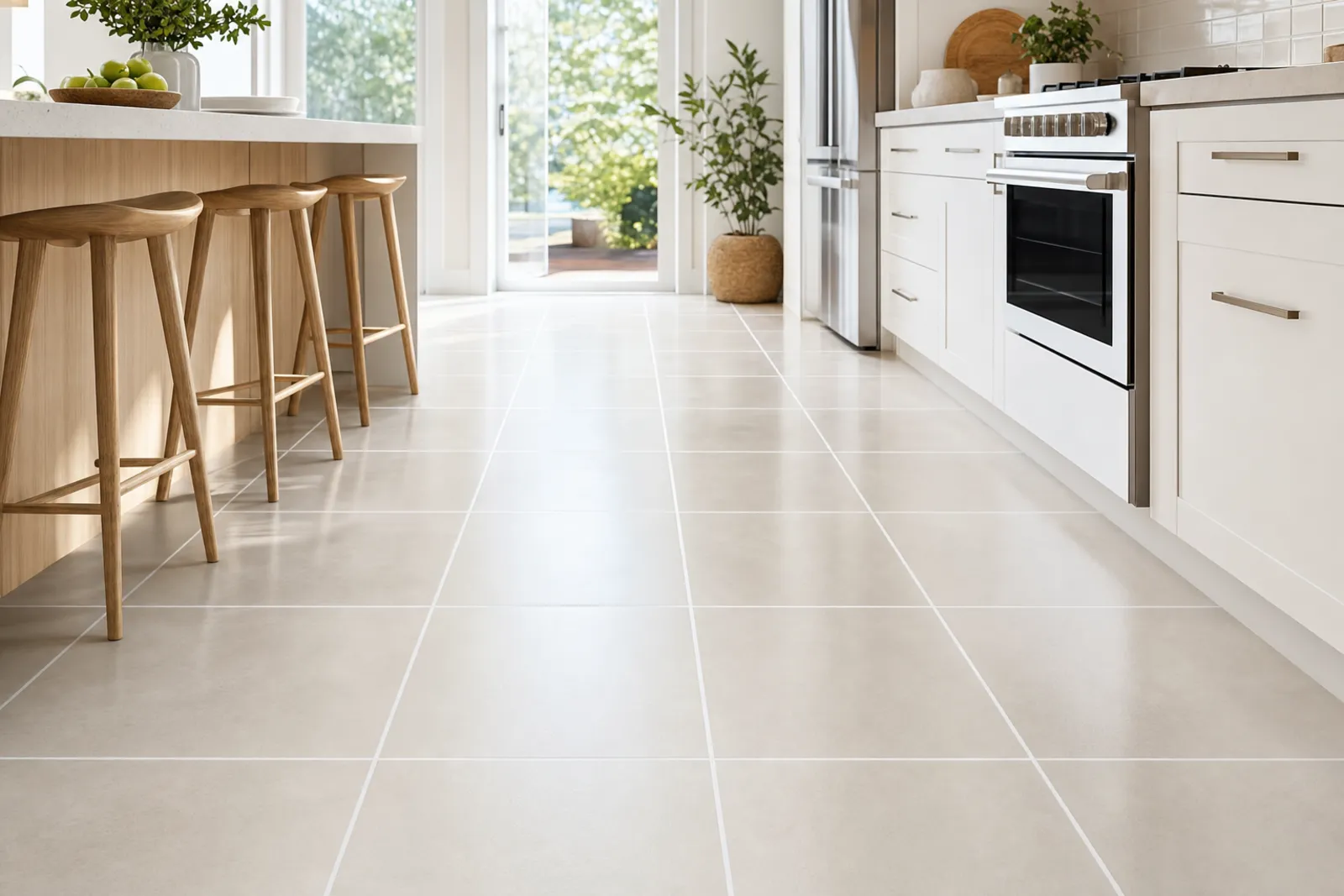
Marble looks tough, but it is one of the most chemically sensitive surfaces in your home. The dull spots and water rings people blame on “scratches” are usually etching, and once you understand why it happens, keeping marble beautiful gets a lot simpler.
Etching and Dulling Are Two Different Problems
People use the words interchangeably, but they are not the same thing, and the fix is different for each. Etching is a chemical burn. Marble is calcium carbonate, and any acid that touches it dissolves the surface, leaving a dull, slightly rough mark that often looks lighter or cloudier than the stone around it. Dulling is the gradual loss of polish across a whole surface from foot traffic, grit, and the wrong cleaners worn down over years.
The reason this distinction matters is that a sealer will not stop etching. We hear this constantly from Mercer and Bucks County homeowners who sealed a new marble vanity and still got a ring under a perfume bottle. Sealing reduces staining, which is liquid soaking into the stone. Etching happens on the surface, in seconds, before anything has a chance to soak in. They are governed by completely different chemistry.
The Acids Hiding in Your Kitchen and Bath
Most marble damage is self-inflicted and entirely preventable once you know what to watch for. The everyday culprits are acidic, and they act fast. The worst offenders we see on service calls:
- Lemon, lime, orange, and tomato in the kitchen
- Vinegar and anything with vinegar in it, including most “natural” homemade cleaners
- Wine, coffee, and many sodas
- Toothpaste, many facial cleansers, and acidic skincare in the bathroom
- Bleach and many bathroom tub-and-tile sprays
- Hard-water deposits and the acidic descalers people use to remove them
That last pairing traps a lot of people. Hard water leaves a film, so they reach for a lime-and-scale remover, which is acid, and they etch the marble trying to clean it. If your countertop already has water spots that will not wipe away, you may be looking at early etching, not deposits.
Daily Cleaning That Will Not Hurt the Stone
The single best habit is to wipe spills immediately, especially anything acidic. With marble, time on the surface is everything. A splash of lemon juice wiped in five seconds usually does nothing; the same splash left through dinner can leave a permanent mark.
For routine cleaning, use warm water and a soft microfiber cloth, or a cleaner specifically labeled pH-neutral and safe for natural stone. Skip the all-purpose sprays, the citrus cleaners, the vinegar solutions, and the “scrubbing” powders. This is one place where the certified-organic, non-toxic approach we use is not just about indoor air quality, it genuinely protects the stone, because the formulas are pH-balanced and free of the acids and harsh surfactants that quietly wear polish away. If you want the broader picture on caring for stone and the grout around it, our tile, grout, and stone cleaning guide walks through it room by room.
A few practical rules that prevent most damage:
- Use coasters, trivets, and cutting boards. Always.
- Blot spills, do not wipe them across the surface and spread the acid.
- Dust-mop marble floors so grit does not grind in and scratch the polish.
- Keep acidic toiletries off the vanity, or set them on a small tray.
Sealing: What It Does and What It Cannot Do
A good penetrating sealer is worth doing, but set your expectations correctly. Sealer slows liquids from soaking in, which buys you time to wipe a spill before it stains. On a polished marble countertop, most quality sealers last one to three years; a busy kitchen runs shorter than a guest bath. You can test it with the water-drop method: drop a little water on the stone, wait fifteen minutes, and if it darkens, it is time to reseal.
What sealer will not do is stop etching, prevent scratches, or restore shine that is already gone. It is a stain shield, nothing more. The same logic applies across natural stone and grout, which is why we explain elsewhere why grout darkens and when sealing actually helps. If you are weighing whether to seal at all, our piece on whether you should seal grout lays out the honest trade-offs in plain language.
Honed Marble (and Other Finishes) Change the Rules
Polished vs. honed
Polished marble has a mirror finish that shows every etch mark plainly, because the dull etch contrasts sharply against the gloss. Honed marble has a matte, satin finish, and it is far more forgiving. Etching still happens on honed stone, but because the surface is already low-sheen, small etches are much harder to see. If you are choosing marble for a kitchen and the look works for you, honed is the practical choice. It hides life better.
Why finish matters for repair
Finish also determines how etching gets fixed. A light etch on polished marble can sometimes be buffed out with a marble polishing powder. The same powder on honed stone can leave a shiny spot that looks worse than the etch did, because now you have a gloss patch in a matte field. Knowing the finish before you touch a repair is half the job.
Repairing Etches and Restoring Shine
Minor etching on polished marble is often DIY-fixable. Marble polishing powder, sometimes sold as etch remover, contains a mild abrasive and oxalic acid in a controlled form. You wet the spot, work the powder in with a damp cloth in small circles, and buff. For a single small ring, that frequently does the trick.
Deeper etching, etching across a wide area, dull worn floors, and chips or scratches are restoration work. This is where professional honing and polishing comes in: we re-flatten the surface with progressively finer abrasives and bring the polish back evenly, so you do not end up with a patchwork of shiny and dull. As an IICRC-certified stone and textile cleaning team, we would rather assess a marble surface in person than have a homeowner chase an etch with the wrong product and create a bigger problem. Robbinsville, Princeton, Hamilton, and Newtown homes built in the last twenty years have a lot of marble baths, and most of what we restore could have been caught earlier. Folks near Princeton can find specifics on our Princeton tile, grout, and stone cleaning page.
The Low-Moisture, Certified-Organic Angle
Two things matter when a professional cleans marble: chemistry and water. The chemistry has to be pH-neutral, because the acidic and high-alkaline products that work fast on tile or grout will etch or streak marble. Our certified-organic, non-toxic line is formulated to clean without those extremes, which makes it genuinely safer on calcium-based stone, not just gentler on your lungs.
The water side matters too. Marble does not like to stay wet, and trapped moisture can lead to spotting, efflorescence (a white mineral haze that migrates up through the stone), and slow degradation of any sealer. A low-moisture method means the surface is cleaned and dried quickly rather than flooded, the same principle that lets us return most carpets dry in about an hour. On stone, fast drying is not a convenience, it is part of protecting the material.
When to Call a Professional
Handle daily cleaning and small polished-marble etches yourself. Call us when you see widespread etching or dulling, a honed surface that needs attention, floors that have lost their finish, chips, deep scratches, stubborn stains, or efflorescence you cannot wipe away. It is also worth a professional inspection if you have just bought a home with marble and do not know its history, sealer status, or finish. A thirty-minute look can save you from an expensive refinish later. The same care extends to the grout joints around stone tile; if yours look dingy no matter what you try, our note on why grout darkens explains what is actually happening down in those lines.
If your marble has gone dull, picked up etch marks, or you simply want it cleaned and protected the right way, we are happy to take a look. Call AllState Cleaning at 609-586-5833 for a free, no-pressure quote anywhere in Mercer County, NJ or Bucks County, PA.
Frequently asked questions
No. Vinegar is an acid and will etch marble on contact, leaving dull spots. Use warm water or a cleaner labeled pH-neutral and safe for natural stone instead.
Etching is surface damage where acid has eaten into the stone, leaving a dull mark; staining is discoloration where a liquid has soaked into the stone. Etching cannot be removed by cleaning, while many stains can.
No. Sealer only slows liquids from soaking in to reduce staining. Etching is a chemical reaction on the surface that happens before anything can penetrate, so a sealer offers no protection against it.
Most quality penetrating sealers last one to three years, with kitchens needing it sooner than guest baths. Test by dropping water on the stone; if it darkens within fifteen minutes, it is time to reseal.
A light etch on polished marble can often be buffed out with marble polishing powder. Widespread etching, dull floors, and honed surfaces usually require professional honing and polishing to avoid creating mismatched shiny and matte patches.
Yes. We use certified-organic, non-toxic, pH-neutral products that are safe around children and pets, and our low-moisture method dries quickly to avoid spotting and trapped moisture in the stone.