
Rugs · 8 min read
Fixing Fringe Damage and Dye Bleed
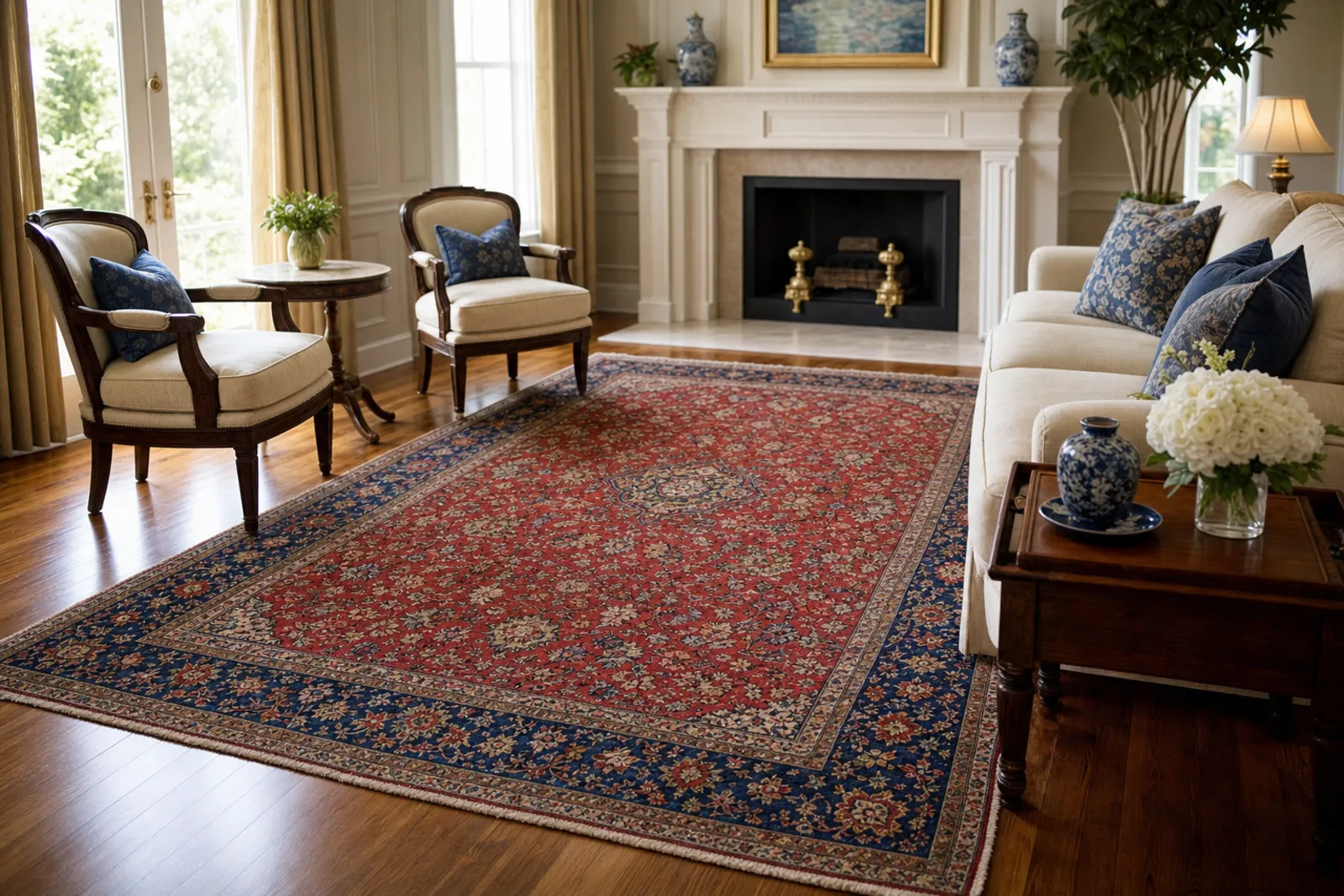
Fringe damage and dye bleed are the two problems that turn a routine rug cleaning into an emergency phone call. Both are fixable when caught right, and both get worse fast when handled wrong.
What the Fringe Actually Is (And Why It Matters)
On a genuine hand-knotted Oriental or Persian rug, the fringe is not a decorative add-on stitched to the edge. It is the warp foundation of the rug itself, the vertical threads that every single knot is tied around. When you see fringe sticking out at the ends, you are looking at the structural skeleton of the rug poking through. That is why fringe damage is never purely cosmetic on a real hand-knotted piece. Lose enough fringe and the knots at the end of the rug start releasing, one row at a time.
Machine-made rugs are different. Their fringe is usually sewn or glued on after the fact, so a damaged fringe there is closer to a trim problem than a foundation problem. Knowing which kind you own changes everything about how it should be repaired, and it is the first thing a trained inspector checks. If you are not sure what you have, our guide to Oriental rug cleaning walks through how to tell a hand-knotted rug from a machine-made one.
How Fringe Gets Damaged
Most fringe damage comes from ordinary use that nobody thinks twice about. Vacuuming is the biggest culprit. A beater-bar vacuum run straight off the rug and onto the fringe will chew it up, snag it, and yank warp threads loose. Foot traffic is the second cause. The ends of a rug take the brunt of people walking on and off it, and that constant abrasion grinds the fringe down.
- Vacuum damage: rotating brushes catching and tearing the fringe knots.
- Traffic wear: the ends thinning and fraying from being walked across daily.
- Dry rot: old fringe that has gone brittle from age, sun, or past moisture, snapping at the touch.
- Improper cleaning: aggressive agitation or high-pressure rinsing that whips the fringe into knots and tears it.
- Pet chewing and pulls: dogs, cats, and stray threads getting tugged.
When fringe wear reaches the knotted pile, the rug is no longer just losing fringe. It is losing rug. At that point the repair is no longer optional.
Repairing Damaged Fringe Properly
There is a right order to fringe repair, and skipping steps is how rugs get butchered. The honest first question is whether the fringe should be saved, secured, or replaced.
- Securing the ends. If the fringe is wearing but the foundation is sound, an overcast or end-stop stitch can lock the last row of knots so the rug stops unraveling. This is the most common and least invasive fix.
- Re-fringing. When the original fringe is gone or beyond saving, new fringe can be hand-sewn onto a secured edge. On a valuable hand-knotted rug this is done by hand to match the original, never glued.
- Re-weaving. If the damage has eaten into the actual pile and knots, a skilled weaver rebuilds the foundation and re-knots the missing rows. This is real restoration work and it is worth it on a quality rug.
What you should be wary of is a shop that reaches for glue-on fringe or a sewing machine across the end of a hand-knotted rug. It looks fine for a season, then fails and often takes original material with it. As an IICRC Certified Master Restorer, we treat the foundation first and the appearance second, because a pretty fringe on a collapsing edge buys you nothing.
Why Dye Bleed Happens
Dye bleed, also called color run or migration, is when color from one part of the rug travels into another, usually a dark red or blue creeping into a cream or ivory field. It happens because the dye was not fully fixed to the fiber, and water reactivates it. The classic case is fugitive dye in older or village-made rugs, where natural or early synthetic dyes were not perfectly set. Add water, and the loose dye goes looking for somewhere lighter to land.
The triggers are almost always moisture related: a pet accident left to soak, an overwatered houseplant, a flooded basement, a spilled glass of wine, or, very commonly, a well-meaning homeowner scrubbing a spot with too much water and a colored cleaning rag. Heat makes it worse. Wool, silk, and especially viscose all behave differently here, which is why fiber identification comes before any wet work. We cover those differences in our notes on caring for wool, silk, and viscose rugs.
What To Do The Moment You See Color Running
Speed matters more than technique in the first few minutes. If you catch dye bleeding while the rug is still wet, you have a real chance of stopping it. Once it dries in, it is set, and removing it becomes specialist work.
- Blot, do not rub. Press a clean white towel straight down to lift moisture. Rubbing spreads the dye and grinds it deeper.
- Use white cloths only. A colored or printed towel can transfer its own dye into a wet rug.
- Get it dry, fast. Lift the rug off the wet floor, prop it for airflow, and run a fan. The faster the fibers dry, the less the dye can travel.
- Stop adding water. Do not pour, do not flood, do not “rinse it out.” More water moves more dye.
- Keep it flat and elevated. Do not let a wet rug sit folded or stacked, where trapped color sets into the creases.
What you should not do is reach for a store-bought stain remover, oxygen bleach, or vinegar on a bleeding Oriental rug. Those can strip the good dye along with the bad and leave a permanent pale patch that is harder to fix than the original bleed.
How Professionals Remove and Stop Dye Bleed
Real dye-bleed correction is controlled chemistry, not scrubbing. A trained cleaner first tests the dyes in a hidden corner to see which colors are fugitive and how the fiber reacts. From there the approach is methodical: lower the rug’s pH, apply a dye-stripping or dye-blocking agent suited to the fiber, and rinse and dry under tight control so color does not get a second chance to wander. On stubborn migration, the work happens in stages, drying between passes. It is patient work, and rushing it is how a fixable bleed becomes permanent.
This is also where the cleaning method itself protects the rug. Our certified-organic rug cleaning uses non-toxic, hypoallergenic products and a low-moisture process, so carpets and rugs dry in about an hour rather than staying soaked for a day. Less standing water means less opportunity for dyes to bleed in the first place, which is the whole point of treating textiles gently. Every job is backed by our 1-year written warranty and our promise that you must be happy or it is free.
In-Home Cleaning Versus Plant Cleaning for At-Risk Rugs
For a rug that has already shown dye bleed, or one made of materials known to run, where the work happens is a real decision. In-home, low-moisture cleaning is excellent for routine maintenance and for situations where you want minimal water on a delicate piece. But a rug with active fugitive dyes, heavy contamination from a pet accident, or deep soiling often needs full submersion washing in a controlled plant environment, where dye behavior can be managed with proper rinsing, flushing, and drying equipment. We help homeowners weigh those tradeoffs in our breakdown of in-home versus plant rug cleaning, and the right answer genuinely depends on the rug in front of us.
Preventing Both Problems Before They Start
Most fringe and dye disasters are preventable with a few habits. Vacuum the body of the rug with the beater bar off, and never run the vacuum across the fringe. Rotate the rug a couple of times a year so traffic wear and sun fading spread evenly instead of destroying one edge. Use a quality rug pad to cut abrasion from below and keep the ends from curling and getting kicked. Clean spills immediately by blotting with a white towel and nothing else.
The single best preventive measure is having the rug professionally inspected and cleaned on a regular schedule before damage compounds. An inspection catches a loosening fringe edge while a few stitches will fix it, and catches dye instability before someone’s spilled drink turns it into a stain you can see from across the room. Ongoing care for a fine rug is its own discipline, and we lay out a sensible routine in our advice on caring for an Oriental or Persian rug. Homeowners around Princeton can also see how we handle these jobs locally on our Princeton rug cleaning page.
If your rug is shedding fringe or showing color where it should not be, do not wait and do not experiment on it. Call AllState Cleaning at 609-586-5833 for a free, no-pressure assessment, and we will tell you honestly what your rug needs.
Frequently asked questions
On a genuine hand-knotted Oriental or Persian rug the fringe is the warp foundation the knots are tied around, so it is structural. On most machine-made rugs the fringe is sewn or glued on and is closer to decorative.
Yes. Depending on the rug, the ends can be secured with an overcast stitch, the fringe can be hand-sewn back on, or the foundation can be re-woven when wear has reached the knots.
Stop adding water, blot straight down with a clean white towel, lift the rug off any wet surface, and run a fan to dry it fast. Do not rub and do not use store-bought stain removers.
The dye was never fully fixed to the fiber, so when water and often heat reach it, the loose color migrates into lighter areas of the rug.
Often, but it becomes specialist work. A trained cleaner tests the dyes, adjusts pH, and applies dye-correcting agents in controlled stages, which is far harder than stopping a bleed while the rug is still wet.
Yes. Our certified-organic, low-moisture process dries rugs in about an hour rather than leaving them soaked, so dyes have far less chance to migrate, and every job is backed by our 1-year written warranty.