
Rugs · 8 min read
How to Care for a Hand-Knotted Oriental or Persian Rug
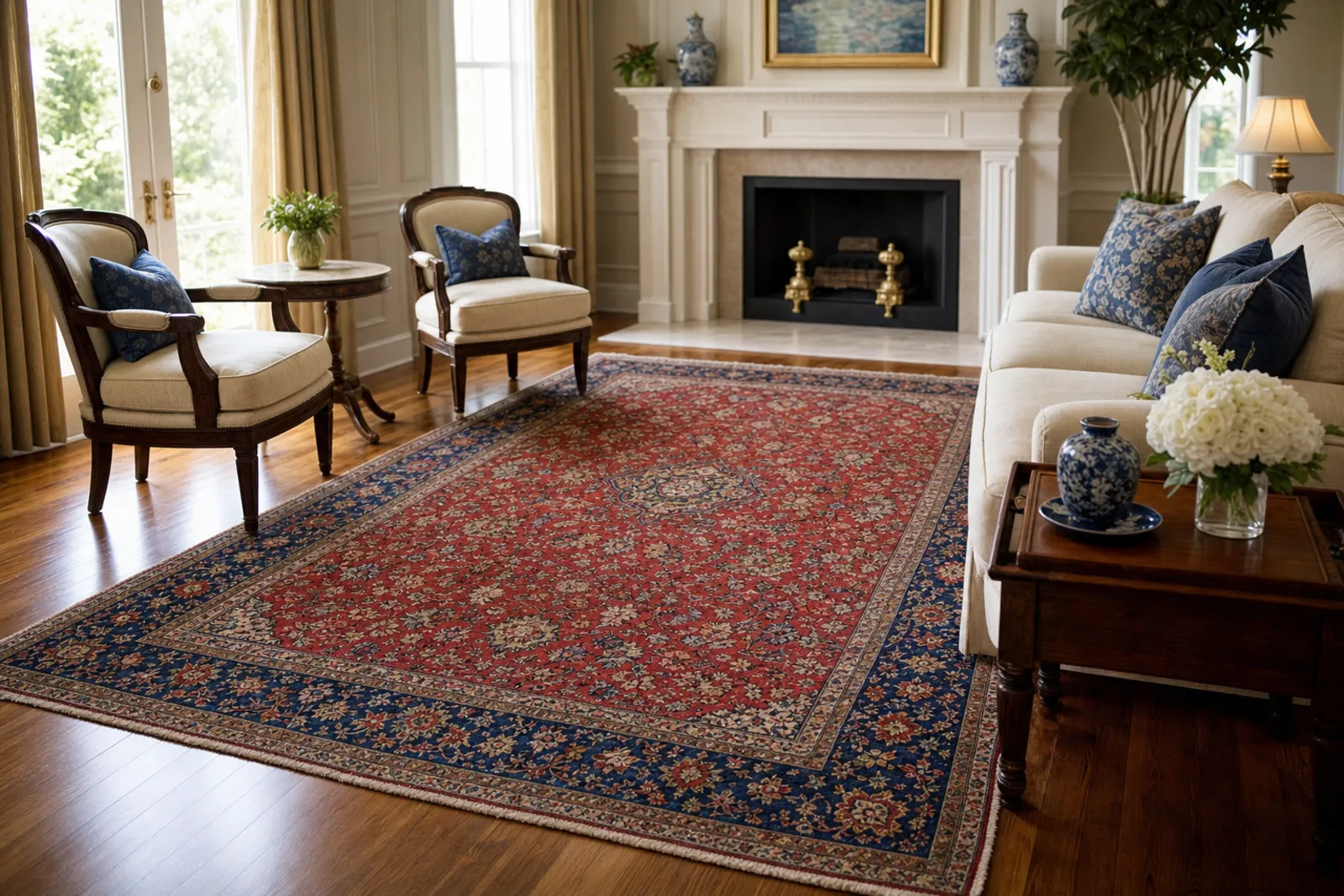
A good hand-knotted Oriental or Persian rug is built to last a century or more, but only if you treat it like the textile it is and not like wall-to-wall carpet. The difference between a rug that gets handed down and one that wears out in fifteen years comes down to a few simple habits and knowing when to call a professional.
Know What You Actually Own
Before you change anything about how you care for a rug, figure out what it is. A true hand-knotted rug has knots tied individually onto the foundation by hand, so the back shows the same pattern as the front, slightly blurred, with small irregularities. Flip a corner over: if the back is a crisp printed grid or has a mesh glued to it, you have a machine-made or tufted rug, which is a different animal entirely.
The fiber matters just as much as the construction. Most antique and semi-antique Oriental and Persian rugs are wool pile on a cotton foundation, sometimes with silk highlights or an all-silk pile. Wool is forgiving and durable. Silk is gorgeous and fragile. And viscose, often sold as “art silk” or “bamboo silk,” looks like silk but behaves like wet paper when it gets cleaned wrong. If you are not sure which you have, our breakdown of how wool, silk, and viscose rugs differ will save you from an expensive mistake.
Vacuum the Right Way (and Skip the Beater Bar)
Routine vacuuming is the single most important thing you can do, because the damage that actually destroys rugs is dry grit. Sand and soil work their way down to the foundation and act like tiny knives, cutting wool fibers every time someone walks across the rug. Get it out before it grinds.
A few rules that protect the pile:
- Turn off the beater bar or use a suction-only setting. The rotating brush on most upright vacuums chews hand-knotted pile and rips fringe. A canister vacuum with a plain floor tool is ideal.
- Vacuum in the direction of the nap. Run your hand across the pile; one direction feels smooth, the other rough. Vacuum with the smooth direction to avoid forcing grit deeper.
- Never vacuum the fringe. It catches, twists, and tears off. Sweep it gently with your hand or a soft brush instead.
- Vacuum the back once a month. Flip the rug and vacuum the underside to shake loose embedded soil, then vacuum the front.
Rotate, and Mind the Sun and Furniture
Rugs wear and fade unevenly, and a little planning evens it out. Rotate the rug 180 degrees once or twice a year so traffic lanes and sun exposure get shared across the whole piece. This matters most in rooms where one end sits in a doorway and the other under a coffee table.
Direct sunlight will fade natural dyes over time, especially reds and blues. You do not have to live in the dark, but sheer curtains or a UV film on a sun-blasted window go a long way. For heavy furniture, use coasters or cups under the legs and shift the pieces a few inches every season so you do not crush permanent dents into the pile. A quality rug pad underneath does double duty here: it cushions the foundation, stops the rug from sliding, and lets air move so the fibers do not stay compressed.
Handle Spills in the First Five Minutes
What you do in the first few minutes decides whether a spill becomes a stain. The enemy is time, heat, and rubbing.
- Blot, never rub. Press a clean white towel straight down to lift the liquid. Rubbing pushes the spill into the foundation and distorts the pile.
- Work from the outside in so you do not spread the spot wider.
- Use cool water only. Hot water sets many stains and can shock natural dyes into bleeding.
- Skip the drugstore spot cleaners. Oxygen “boosters,” bleach, and many big-box carpet products are too harsh for natural dyes and wool and can leave a permanent light spot.
- Lift the wet area off the floor. Slide a towel or a sheet of foil under the spot so moisture and any color do not transfer into the foundation or the floor below.
Pet accidents deserve special caution. Urine is acidic going in and turns alkaline as it dries, and that swing is what permanently changes dye color and rots cotton foundations. Blot what you can, keep it from drying into the back, and get a professional on it quickly. The reasons dyes shift and fringes give out are worth understanding, and we cover them in our guide to fringe damage and dye bleed.
Why Professional Cleaning Is Different for These Rugs
Every hand-knotted rug needs a real wash every two to four years, more often in a busy household with kids or pets. This is not the same service as having your wall-to-wall carpet steamed. A proper Oriental rug cleaning starts with dusting, a mechanical process that drives out pounds of dry soil the vacuum never reaches, then a controlled wash matched to the fiber and the stability of the dyes, then thorough drying and grooming.
This is exactly where the certified-organic, low-moisture approach earns its keep on these textiles. Wool and natural dyes do not like being saturated and left damp, that is how you get color bleed, brown wicking, mildew, and dry rot in the foundation. A non-toxic, hypoallergenic system that controls moisture and lets the rug dry in about an hour is far gentler on old dyes and fragile silk than a soak-and-extract carpet method. It is also the safer choice in a home with children, pets, or anyone with allergies. You can read more about our certified-organic rug cleaning and how the method protects the pieces it touches.
In-Home vs. Plant Cleaning
One of the most common questions we get is whether the rug should be cleaned in the home or taken to a facility. The honest answer is: it depends on the rug. A sturdy wool rug with stable dyes and ordinary soil often cleans beautifully right in your living room with a low-moisture process and dries fast. But a heavily soiled rug, a pet-urine situation that has soaked the foundation, or a fragile silk or antique piece usually belongs at a plant where it can be fully submerged, flushed, and dried flat under controlled conditions.
What you want to avoid is a one-size-fits-all promise. A good cleaner inspects the fiber, tests the dyes for colorfastness, and tells you honestly which route fits your rug. We walk through the real trade-offs in our comparison of in-home versus plant rug cleaning so you can ask the right questions. For a fuller walkthrough of the whole process from inspection to grooming, our complete Oriental rug cleaning guide is a good next read.
Storage, Moths, and the Long Game
If a rug is going into storage, prepare it properly or you may unroll a ruined piece. Have it professionally cleaned first, because soil and food residue are exactly what attracts moths and carpet beetles. Wrap it in breathable material such as cotton sheeting or acid-free paper, never plastic, which traps moisture and invites mildew. Roll it, do not fold it, since folds crack the foundation over time, and store it off the floor in a dry, climate-controlled space. Check on it a couple of times a year.
Moths are the quiet killer of wool rugs. They love dark, undisturbed, low-traffic areas, the back corners under heavy furniture, the edge tucked behind a couch. The defense is mostly disruption: vacuum those hidden zones, move furniture occasionally, and if you see fine grazed patches, loose sandy debris, or small webbing, get the rug treated before the damage spreads. Homeowners across Mercer and Bucks County deal with this every season, and addressing it early is the difference between a quick treatment and a costly reweave. If you are local, our team handles Oriental rug cleaning in Princeton and the surrounding towns.
When to Bring in an Expert vs. DIY
Plenty of rug care is genuinely a do-it-yourself job: regular suction-only vacuuming, prompt blotting of spills, rotation, rug pads, and smart storage. Where homeowners get into trouble is attempting a full wash at home, scrubbing a set-in stain with a harsh cleaner, or ignoring a urine problem until it has rotted the cotton. Anything involving silk, an antique, visible dye bleed, fringe damage, or odor that will not lift is a job for a certified textile professional who can test before treating. An IICRC-certified inspector can also tell you what a rug is, what it is worth, and whether a problem is fixable, often before you spend money you do not need to.
If you have a hand-knotted Oriental or Persian rug that is due for a wash, or you are just not sure what you have, we are happy to take a look. Call AllState Cleaning at 609-586-5833 for a free, no-pressure quote and an honest assessment from a certified textile professional.
Frequently asked questions
Every two to four years for most homes, and more often if you have kids, pets, or heavy foot traffic. Regular vacuuming between washes extends the time you can safely go.
You can vacuum, blot spills, and rotate it yourself, but a full wash should be left to a professional. Home washing risks dye bleed, brown wicking, mildew, and foundation damage that is expensive to repair.
Yes, but turn off the beater bar or use a suction-only setting, and never run the vacuum over the fringe. The rotating brush tears pile and shreds fringe over time.
Blot straight down with a clean white towel using cool water only, working from the outside in, and never rub. Avoid bleach and oxygen-based cleaners, which can permanently lighten natural dyes.
It depends on the rug. Sturdy wool rugs with stable dyes often clean well in-home with a low-moisture method, while fragile silk, antiques, and pet-urine cases usually belong at a plant for full immersion and controlled drying.
Wool and natural dyes are damaged by being saturated and left damp, which causes bleeding, mildew, and dry rot. A non-toxic, hypoallergenic low-moisture system protects fragile fibers and dyes, dries in about an hour, and is safer for homes with kids, pets, or allergies.