Pet Odor & Stain Removal · 6 min read
Vomit, Hairballs & Muddy Paws: Safe Spot Cleaning
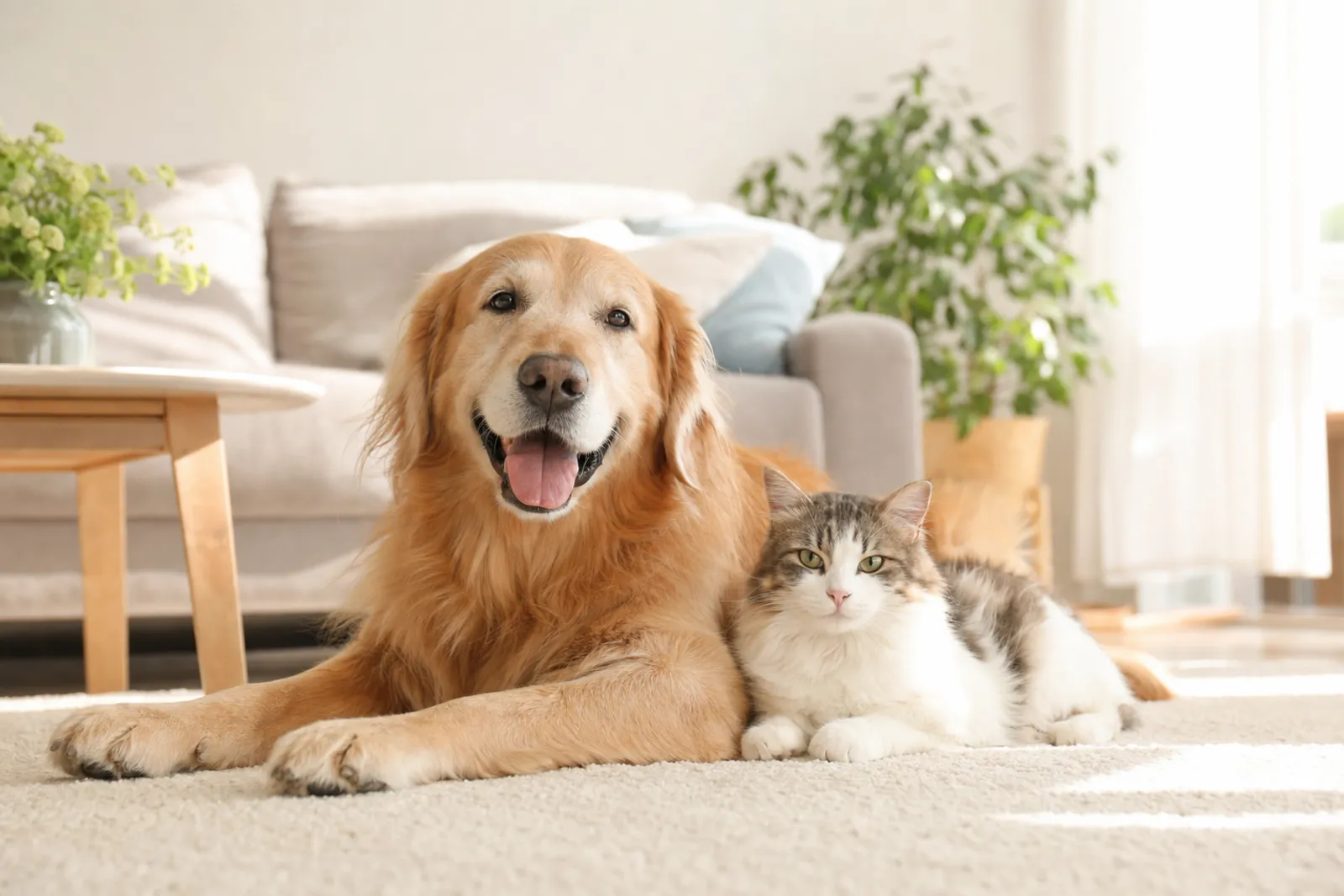
A dog throwing up on the rug or a cat coughing up a hairball at 6 a.m. is part of pet ownership. What you do in the next ten minutes decides whether you end up with a clean spot or a permanent shadow ground into the fibers.
The first rule: blot and scoop, never scrub
The single biggest mistake we see after 60,000-plus jobs since 1989 is people grabbing a rag and scrubbing hard. Scrubbing drives the mess deeper into the carpet pile and, worse, frays and fuzzes the fiber tips so that even after the stain is gone, the spot looks dull and matted. That distorted texture is often what people are actually seeing when they think a stain “came back.”
Instead, work from the outside of the spot inward and use pressure, not motion. For vomit or anything chunky, lift the solids first with a spoon or a stiff piece of cardboard, scooping toward the center so you don’t smear. Then fold a clean white towel, press straight down, hold for several seconds, and lift. Repeat with a fresh section of towel each time. You want the carpet to do as little soaking as possible.
Vomit: act fast because it is acidic
Pet vomit is not just unpleasant, it’s chemically aggressive. Stomach acid, bile, and partially digested food can etch and discolor carpet dye if it sits, especially on wool and on older nylon. Bile in particular can leave a yellow cast that no amount of surface cleaning will fix once it has set into the dye. This is why vomit belongs in the “treat it now” category, not the “deal with it after work” category.
After you’ve scooped and blotted, lightly mist the area with cool water and blot again to dilute the acid. Avoid hot water on a fresh protein mess. Heat sets protein stains the same way it sets a raw egg in a hot pan, locking the discoloration into the fiber. Keep everything cool until the spot is fully clean.
Hairballs: deceptively simple, occasionally staining
A dry hairball is the easy case. Pick it up, vacuum the spot, and you’re usually done. The trouble is the wet hairball, the one that comes up with stomach fluid and bile attached. Treat those exactly like vomit, because chemically that’s what they are. Don’t be fooled by the small footprint, a quarter-sized yellow hairball stain can be just as stubborn as a larger spill if it dries in place.
Muddy paws: let it dry before you touch it
Mud is the one mess where doing nothing for a while is the right move. Wet mud smears, and the more you wipe it the wider and deeper it goes. Let it dry completely, then vacuum up the loose dirt, often the majority of it lifts right out. Only after vacuuming should you treat whatever shadow remains with a little cool water and blotting. Around here, the iron-rich clay soils common in parts of Mercer and Bucks County can leave a faint reddish tint, so don’t be surprised if a muddy paw needs a second pass.
What to use, and what to keep far away from your carpet
You don’t need a cabinet full of chemicals. For most of these messes, cool water and patient blotting do 90 percent of the work. If you want a mild homemade solution, a teaspoon of clear dish soap in a cup of cool water, applied sparingly and blotted out thoroughly, is safe on most synthetic carpet. Always rinse with plain water afterward, because leftover soap is sticky and attracts dirt, which is another reason spots seem to reappear.
Here is what to keep off your carpet:
- Bleach and oxygen “stain” products on colored or wool carpet, they can strip the dye and leave a permanent light spot worse than the original stain.
- Vinegar on stone or unsealed surfaces nearby, and on wool it can sometimes alter the dye, so test first.
- Ammonia-based cleaners on pet messes, the smell can actually encourage a pet to revisit the same spot.
- Steam or a hot iron-and-towel trick on protein or bile, heat sets these stains permanently.
As a certified-organic, hypoallergenic cleaner, the products we use professionally are non-toxic and safe around pets and kids, which matters when you’re cleaning the exact patch of floor your dog naps on. If you’re a pet household, it’s worth being honest about what residue your DIY cleaners leave behind.
Why low-moisture matters with pet messes
The instinct with a bad spill is to drown it. The problem is that excess water carries the contamination down into the backing and the pad, where you can’t reach it. A surface that looks clean can still hide vomit or bile underneath, and that’s the classic setup for an odor that returns days later. We explain this in more detail in our look at why pet odors keep coming back, but the short version is: what goes down deep has to come back up, and a soaked spot rarely dries fully on its own.
Our low-moisture approach exists for exactly this reason. We clean from the fiber down and extract rather than saturate, so carpets dry in about an hour instead of staying damp for a day. A damp carpet that sits overnight is an invitation for mildew and that musty smell, which is its own separate problem on top of the stain you started with.
Fresh versus set-in: knowing when DIY is enough
A fresh mess you catch within minutes is usually a homeowner job. Once a spot has dried, soaked into the pad, or started to smell, the math changes. Set-in protein stains and bile bond to the fiber and the dye in ways that surface cleaning won’t reverse, and pet messes that reach the backing need extraction you can’t do with a towel. If you’re unsure which camp you’re in, our breakdown of fresh versus set-in pet stains walks through the telltale signs.
It also helps to know what you’re dealing with, because dog and cat messes behave differently and cat-related stains in particular tend to be more concentrated and harder to neutralize. For the deeper odor and staining problems, our full guide to removing pet stains and odor covers the methods we use in the field.
When to call a professional
Call when the stain is older than a day, when it covers a large area, when the mess has clearly soaked through to the pad, or when an odor lingers after the visible spot is gone. Wool and other natural-fiber rugs are also worth professional attention, since the wrong product can do permanent damage that costs far more than a cleaning. As an IICRC Certified Master Restorer and Senior Carpet and Textile Inspector, we can identify the fiber, the exact contamination, and the right treatment before anything touches your carpet, which is the difference between fixing a spot and accidentally setting it for good. For the deeper work, our professional pet odor and stain removal service handles what a towel never will.
If you’ve got a spot you can’t shake or a smell that keeps coming back, give us a call at 609-586-5833 for a free quote. We’ll tell you honestly whether it’s a quick DIY fix or something worth bringing us out for, and either way you’ll know what you’re dealing with.
Frequently asked questions
No. Heat sets protein and bile stains the way it cooks an egg in a hot pan, locking the discoloration into the fiber. Use only cool water on fresh pet messes.
Let the mud dry completely first, then vacuum up the loose dirt, which removes most of it. Only treat the remaining shadow afterward with a little cool water and blotting.
Avoid bleach and oxygen stain products on colored or wool carpet, since they can strip the dye and leave a permanent light spot worse than the original stain. When in doubt, stick to cool water and a drop of clear dish soap.
The contamination usually soaked down into the backing or pad, where surface cleaning can't reach it. As the area dries, that hidden residue releases odor again, which is why deep extraction matters.
Yes. We use certified-organic, non-toxic, hypoallergenic products, which matters when you're cleaning the exact spot your pet naps on. They're safe around both pets and kids.
Call when the stain is older than a day, covers a large area, has soaked through to the pad, smells after cleaning, or sits on a wool rug. Those situations need extraction and fiber expertise a towel can't provide.