Pet Odor & Stain Removal · 7 min read
New Puppy? A Carpet-Protection Game Plan
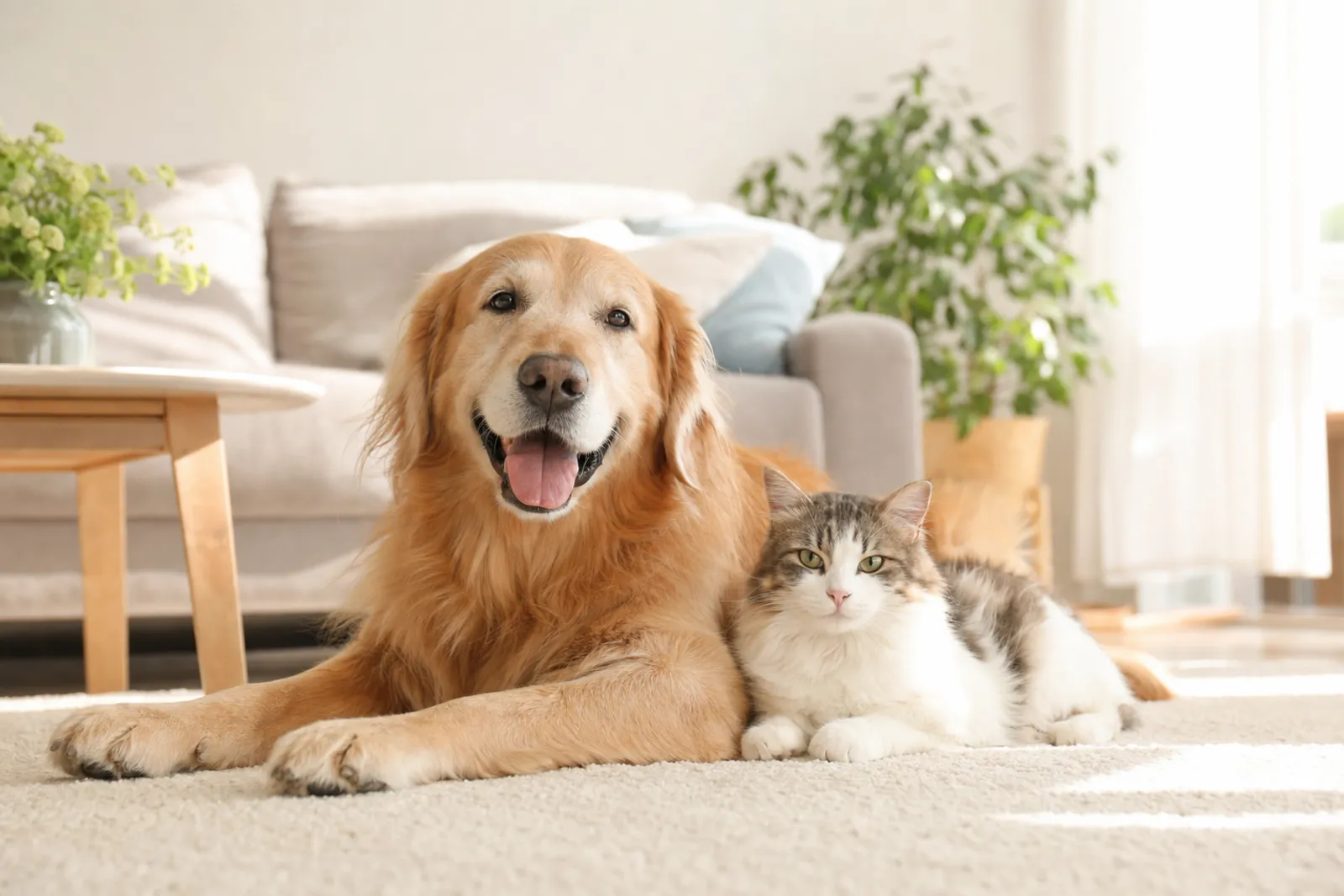
A new puppy will test your carpet in ways you have not imagined yet. The good news: with a plan in place before the accidents start, you can keep your floors clean through the housebreaking months and well past them.
Start before the puppy comes home
The biggest mistake new dog owners make is reacting to messes instead of preparing for them. By the time you are scrubbing a spot at 11 p.m., you have already lost the easy version of the job. Spend the week before pickup setting up so that the first accident is handled in two minutes, not twenty.
Pick a “puppy zone” with the most forgiving flooring you have. Kitchens, mudrooms, and tiled entryways are ideal because hard surfaces wipe clean and dry fast. If the zone has to include carpet, choose the room you care least about and gate the rest of the house off. A puppy that roams the whole first floor on day one will mark the whole first floor by week two.
Stock a cleanup kit and keep it within reach: clean white cotton towels, a quality enzyme cleaner, an empty spray bottle, and a roll of paper towels. White towels matter because they let you see what is transferring out of the carpet, and they will not bleed dye onto a light pile.
Why puppy accidents are different from adult dog accidents
Puppy urine is more dilute and less concentrated than an adult dog’s, which sounds like good news but cuts both ways. It spreads wider and soaks faster, so a small puddle can reach the backing before you notice it. The earlier you catch it, the better your odds, which is the whole argument behind treating a fresh accident versus one that has set in completely differently.
Frequency is the real problem. A young puppy may have six to ten accidents a day during the first weeks. That is not one stain to manage; it is a steady drip of small contaminations in roughly the same areas. Dogs return to spots that already smell like a bathroom, so each missed cleanup makes the next accident more likely in the same place. Break that cycle early and housebreaking goes faster, too.
The two-minute fresh-accident routine
Speed beats strength with a fresh puddle. Here is the order that actually works:
- Blot, do not rub. Press a folded white towel straight down and let it wick the liquid up. Stand on it if you have to. Rubbing pushes urine deeper into the pile and frays the fibers.
- Rinse with cool water. Pour a small amount of plain cool water onto the spot and blot again. This dilutes what is left before it has time to bond to the fiber.
- Apply an enzyme cleaner. Saturate the area, not just the surface. Urine goes as deep as the liquid did, so your cleaner has to follow it down. Let it dwell the full time on the label, usually ten to fifteen minutes.
- Blot dry and weight it. Lay a dry towel over the spot, put a heavy book on it, and walk away. Let it pull moisture out for a few hours.
Skip the hot water, skip the steam mop, and skip anything ammonia-based. Heat sets protein stains permanently, and ammonia smells enough like urine that it can encourage a puppy to re-mark the area.
Choose your cleaning products like a professional would
The supermarket aisle is full of bottles that mask odor instead of removing it. For a household with a puppy and a baby crawling on the same floor, what you put down matters as much as what you pull up. We have built our business on certified-organic, non-toxic products precisely because pets and kids spend their day at carpet level, breathing whatever is in the fibers.
An enzyme cleaner is the one product worth owning. Enzymes digest the uric acid crystals that ordinary detergents leave behind, and those crystals are the reason a “clean” spot starts smelling again on a humid day. If you have ever wondered why pet urine odor keeps coming back after you thought you handled it, the crystals are almost always the answer. Look for a true enzymatic formula and avoid anything that lists fragrance as its main feature.
One caution: do not mix products. Enzyme cleaners and oxidizers can cancel each other out, and layering chemicals on a wool or natural-fiber carpet is how you end up with a bleached or browned patch that no longer matches the room.
Protect the carpet you cannot watch
You will not catch every accident, and you cannot supervise around the clock. Reduce the surface area at risk instead.
- Crate or gate during the night and when you are out. A properly sized crate keeps the puppy off the carpet entirely during the hours you cannot watch.
- Use washable runners and low-pile mats over the carpet in the puppy zone. A mat that goes in the washing machine is far easier to deal with than a wall-to-wall stain.
- Roll up area rugs you value until the puppy is reliably housebroken. An antique or wool rug is not the place to learn this lesson.
- Establish one indoor potty pad station if you live in an apartment or face a long winter. Keep it on hard floor, never on carpet, so the puppy never associates relief with the soft surface underfoot.
Handle the accident you find hours later
A dried, set-in spot is a different animal. The liquid is gone but the salts and crystals remain, and they have likely reached the carpet backing and maybe the pad. Surface cleaning will not touch what has soaked through.
Re-wet the area generously with cool water so the dried residue dissolves and becomes reachable again, then run the enzyme routine and let it dwell longer than you would for a fresh spot. If the same area keeps smelling no matter what you do, the contamination has gone below where any consumer product can reach, and that is genuinely a job for professional extraction. The difference between species also matters here; the chemistry of dog versus cat urine odor is not identical, and the heavier accidents need different handling than a puppy’s dilute ones.
Where home cleaning ends and a pro takes over
Be honest about the limits of a spray bottle. When odor lingers after several cleanings, when a stain has spread past the size of your hand, or when liquid has obviously reached the pad and subfloor, you are past what topical products can fix. At that point you need flood-level rinsing and extraction that pulls the contamination out rather than diluting it in place.
This is where our method earns its keep. We use a certified-organic, low-moisture process, so the carpet your puppy lives on is cleaned without harsh residue and dries in about an hour rather than staying damp all day. Fast drying matters with a young dog, because a carpet that stays wet for hours is an invitation to a fresh accident. Our full guide to removing pet odor and stains walks through how deep extraction reaches the layers a household machine never will, and our core pet odor and stain removal service is built specifically for this kind of contamination.
Set habits that protect the carpet for years
The puppy phase ends, but the carpet stays. A few habits keep it in shape long after housebreaking is done. Vacuum the puppy zone often, because trapped grit grinds against fibers every time the dog walks across it. Wipe muddy paws at the door during wet Mercer County and Bucks County springs. Treat any accident the same day, every time, so nothing has the chance to set. And put the whole carpet on a professional cleaning schedule once or twice a year so embedded soil and the dander that triggers allergies do not build up where your family and your dog spend their time.
Do that, and the carpet you worried about during week one will still look right when your puppy is a calm, fully housebroken adult.
If a puppy accident has gotten away from you, or you would rather hand the whole job to someone who has done it 60,000 times, we are glad to help. Call AllState Cleaning at 609-586-5833 for a free, no-pressure quote and let our family-owned team get your carpet back to clean.
Frequently asked questions
Most puppies are reliably housebroken between four and six months, though it varies by breed and consistency. Cleaning every accident thoroughly speeds it up, because dogs return to spots that still smell like a bathroom.
A true enzymatic cleaner, because enzymes digest the uric acid crystals that ordinary detergents leave behind. We use certified-organic, non-toxic products since puppies and kids spend their day at carpet level.
Not reliably, and the heat can make things worse. High heat sets the protein in urine permanently, so the stain and odor can lock in rather than lift out.
Because uric acid crystals left in the fibers reactivate with moisture in the air. Ordinary detergents do not break these crystals down, which is why only enzyme-based cleaning or professional extraction stops the smell from returning.
They can help freshen a very minor spot, but they do not break down uric acid crystals, so the odor usually returns. For anything beyond a tiny fresh spill, an enzyme cleaner does the real work.
When odor lingers after several cleanings, a stain spreads past the size of your hand, or liquid has soaked into the pad and subfloor. At that point the contamination is below what topical products reach and needs flood-level extraction.