Pet Odor & Stain Removal · 8 min read
Getting Pet Smell Out of Carpet When You Can’t See the Stain
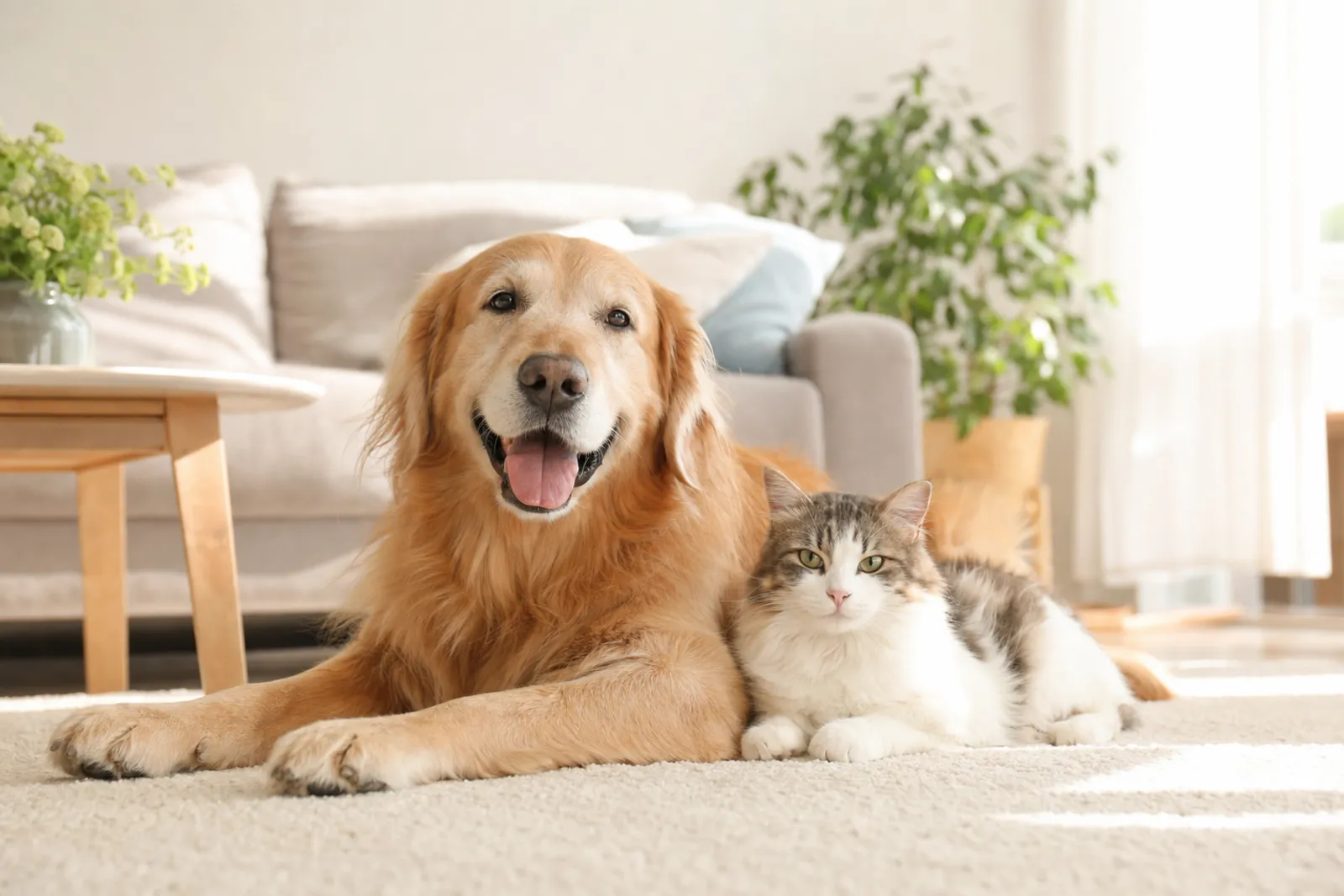
You walk into the room and there it is again, that sour, ammonia edge that says a pet has been here, but you crawl the carpet on your hands and knees and you cannot find a single spot. That is one of the most common calls we get, and the reason is simple: the smell almost never lives where you think it does.
Why You Can Smell It But Can’t See It
Pet urine is mostly invisible to the naked eye once it dries, especially on patterned, dark, or low-pile carpet. What you are smelling is not the surface. Urine soaks straight through the carpet face, down through the backing, into the padding underneath, and frequently all the way to the subfloor. The visible part dries and fades in a day or two. The part trapped in the cushion and tack strip stays wet far longer and keeps releasing odor for months.
There is a second reason the nose finds what the eye misses. Dried urine contains uric acid crystals. These crystals are not water-soluble, so when humidity rises, a damp day, a running humidifier, summer in Mercer County, they reactivate and the smell comes roaring back. You are not imagining it getting worse in July. The chemistry really does respond to moisture in the air.
Find the Source Before You Clean Anything
Cleaning a spot you cannot locate is guesswork, and guesswork wastes product and time. Before you do anything, you need to map where the contamination actually is. A few honest, low-tech methods work well at home:
- Use your nose at floor level. Get down on the carpet and smell in a grid. The odor is always strongest directly over the source. Pets also tend to re-offend in the same spots, so check edges of rooms, behind furniture, and along walls where a dog or cat feels hidden.
- Feel for stiffness. Dried urine leaves the carpet fibers slightly crunchy or crusty compared to clean areas. Run your palm flat across the pile.
- Get a UV blacklight. An inexpensive blacklight, used in a fully darkened room, makes dried urine glow a dull yellow-green. It is not perfect, optical brighteners in some carpets and certain spills also glow, but it is the single most useful tool a homeowner can buy for this problem. Mark every glowing area with painter’s tape so you can find it with the lights on.
If you smell it strongly but the blacklight shows almost nothing on the surface, that is your tell that the urine has gone deep, into the pad and subfloor, and surface cleaning alone will not fix it.
The Mistake That Locks the Smell In
The most damaging thing people do is reach for a steam-style machine or a bottle of ammonia-based or perfumed cleaner before they understand the depth of the problem. Heat is the real culprit. High heat can permanently set the proteins and dyes in urine, turning a removable problem into a permanent one. Many rental machines run hot for exactly this reason, and on a deep pet contamination they can bake the odor in.
Ammonia is its own trap. Urine already contains ammonia compounds, so cleaning with an ammonia product can actually signal to a dog or cat that this is the right place to go again. Perfumed deodorizers do not remove anything; they sit on top of the odor for a day or two and then the underlying smell wins. If you want the deeper science on why these quick fixes fail, our explainer on why pet odor keeps returning walks through it spot by spot.
What Actually Removes the Odor
There are two real ways to eliminate urine odor, not mask it: dissolve the uric acid crystals, or digest them. Enzyme and bacterial cleaners work by digestion, living bacteria eat the organic residue and the crystals along with it. They are effective, but they are slow, they need to stay wet and warm for hours to work, and they only reach what they can physically contact. If the urine is sitting in padding under a glued-down carpet, a bottle of enzyme cleaner sprayed on top will never get to it.
For surface and shallow contamination you can treat at home, the honest process looks like this:
- Blot up any fresh moisture first, do not rub, with clean white towels.
- Apply an enzyme cleaner generously enough to reach as deep as the urine went, which is usually far more product than people use.
- Cover it and let it dwell for the full time on the label, often several hours, so the bacteria can finish.
- Let it air dry slowly. Do not blast it with heat.
For anything deeper, soaked padding, repeat offenders, a smell you cannot pin down, home products hit a ceiling. The contamination is physically out of reach. That is where professional extraction earns its keep.
How We Handle Hidden Pet Odor
When we get a hidden-odor call, the first thing we do is inspect, not clean. As an IICRC Certified Master Restorer and Senior Carpet & Textile Inspector, the inspection is where most of the value is, because treating the wrong spot or under-treating a deep one is how odor problems become chronic. We locate every contaminated area, gauge how far down it went, and tell you honestly whether it is a top-down cleaning job or whether the padding needs attention.
Our cleaning is certified-organic carpet cleaning, non-toxic and hypoallergenic, which matters more with pets and kids than with almost any other job, the family that smells the odor is the same family breathing whatever you use to remove it. We use a low-moisture method, so we are not dumping gallons of water into a carpet that already has a moisture problem underneath. Less water in means less water that has to come out, and your carpet dries in about an hour instead of staying damp for two days and growing its own new smell.
For deep contamination we extract from the carpet face down toward the source rather than just wiping the top. The goal is to physically flush and remove the residue, not to push a fragrance over it. You can read the full breakdown of our approach in our complete guide to pet odor and stain removal.
Dogs, Cats, and Why the Smell Differs
Not all pet odor is the same, and that changes the treatment. Cat urine is more concentrated and notoriously harder to remove than dog urine, the odor is sharper and it lingers longer, particularly from an intact male. Dogs tend to leave larger-volume accidents that spread wider and reach the padding faster. If you are trying to figure out which animal you are dealing with by smell alone, our comparison of dog versus cat urine odor covers the differences that matter for cleaning.
Timing matters just as much as species. A puddle caught in the first hour is a completely different job than one that has been drying and concentrating for three weeks. We explain why in our piece on fresh versus set-in pet stains, the short version is that fresh accidents are still water-soluble and easy, while set-in ones have crystallized and require real digestion or extraction.
When the Carpet Is Not the Answer
Honesty matters here, because we have walked into homes in Hamilton and Lawrenceville where the carpet was already saved and the smell was coming from underneath it. If urine has saturated the padding and soaked into the subfloor, no amount of cleaning the carpet face will fully solve it. In those cases the real fix is replacing the affected pad and sealing the subfloor, then laying clean carpet on top.
A good inspector will tell you this up front rather than selling you repeat cleanings that never quite work. Most hidden-odor problems we see are well within reach of a proper low-moisture extraction, but knowing the line between cleanable and replaceable is exactly what 60,000-plus jobs since 1989 teaches you. If you have already cleaned a spot two or three times and it keeps coming back, that is usually the signal that the odor is below the carpet, not in it.
Keeping It From Coming Back
Once the odor is genuinely gone, a few habits keep it gone. Treat accidents the same day, before the urine has time to wick down and crystallize. Keep a bottle of enzyme cleaner on hand and use plenty of it. Skip the ammonia and the perfumed sprays entirely. And if a pet keeps returning to one spot, that is almost always a sign there is still residue down there that your nose can detect and theirs definitely can, which means it is time for a real extraction rather than another round of surface cleaning.
If there is a smell in your home you can’t track down, we’ll find the source and tell you straight whether it’s a cleaning job or something deeper, no pressure either way. Call us at 609-586-5833 for a free quote, and remember every job is backed by our promise that you must be happy or it is free.
Frequently asked questions
Dried urine is nearly invisible once the surface fades, but it soaks down into the padding and subfloor where it stays trapped. You are smelling the contamination underneath, not on the carpet face.
Smell at floor level in a grid to find the strongest spot, feel for stiff or crusty fibers, and use an inexpensive UV blacklight in a dark room, which makes dried urine glow yellow-green. Mark each spot with painter's tape.
Often it makes it worse. High heat can permanently set urine proteins and odor into the carpet, turning a removable problem into a permanent one, which is why we use a low-moisture method instead.
Dried urine leaves uric acid crystals that are not water-soluble and reactivate with humidity. Surface cleaning never reaches the crystals soaked into the padding, so the odor returns whenever the air gets damp.
For fresh, shallow accidents they work well if you use enough product and let them dwell for hours. For deep contamination in the padding, a topically sprayed cleaner can't physically reach the source and professional extraction is needed.
At that point cleaning the carpet face alone won't fully solve it. The real fix is replacing the affected padding and sealing the subfloor, which a proper inspection will identify before you waste money on repeat cleanings.