Organic Method & Seasonal · 7 min read
A Healthier Home: Reducing Indoor Allergens Room by Room
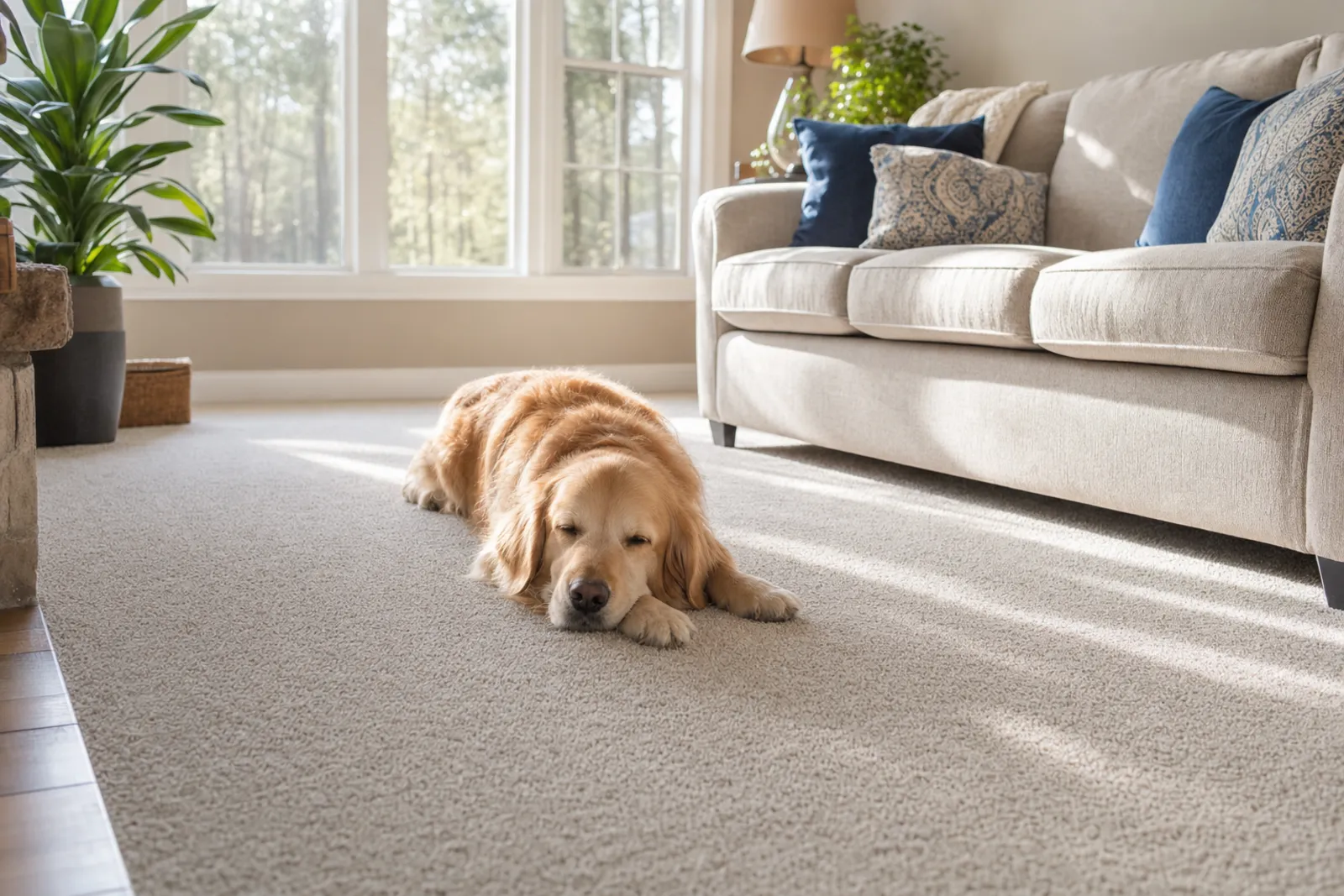
If your eyes itch and your nose runs more inside the house than out in the yard, the problem usually is not the season. It is what is living in your carpet, your bedding, and the dust on top of the ceiling fan.
After 60,000-plus jobs across Mercer County and Bucks County since 1989, we have learned that indoor allergens are not random. They collect in predictable places, and they respond to a few unglamorous habits done consistently. Here is how to work through a home room by room, what actually moves the needle, and where professional cleaning earns its keep.
What you are actually fighting
“Allergens” is a broad word, so it helps to name the real culprits. In a typical home in this area, the big four are dust mite waste, pet dander, pollen tracked in from outside, and mold spores from damp spots. Cockroach allergen matters in some older housing too, but for most homes here the first four dominate.
Two of those are worth understanding more closely. Dust mites are microscopic and they do not bite; the allergen is their droppings and shed body parts, which build up in anything soft and slept on. They thrive in humidity above roughly 50 percent. Pet dander is not hair, it is tiny flakes of skin, and it is sticky enough to ride on clothing into rooms the pet never enters. Both of these embed deep in fibers, which is why surface dusting alone never gets you all the way there.
The bedroom: where you spend a third of your life
If you only fix one room, fix the bedroom. You breathe the air directly above your mattress and pillow for seven or eight hours a night, and a mattress is a dust mite city.
- Wash sheets and pillowcases weekly in hot water, ideally 130°F or hotter, which is the temperature that actually kills mites rather than just relocating them.
- Use zippered allergen-barrier encasements on the mattress and pillows. This is the single most effective dust mite step there is, and it costs less than a dinner out.
- Keep bedroom humidity down. A small dehumidifier or running the AC pulls mite populations down faster than any spray.
- Skip the heavy upholstered headboard and the pile of decorative pillows if allergies are bad. Every soft surface is storage for allergen.
Carpet in a bedroom is comfortable underfoot but it is also a reservoir. If you keep it, vacuum slowly with a sealed HEPA-filter machine and have it deep-cleaned on a regular schedule, because home vacuums only reach the top layer.
Living rooms and family rooms: the soft-surface trap
This is where the household congregates, where the dog naps on the couch, and where pollen rides in on everyone’s shoes and clothes. Wall-to-wall carpet and upholstered furniture are the two largest allergen reservoirs in most homes simply because they have the most surface area and the deepest pile.
Vacuuming helps, but it has limits. A vacuum lifts loose debris off the top; it does not extract the fine, bound-up allergen down in the base of the fibers, and a cheap bagless unit without good filtration can actually blow fine particles back into the air. Two or three slow passes with a quality HEPA vacuum beats one fast pass every time.
For the deep load, periodic professional organic carpet cleaning does what a household machine cannot: it flushes the embedded allergen out of the fibers and removes it from the home rather than redistributing it. For households here in Mercer and Bucks, we generally suggest a professional clean every six to twelve months, more often with pets or active allergy sufferers. If you are local, our team handles this regularly for homes around Princeton and the surrounding towns.
Why our method matters for allergy households
Here is where honesty counts, because the cleaning industry oversells “green” constantly. Two things genuinely matter for allergen control: what is in the cleaning product, and how much water gets left behind.
On the product side, conventional carpet cleaning often leaves behind detergent residue and harsh chemistry. For someone with sensitive airways, that can trade one irritant for another. Our certified-organic, non-toxic, hypoallergenic products are designed to lift soil and allergen without leaving a chemical film behind. If you want to understand the difference between a real claim and marketing, we wrote a plain explanation of what certified-organic cleaning actually means, and a more skeptical look at whether green carpet cleaners are really green.
On the moisture side, this is the part most people overlook. Carpet that stays damp for a day or two is exactly what mold and dust mites want. Traditional steam cleaning can saturate a carpet so thoroughly it takes a full day to dry. Our low-moisture process gets carpets dry in about an hour, which closes that window. For an allergy household, fast drying is not a convenience feature; it is part of keeping a mold problem from starting.
Kitchen and bathrooms: the mold and moisture rooms
Allergen control in these rooms is mostly about water. Mold needs moisture, and these two rooms supply it daily.
- Run the bathroom exhaust fan during every shower and for fifteen minutes after. If you do not have one, crack a window.
- Fix slow leaks under sinks promptly. A small, ignored drip behind a vanity is how mold gets started where you cannot see it.
- Wipe down shower walls and squeegee glass to cut the standing moisture mold feeds on.
- Take out kitchen trash regularly and keep counters clear of crumbs, which is what cockroaches are after.
If a bath mat or kitchen rug stays damp, it becomes its own little allergen factory. Wash these often and let them dry fully before they go back down.
Whole-home habits that quietly do the heavy lifting
Room-by-room work is the foundation, but a few house-wide habits multiply the results.
- Control humidity. Aim to keep indoor humidity between 30 and 50 percent. A hygrometer costs a few dollars and tells you where you stand. This one number drives both dust mites and mold.
- Upgrade and change your HVAC filter. A higher-MERV pleated filter captures finer particles, and changing it on schedule keeps your system from blowing dust around. Mark a date on the calendar.
- Adopt a shoes-off rule. Shoes carry pollen, pollen, and outdoor mold straight onto your carpet. A doormat plus a no-shoes policy keeps a surprising amount of allergen out of the house entirely.
- Vacuum with a HEPA machine, slowly. Twice a week in high-traffic areas. The filtration is the part that matters; a sealed HEPA unit traps the fine allergen instead of recirculating it.
- Wash soft goods. Throw blankets, slipcovers, and curtains all hold allergen and almost never get cleaned. Add them to the rotation.
Seasonal rhythm for Mercer and Bucks homes
Our area has real seasons, and allergens follow them. Spring brings tree and grass pollen that rides indoors on clothing and pets; that is the right time for a thorough reset, and our spring cleaning checklist walks through it room by room. Late summer and fall bring ragweed and the start of running the heat, which stirs up settled dust through the ductwork.
Winter is its own challenge. Closed windows, the furnace running, and a houseful of guests trap and concentrate indoor allergen right when you most want the place comfortable. Refreshing carpets and upholstery before the holidays makes a real difference, and we put together guidance on getting your carpets and upholstery holiday-ready for exactly that stretch.
When to call a professional
Most of the work above you can do yourself, and you should. Call in a pro when the allergen load is beyond what a vacuum reaches: wall-to-wall carpet that has not been deep-cleaned in over a year, upholstered furniture a pet sleeps on, area and Oriental rugs that need proper extraction, or any carpet that has been wet. An IICRC-certified technician can also tell you honestly whether a textile is worth cleaning or has reached the end of its life, which saves you money either way.
The point of professional cleaning here is specific: it physically removes embedded allergen from the home using low-moisture, organic methods that do not leave residue or a drying window behind. That is the difference between moving allergen around and actually getting it out.
If allergies have your household worn down, we are happy to take a look and give you a straight, no-pressure assessment. Call us at 609-586-5833 for a free quote, and we will tell you exactly what would help and what you can skip.
Frequently asked questions
Carpet itself is not the enemy, but it is a large reservoir that traps allergen. Kept clean with HEPA vacuuming and periodic deep extraction, carpet can actually hold allergen out of the air; left uncleaned, it becomes a steady source.
For most homes in Mercer and Bucks counties we suggest every six to twelve months. Households with pets or active allergy sufferers benefit from the shorter end of that range.
They help because they avoid the harsh detergent residue and chemistry that conventional cleaning can leave behind, which can irritate sensitive airways. Our certified-organic, hypoallergenic products lift allergen without leaving a chemical film.
Carpet that stays damp for a day or more is exactly what mold and dust mites need to grow. Our low-moisture method dries carpets in about an hour, closing that window before a problem can start.
Focus on the bedroom: zippered allergen-barrier encasements on the mattress and pillows, weekly hot-water washing of bedding, and controlled humidity. You breathe that air for a third of every day.
No. A vacuum lifts loose debris off the surface but cannot extract the fine allergen bound deep in the fibers. Regular HEPA vacuuming and periodic professional extraction work together, not as substitutes.