Organic Method & Seasonal · 7 min read
What “Certified Organic” Cleaning Really Means (and What It Doesn’t)
“Organic” has become one of the most misused words in the cleaning business. Before you book anyone who claims it, it helps to know exactly what the label promises, what it legally requires, and where the marketing usually outruns the truth.
What “organic” actually means in a cleaning context
In chemistry, “organic” simply means a compound contains carbon. By that definition, formaldehyde and benzene are organic too, which is why the word alone tells you almost nothing about safety. When people say organic in the grocery aisle, they mean something stricter: grown and processed under a certified standard that limits synthetic pesticides and additives. The cleaning industry borrowed the warm feeling of that second meaning without inheriting any of its rules.
That gap matters. There is no single federal law that defines “organic carpet cleaning” the way the USDA defines organic produce. So when a company calls itself organic, the honest question is always the same: certified by whom, against what standard? A real answer points to a specific certifying body and a specific product. A vague answer usually means the word is doing marketing work, not chemistry work.
“Certified” is the word that carries the weight
The useful part of “certified organic” is the first word. Certification means an independent third party has reviewed the product’s ingredients against a published standard and put their name on it. That is very different from a company printing “organic” on a van because the owner likes how it sounds.
When you evaluate the products a cleaner uses, look for recognizable certifications and registrations rather than slogans. A few that genuinely mean something:
- USDA Certified Biobased — verifies what percentage of the product comes from renewable plant material rather than petroleum.
- Green Seal or EcoLogo (UL ECOLOGO) — independent standards covering toxicity, biodegradability, and human safety for cleaning products.
- EPA Safer Choice — reviews every ingredient for human and environmental safety.
None of these is the same as “USDA Organic,” and no honest cleaner should imply that they are. What they share is the thing that matters most to you as a homeowner: a documented standard and a third party willing to stand behind it. We dug into this distinction in more detail in our look at whether green carpet cleaners are really green, because the gap between claim and proof is where most people get misled.
Why the certified-organic angle matters for carpet specifically
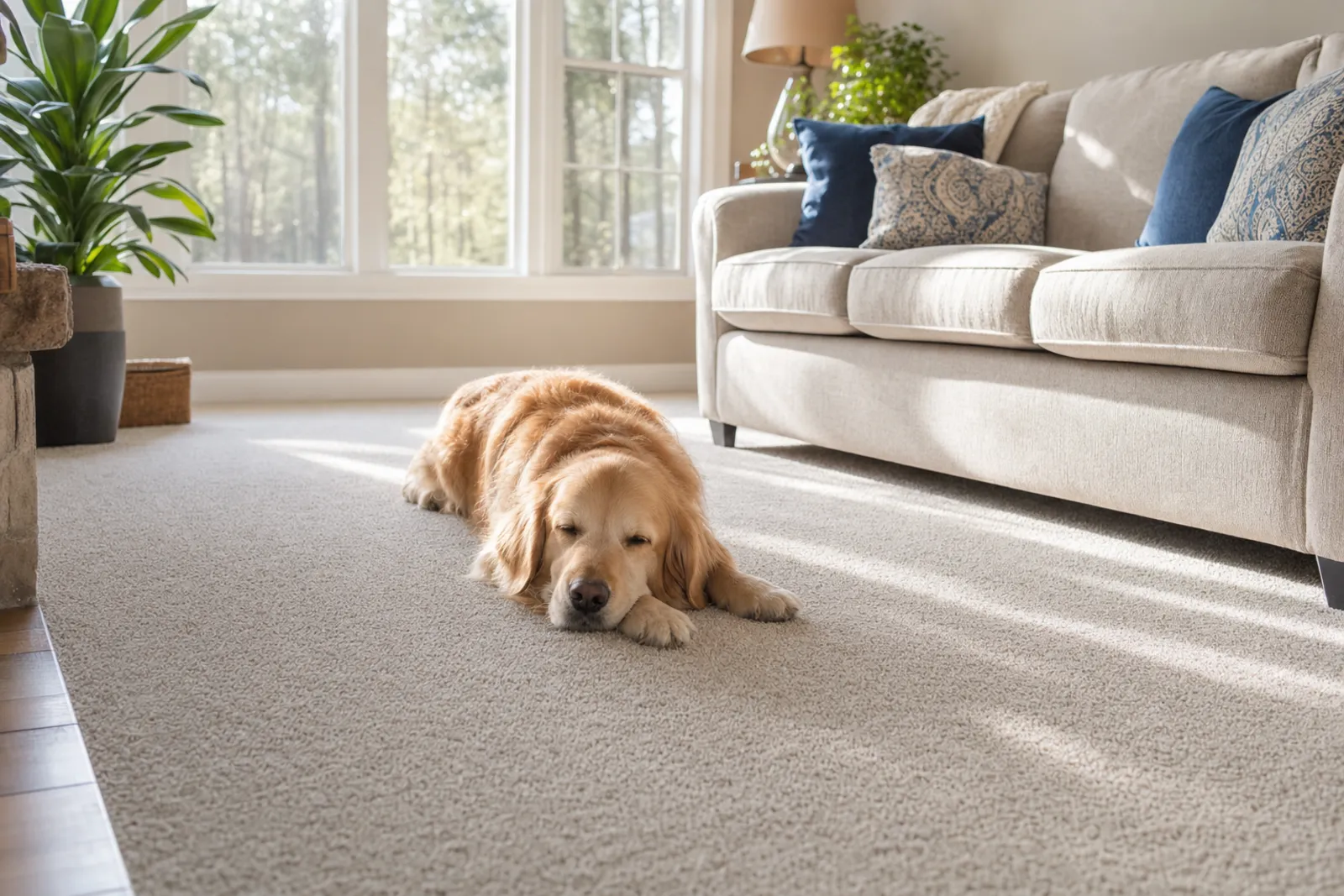
Carpet is not a hard surface you wipe and walk away from. It is a deep textile reservoir that holds whatever you put into it. Traditional truck-mount cleaning often relies on high-alkaline pre-sprays, optical brighteners, and synthetic surfactants, and unless every bit is rinsed and extracted, residue stays down in the pile. That residue is what your kids crawl on and what your dog naps on for the next year.
This is where a genuinely non-toxic, certified product earns its keep. The point of using organic carpet cleaning is not to feel virtuous; it is that anything left behind in the fibers is something you actually want to be safe. Plant-derived, hypoallergenic chemistry means a leftover trace is far less likely to trigger sensitivities, irritate skin, or off-gas into the air your family breathes indoors.
What “organic” does NOT mean
This is where homeowners get burned, so it is worth being blunt about the limits of the label.
It does not mean weak. A common myth is that gentle, plant-based products cannot lift heavy soil. Done right, with proper agitation and dwell time, certified products handle traffic lanes, food spills, and everyday grime just fine. The skill of the technician matters more than the harshness of the chemical.
It does not mean “anything goes” on stains. Some set-in dyes, rust, and pet accidents that have soaked into the backing need targeted treatment. Organic does not equal magic. A good company will tell you honestly when a stain is permanent rather than promise a miracle.
It does not automatically mean low-moisture. These are two separate ideas that often travel together but are not the same. A company can use green products and still soak your carpet so badly it takes two days to dry, which invites mold and wicking. Ask about both the products and the method.
It does not mean “no rinsing needed.” Even the best product should be properly extracted. “Organic” is never an excuse to leave residue in the carpet.
The low-moisture connection, explained honestly
The reason certified-organic and low-moisture cleaning pair so well is practical, not promotional. Low-moisture methods use controlled amounts of solution and strong extraction, so far less water and far less product end up sitting in the carpet. When the chemistry is already non-toxic and the volume is small and well-extracted, you get the cleanest possible outcome with the least residue.
There is a comfort benefit too. With a proper low-moisture approach, carpets typically dry in about an hour rather than overnight. That fast dry time is not just convenient; it is what keeps moisture from migrating down to the backing and pad, which is the real cause of musty smells and recurring “ghost” stains weeks after a cleaning. Faster drying also means less disruption and less chance of dirt being tracked back onto a damp surface.
How to vet a “certified organic” cleaner before you book
You do not need to be a chemist to separate the real thing from the marketing. A short list of questions does most of the work:
- Which products do you use, and who certifies them? You want a brand name and a certifying body, not “it’s all-natural.”
- Can I see a Safety Data Sheet (SDS)? A legitimate company can produce one for every product it brings into your home.
- Is the method low-moisture, and how long until it’s dry? “About an hour” is a strong answer; “a day or so” is a flag.
- What are your certifications as a technician? Industry training such as IICRC certification tells you the person, not just the product, knows what they are doing.
- What is your guarantee in writing? A real warranty means they expect the work to hold up.
For what it is worth, those are the standards we hold ourselves to. AllState Cleaning has been a family-owned, IICRC-certified shop since 1989, and our work is backed by a written one-year warranty and a simple promise: you must be happy or it is free.
Who benefits most from going organic
Everyone benefits from less residue, but a few households should treat it as non-negotiable. Homes with infants and toddlers who spend their days on the floor. Anyone with asthma, eczema, or chemical sensitivities. Households with pets. Older adults with compromised immune systems. If reducing the chemical load in your home is a priority, the carpet is one of the largest surfaces you own, and it is worth getting right. We cover the broader picture in our guide to reducing indoor allergens at home, where carpet plays a bigger role than most people realize.
Timing helps too. Many families fold a certified-organic deep clean into seasonal routines, whether that is part of a spring cleaning checklist or getting floors fresh before guests arrive. Cleaner fibers with no harsh residue simply hold up better between visits.
The local reality in Mercer and Bucks County
Our area runs the full range of carpet conditions. Older homes around Princeton, Lawrenceville, and Newtown often have wool and natural-fiber rugs that demand gentle, pH-appropriate chemistry, which is exactly where harsh conventional products do damage. Newer builds in Hamilton and Robbinsville lean toward synthetic wall-to-wall that hides soil until it suddenly looks gray in the traffic lanes. Both do better with a low-residue, certified approach. If you are comparing options, our page on carpet cleaning in Princeton, NJ walks through what local homeowners typically ask about.
The humidity here is the other factor. Summer moisture in central New Jersey and lower Bucks County is exactly why over-wetting carpets is a problem worth avoiding. A method that dries in about an hour is not a luxury in this climate; it is how you keep mold and musty odors out of the equation entirely.
If you want carpets that are genuinely cleaner and safer, without the residue or the guesswork, we are happy to help. Call AllState Cleaning at 609-586-5833 for a free, no-pressure quote and we will tell you straight what your carpets actually need.
Frequently asked questions
No. Unlike USDA Organic for food, there is no single federal standard for organic carpet cleaning. Look instead for recognized product certifications like EPA Safer Choice, Green Seal, or USDA Certified Biobased, backed by a named certifying body.
Yes, when done by a skilled technician. Plant-based, non-toxic products handle heavy soil and traffic lanes with proper agitation and dwell time; the operator's skill matters more than how harsh the chemical is.
No. They often go together but are two separate things. A company can use green products and still over-wet your carpet, so ask about both the products and the drying method.
They handle most common stains well, but some set-in dyes, rust, and accidents soaked into the backing may need targeted treatment. Organic is not magic, and an honest cleaner will tell you when a stain is permanent.
Typically about an hour. Fast drying matters because trapped moisture in the backing and pad is the real cause of musty smells and recurring "ghost" stains.
Ask which products they use and who certifies them, request a Safety Data Sheet, confirm the drying time, check the technician's IICRC certification, and get the guarantee in writing.