Pet Odor & Stain Removal · 7 min read
How Enzyme Treatments Break Down Pet Odor
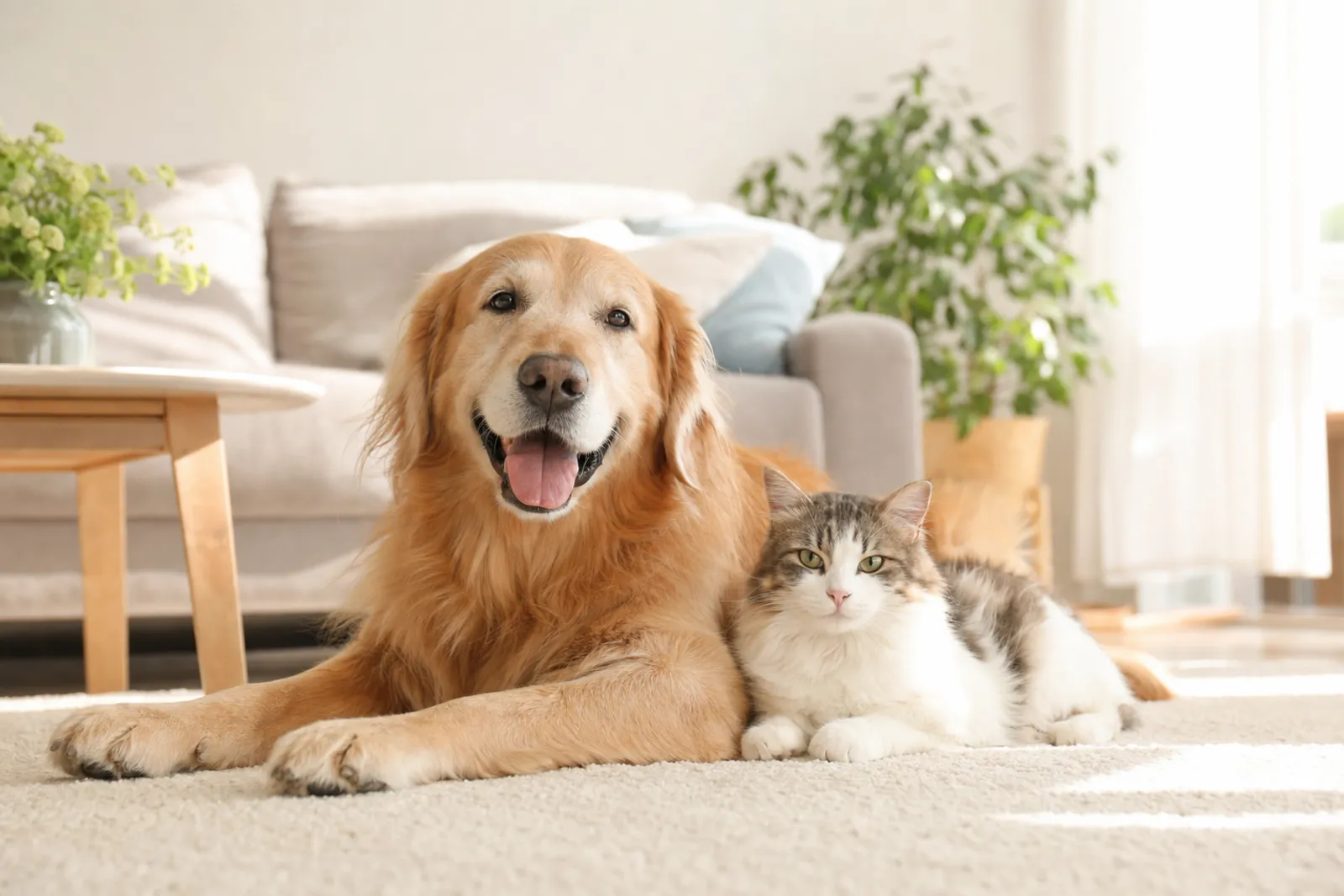
If pet odor keeps coming back after you clean, the problem usually isn’t your effort. It’s chemistry. Urine smell comes from specific compounds, and ordinary cleaners don’t touch them.
Why Pet Urine Smells the Way It Does
Fresh urine is mostly water, urea, salts, and a small amount of uric acid. On its own, fresh urine doesn’t smell like much. The real stink develops over the next day or two as bacteria feed on the urea and break it down. That decomposition releases ammonia, which is the sharp, eye-watering note you catch when you walk into a room. It also produces sulfur compounds and short-chain fatty acids that give old urine its sour, lingering character.
The part that makes pet odor so stubborn is the uric acid. Uric acid forms crystals that bind tightly to carpet fibers, padding, and subfloor. These crystals are not water-soluble in any meaningful way. You can scrub, rinse, and shampoo all you want, but the crystals stay put. Worse, they reactivate. Every time humidity rises on a damp summer day in Mercer County or after you steam-clean with hot water, those crystals release odor again. That is the single biggest reason people think the smell is gone, only to have it return a week later.
What an Enzyme Treatment Actually Does
Enzymes are biological catalysts. They speed up chemical reactions without being used up themselves. In a pet odor product, the enzymes work alongside specific strains of beneficial bacteria. The bacteria are the engine; the enzymes are the tools the bacteria use to take apart large organic molecules into smaller pieces the bacteria can then consume.
A well-formulated treatment includes several enzyme types, each matched to a component of urine and other pet messes:
- Proteases break down proteins, which matter for vomit, blood, and the protein content in urine.
- Lipases break down fats and oils, including the body oils a dog leaves behind on a favorite spot.
- Amylases break down starches and carbohydrates.
- Urease and uricase-type activity target urea and uric acid directly, which is the whole point with urine.
The key difference between an enzyme treatment and a masking spray is simple. A masking spray covers the smell with fragrance and leaves the source intact. An enzyme treatment digests the source. Once the bacteria consume the organic material, there is nothing left to produce odor. That is what people mean when they say enzymes “remove” odor rather than hide it. For a fuller walk-through of the whole process, our pet odor and stain removal guide covers the steps in order.
Why Enzymes Succeed Where Regular Cleaners Fail
Most household cleaners, even good ones, are surfactants. They lift soil so you can rinse it away. That works fine for dirt on the surface, but urine isn’t a surface problem. It soaks down through the carpet face, into the backing, through the cushion, and onto the subfloor. A surface clean removes maybe the top layer and leaves most of the deposit untouched below.
Enzymes have a different job. They don’t need to lift the material out. They convert it in place. As long as the treatment can reach the deposit and stay wet long enough for the biological activity to finish, the enzymes and bacteria do the work wherever the urine traveled. This is also why timing and saturation matter so much, a point we cover in detail in why pet urine odor comes back.
The Conditions Enzymes Need to Work
Enzymes are alive in the sense that the bacterial cultures driving them are living organisms, and living things have requirements. A treatment that goes in under the wrong conditions does very little. Three factors decide whether it works:
- Moisture and contact time. The enzymes need to stay damp to keep reacting. If a spot dries in twenty minutes, the reaction stops before it finishes. Professional applications keep the area in the right moisture window long enough for the activity to complete.
- Coverage. The treatment has to physically reach every place the urine went. If urine soaked four inches across and down into the pad, a light surface mist will not cut it. The product must be applied to match the contamination, which is why we map the affected area before we treat it.
- No interference. Harsh chemicals applied beforehand can kill the bacteria or denature the enzymes. If someone has already poured a strong oxidizer or a high-pH cleaner on the spot, the enzymes may have nothing left to work with, or the surface may be too hostile for them to function.
Why We Pair Enzymes With a Certified-Organic, Low-Moisture Approach
There is a real tension in pet odor work. Enzymes need moisture and time, but soaking a carpet with water creates its own problems. Over-wetting drives contaminants deeper, can delaminate carpet backing, and leaves padding wet for days, which invites mold and a musty smell on top of the urine. In a humid New Jersey summer, a soaked carpet pad can stay wet long enough to cause more damage than the original accident.
Our method threads that needle. We use certified-organic, non-toxic, hypoallergenic products, and we control moisture carefully so the treatment stays in the active window without flooding the cushion. Carpets dry in about an hour rather than the day or more a heavy steam clean can take. The organic, hypoallergenic side matters in homes with pets and kids, because you should not have to trade a urine smell for a lungful of solvent. If you want the broader picture of how we handle these jobs, see our pet odor and stain removal service.
Fresh Accidents Versus Set-In Deposits
Enzymes work on both, but the difficulty is very different. A fresh accident caught within an hour or two is mostly liquid still sitting near the surface. Blot up what you can, apply the treatment, keep it damp, and you have a good chance of a complete removal. We break down the at-home steps in fresh versus set-in pet stains.
Set-in deposits are another matter. Once uric acid has crystallized and the urine has reached the pad and subfloor, no amount of surface treatment will reach it. These jobs often need the carpet lifted, the pad inspected and sometimes replaced, the subfloor sealed, and the carpet backing treated from below. A spot that smells fine when dry but reeks when it rains is almost always a set-in deposit that was treated only on top. Honest assessment matters here, because telling someone a surface spray will fix a soaked subfloor just sets them up to call back angry in a month.
Dog Urine, Cat Urine, and Why Cats Are Harder
The basic chemistry is the same, but cat urine is notoriously worse, and there are reasons for it. Cats are desert animals by evolution and produce highly concentrated urine, so each accident carries a heavier load of uric acid and nitrogen compounds in less liquid. Intact male cats add felinine, a sulfur-containing compound that breaks down into a smell most people find unbearable. Cats also tend to mark vertical surfaces and return to the same spots, layering deposit on deposit. We compare the two in dog versus cat urine odor, but the practical takeaway is that cat jobs usually need more product, more dwell time, and more patience.
What to Expect From a Professional Enzyme Treatment
A proper job is not a one-bottle spray-and-go. It starts with detection. We locate every contaminated area, including the spots you cannot see, using moisture and contamination tools rather than guessing. We measure how far the urine spread and how deep it went. Then we apply the right enzyme treatment at the right volume to match that contamination, keep it in the active window, and verify the result.
As an IICRC Certified Master Restorer and Senior Carpet and Textile Inspector, the standard we hold is straightforward: the odor is gone when the source is gone, not when the fragrance is strong. With more than 60,000 jobs completed since 1989, we have seen what happens when a deposit is missed, and the whole approach is built to avoid that. Our work is backed by a one-year written warranty and our 200% No-Risk Guarantee, so the burden of getting it right sits with us, not you.
If pet odor in your Mercer County or Bucks County home keeps coming back, we can find the source and treat it properly. Call AllState Cleaning at 609-586-5833 for a free quote, and we will tell you honestly what your floors actually need.
Frequently asked questions
Yes, when the treatment reaches every contaminated area and stays active long enough to digest the source. The odor is gone for good once the organic material is consumed; problems only return when a deposit deeper in the pad or subfloor was missed.
Uric acid crystals left in the carpet, padding, or subfloor reactivate and release ammonia odor when moisture rises. A treatment that only cleaned the surface left those crystals behind, so the smell comes back with the humidity.
Household cleaners are surfactants that lift surface soil but do not break down uric acid crystals. They may reduce odor briefly, but the deeper deposit remains and the smell returns.
Hot-water steam cleaning often makes it worse by driving contaminants deeper and reactivating uric acid crystals with heat and moisture. Our low-moisture, certified-organic method controls water so the area dries in about an hour without flooding the pad.
Yes. We use certified-organic, non-toxic, hypoallergenic products, so there are no harsh solvent fumes left behind in the home.
Cat urine is far more concentrated, carrying more uric acid in less liquid, and intact males add felinine, a sulfur compound with an especially strong smell. Cats also re-mark the same spots, layering deposits that need more product and dwell time.