Upholstery & Drapery · 6 min read
The Allergens Hiding in Your Upholstery
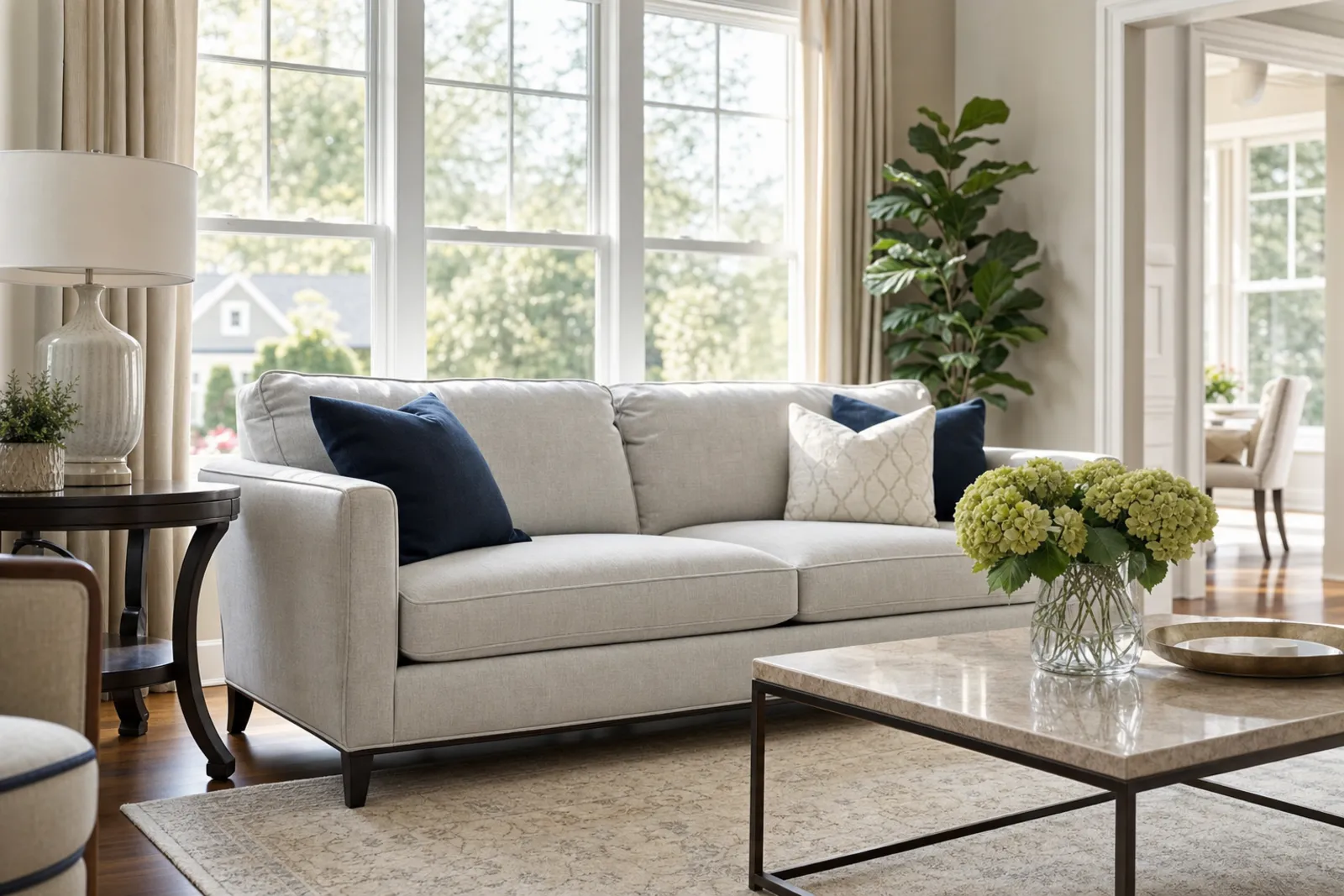
Your sofa is the single largest fabric filter in your house, and most people never clean it until it looks dirty. By then it has already been collecting allergens for years.
Why upholstery is an allergen trap in the first place
A carpet sits on the floor and gets vacuumed. A sofa, a recliner, a fabric headboard, and dining chairs get used constantly and cleaned almost never. Every time you sit down, you compress the cushion and push a small cloud of dust back up through the weave. Every time you stand, the fabric relaxes and pulls fresh air, dust, and skin cells back in. That breathing action makes upholstery far more efficient at trapping airborne particles than most homeowners realize.
The materials matter too. Loose-weave linens, chenilles, and microfibers have enormous surface area and lots of places for fine particles to lodge. Cushion foam underneath acts like a reservoir. So while the visible fabric might look fine, the layer you actually breathe near your face is loaded with material that a vacuum cleaner never reaches.
The dust mite problem nobody sees
Dust mites are the allergen most strongly tied to upholstered furniture, and they are the one homeowners underestimate the most. They do not bite and they are microscopic, so there is nothing to see. What triggers allergies is not the mite itself but its waste and the fragments of dead mites, both of which are light enough to become airborne when you sit down.
Mites feed on the dead skin cells that people and pets shed all day, and a well-used sofa is essentially a buffet. They thrive in humidity, which makes summer in Mercer County and Bucks County their best season. If your allergy symptoms get worse when you relax on the couch in the evening, dust mites in the upholstery are a likely suspect. Regular professional cleaning removes the food source and the existing waste load, which is the most practical way to keep populations down between cleanings.
Pet dander clings to fabric, not just floors
Cat and dog dander is sticky and electrostatically charged, which is exactly why it bonds to fabric and stays there. Even in homes where pets are not allowed on the furniture, dander travels on air currents and on your own clothing and settles into the weave. Households with a cat-allergic guest often find the reaction is worst in the seating area, not the floor.
Vacuuming pulls off the loose surface layer, but the dander worked down into the fibers and foam needs extraction to remove. This is one of the clearest cases where a proper cleaning makes a difference you can feel within a day, especially for anyone in the home with asthma or a confirmed pet allergy.
Pollen, mold, and the things you bring in from outside
This region has a long, heavy pollen season, from tree pollen in early spring through grass and then ragweed into fall. That pollen does not stay outside. It rides in on hair, clothing, and the family dog, and a fabric sofa is where a lot of it ends up. People who keep windows open in spring and summer are loading their upholstery continuously.
Mold is the quieter risk. Spills that were blotted but never fully dried, a basement family room with higher humidity, or a sectional pushed against an exterior wall can all create conditions where mold develops inside the cushion. Mold spores are a serious respiratory irritant, and they are a major reason drying matters so much, which leads directly into how upholstery should actually be cleaned.
Why low-moisture, certified-organic cleaning matters for allergens
Here is the honest version most companies will not tell you: oversaturating upholstery can make an allergen problem worse. If a sofa is soaked and then dries slowly over a day or two, you have created the exact warm, damp conditions that mold and mildew need. A cleaning that smells musty a few days later did more harm than good.
This is the reasoning behind a low-moisture professional cleaning approach. By using controlled moisture and high-efficiency extraction, the fabric lifts out soil and allergens without ever getting waterlogged. Cushions dry in about an hour rather than overnight, so there is no window for mold to take hold. For allergen control specifically, fast drying is not a luxury feature; it is the difference between solving the problem and relocating it deeper into the cushion.
The certified-organic, non-toxic side matters for the same audience. The people most affected by upholstery allergens are usually the ones most sensitive to harsh cleaning chemistry and lingering residue. Hypoallergenic, organic products clean the fabric without leaving behind a chemical film that can itself trigger reactions, and they are safe for the children and pets who spend the most time on the furniture.
What vacuuming and DIY can and cannot do
Home maintenance genuinely helps, and it should not be skipped. A vacuum with a clean HEPA filter and an upholstery attachment, run weekly over cushions and into the crevices, removes a real share of surface dust, dander, and pollen before it settles deeper. Washing removable cushion covers and throw pillows on the recommended cycle helps too.
What home tools cannot do is extract the embedded layer. Consumer-grade machines tend to push more water in than they pull back out, which is the saturation trap again. They also lack the vacuum power to lift allergens out of foam. So the realistic division of labor is simple:
- You handle the surface: weekly vacuuming, prompt blotting of spills, washing covers, and controlling indoor humidity.
- A professional handles the depth: periodic deep extraction that removes the dust-mite waste, dander, and pollen that have worked into the fibers and cushion.
If you want a fuller routine to follow at home, our complete guide to caring for upholstered furniture walks through the maintenance steps in more detail.
How often allergen-prone homes should clean
The general guidance of every 12 to 18 months works for an average household, but allergen sensitivity changes the math. If someone in the home has asthma, year-round allergies, or a pet allergy, every 6 to 12 months is more appropriate. Homes with shedding pets, open windows in pollen season, or young children on the floor near the furniture fall into the more frequent range.
The honest answer also depends on the fabric and how the piece is built, since some materials hold allergens more stubbornly than others. We cover the timing question in depth in our breakdown of how often upholstery should be cleaned, and you can always have us assess a specific piece in person.
Know your fabric before anything touches it
Every upholstered piece carries a cleaning code, and getting it wrong is how fabric gets ruined or shrunk. A water-safe code, a solvent-only code, and a vacuum-only code each call for a completely different approach, and the right allergen cleaning starts with reading that code correctly. If you are curious what the letters on your furniture tag mean, our explainer on upholstery cleaning codes makes it clear.
This is also where a certified inspector earns their keep. As an IICRC Certified Master Restorer and Senior Carpet & Textile Inspector, we identify the fiber, test for colorfastness, and match the method before we begin, which protects both the fabric and the people who use it. Homeowners around Princeton and the surrounding towns can read more about our local approach to upholstery cleaning in Princeton, NJ.
If anyone in your home struggles with allergies, your upholstery is worth a closer look. Call AllState Cleaning at 609-586-5833 for a free, no-pressure quote, and we will help you breathe easier in your own living room.
Frequently asked questions
Yes. Upholstered furniture traps dust mites, pet dander, pollen, and sometimes mold, and sitting down pushes those allergens back into the air near your face. People often notice symptoms worsen during evening relaxation on the couch.
Vacuuming with a HEPA filter removes the loose surface layer of dust, dander, and pollen, which helps. It cannot extract the allergens worked deep into the fibers and cushion foam, which requires professional extraction.
It can if the fabric is oversaturated and dries slowly. Our low-moisture method uses controlled moisture and strong extraction so cushions dry in about an hour, leaving no window for mold to develop.
Yes. We use certified-organic, non-toxic, hypoallergenic products that clean without leaving a chemical residue that could itself trigger reactions, making them safe for the people most sensitive to allergens.
Every 6 to 12 months is appropriate for allergy- or asthma-prone homes, versus the standard 12 to 18 months. Homes with shedding pets or open windows in pollen season fall toward the more frequent end.
Every piece has a cleaning code that dictates the safe method. As an IICRC Certified Master Restorer and Senior Textile Inspector, we identify the fiber, test for colorfastness, and match the method before cleaning, backed by our 200% No-Risk Guarantee.